A long way for a cup of tea – Abraham’s Tea Round

Ross Tea Round - 8

The bus let out a strained cough beneath our feet. “It just won’t start!”, called the driver. People were getting agitated.

After several more wheezes, the driver relented, and called a guy who gave the sagacious advice to “turn it off for a few minutes and turn it on again”. He gave it a shot.

Cough – spluttuttutter – gruh -gruh – broooooom! It staggered into life sounding quite hungover. “Woohoo!” we all cried. We waited a few more minutes. Why aren’t we moving?

The bus turned off. “Right”, the driver emerged again from his cabin, his face drooping. “It started” (as we all noticed) “but now I can’t get it in gear. What can you do?”

I groaned and closed my eyes. Somehow, after more than eight hours running in the fells, it was when I reconnected with humanity things started to come unstuck. Everything seemed all so peaceful 12 hours earlier.

04.30

I sat bolt upright and slapped the alarm silent. I had barely slept, my mind rolling over and over. I simply felt wide awake, adrenaline pumping me up for the excitement of the day to come.

Back in August, I wandered into the George Fisher outdoor shop in Keswick for a meeting with the marketing team there. Mistake number one: Always be on guard when meeting with a store marketing team who promote fell running.

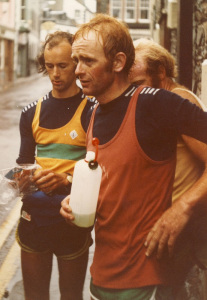
I met Rachel Kearns, the then-marketing manager, alongside my colleague, Pete Barron. Mistake number two: Never go to a meeting in an outdoor shop that supports fell running with a guy who supported Billy Bland to his long-standing Bob Graham Round record.
billy-b-at-moot-hall2
Pete (left) with Billy Bland

We nattered for a while over coffee, chatting generally about running before the conversation turned to Pete and the BGR. Naturally, I involved myself, never passing on an opportunity to talk about hill running (as it is where I come from). I even mentioned my own interest in running a BG at some point.

And that was the moment. Mistake number three: Never mention you are keen to run a BG but that you aren’t sure you have the stamina to alongside a colleague who supported Billy Bland, and in a shop which has recently established its own round whilst in a meeting with said-shop’s marketing manager.

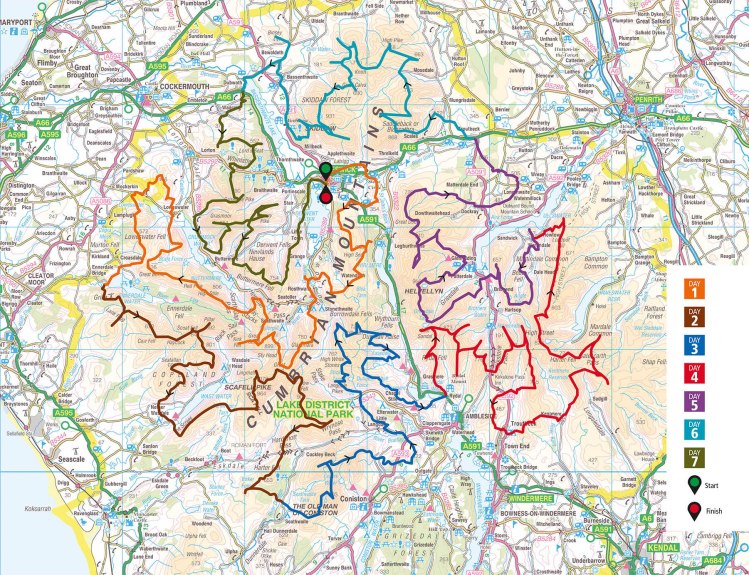
“Have you heard about our own round?” Rachel asked. “No”, I replied, unwittingly. Rachel then told me about the Abraham’s Tea Round: a 30(ish) mile route with around 12,000ft of elevation gain, visiting each of the peaks visible from the Abraham’s Cafe in George Fisher.

The idea intrigued me. I liked the idea of it being based on line-of-sight, thinking that, afterwards, I could look out that window and see each of the peaks I had touched.

I made several attempt to schedule a day to do it, but every time was either fraught with injury or poor weather (or simply not being bothered). That was until a weather forecast with little patches of sunshine coincided with a day off.

And so it was, on 16 March, I was banging my phone to stop its alarm at 04.30 after zero hours of sleep. We dragged ourselves out of bed, not allowing any time to get comfortable again.

My girlfriend, Bo, would be driving me to Keswick and joining me up until Robinson. After a sip of coffee and the usual porridge breakfast, we groggily shuffled into the car.

Despite the glorious forecast, the morning was grey and overcast, the top of Skiddaw capped with cloud as we drove down Thirlmere. I dozed a little, trying to keep the sea urchins in my stomach calm.

06.05

We arrived in Keswick at just after 06.00. I was adamant I needed a visit to the loo beforehand. Anyone who runs long distances knows that pre-run anxiety of having to get the pre-run-poop out the way.

I emerged from the Bell Close Car Park bathroom gruntled, though still tense. “I have never seen you this nervous”, Bo observed. It’s true: for a while I had wrestled with pre-race nerves, but had lately managed to keep them at bay.

This was different somehow. Perhaps the fact I had been mulling over it for a while, or that I had raised some money for the John Muir Trust through it put me on edge. More so, unlike a race, this was my own doing, and I wanted to do it right.

06.20 – Zero hour

When it comes to projects, I am neither an organiser nor a procrastinator. Often, during university, I would write the essay in my head and repeat the arguments so many times that I could write a 3000-word essay in a couple of hours.

Similarly, with running, I go over the plan in my head so many times – perhaps not with timings or a specific plan – that I just have to execute it. I liken it to baking: The thing sits in my brain oven for just long enough before popping out with a cheerful ‘ding!’ ready to eat.

As I stood at the George Fisher front door I knew I had to do several things:Ross Tea Round - 1
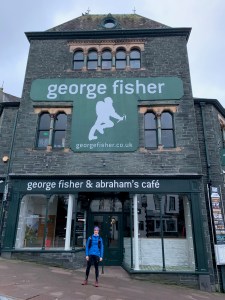
  1. Take a photo of my watch with the George Fisher logo above
  2. Get a photo of me at the door
  3. Touch the door
  4. Kiss Bo before starting

Perhaps it is a little superstitious, but I followed this ‘premonition’ to give me a kind of net. You always have to remember your strategy for when things go wrong, though, which is equally (if not more) important than how you dream it.

I followed my steps, gave a grimace, and started the clock. We were off!


40 minutes

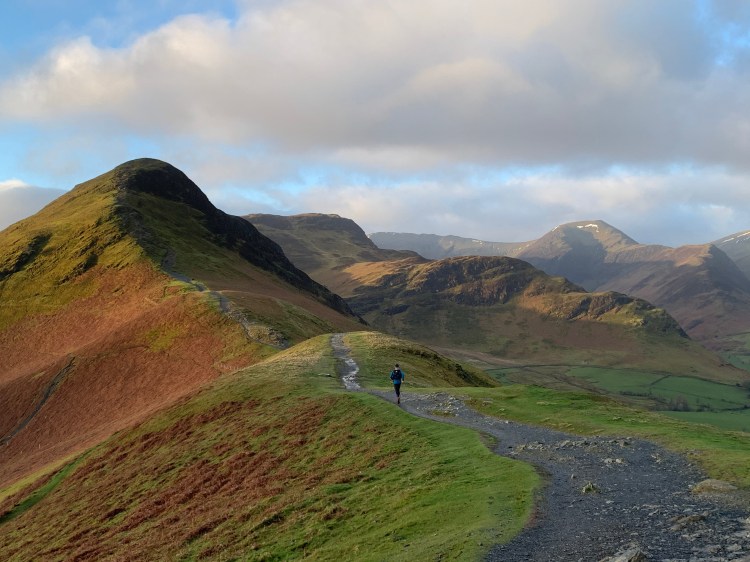
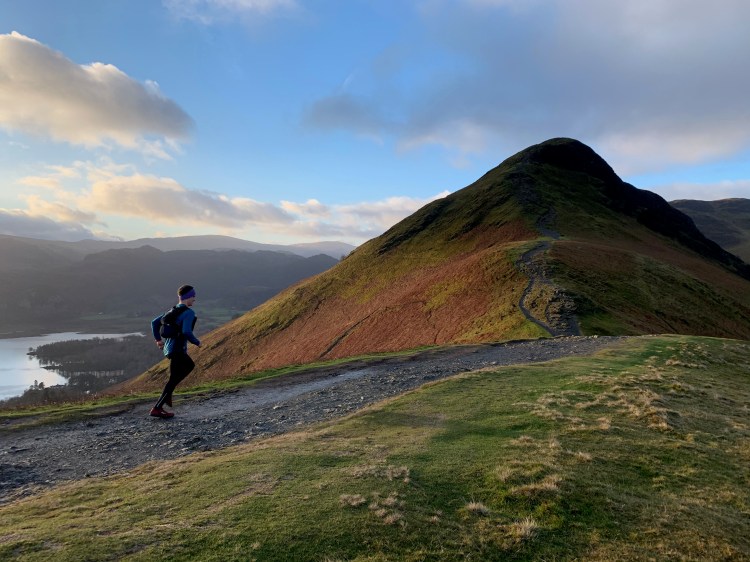
We ran along Cat Bells’ arched back. As we had passed through the woodland by Derwent Water, we had passed walkers out eager to catch the sunrise. The cloud cloaking the higher tops became lighter, Skiddaw’s prow beginning to throw off its lazy morning mist.

In a few moments, the sky turned from dark blue to pastel, soft light easing itself across the surrounding valleys and hills, lighting the way ahead. It was incredible. Marching up the final climb to the summit, we stopped several times just to look at the world and listen to the silence.
Ross Tea Round - 10

To the west, the tops of Eel Crag and Grisedale Pike remained heavily hooded in cloud, but the way ahead was clear as glass, the Newlands Valley awakening to the sounds of birds and becks.

We followed a blank grassy slope down to the little waterfall before following the crumbled path into Little Town.

The last time I had been there was on my way to support my friend Lewis on the final leg of his Bob Graham Round, in similarly exciting circumstances.

From Cat Bells, Robinson looked far away, but we trotted along the road to its foot in good time, joining the grassy gorse-lined path towards its steep flank. The gorse was starting to flower, and I expressed my excitement to Bo about the coming coconut aromas that would soon hang off the hills in spring.

2 hours 18 minutes

The day before the round, Bo and I had joined a friend, Andy, on a bike ride from Kendal to Windermere. We were joined there by Bo’s colleague, Tory, and made the rolling cycle down the lake to the Swan Inn (which I happily swanned inn-to), where I proceeded to do some carb loading.

Upon leaving the Swan Inn, Tory went for a ride around the lake while the rest of us headed back to Kendal. To say we took the scenic route is an understatement. Any turn which offered a shortened way home we eschewed, heading down south through the village of Meathop (and wondered if it was pronounced Meat-hop or Meath-op).
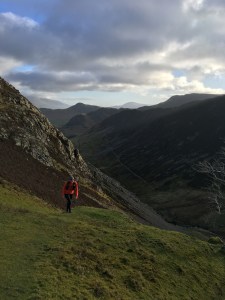
IMG_4919

After a rather lumpy four-and-a-bit hours, we finally arrived back in Kendal. Absolutely, a wonderful ride, but 65km the day before didn’t sound like best preparation for my first ultra.

That said, as we crested the steep slope of Robinson and over its endless false tops, I had to thank my tired legs in a way: with luck, they might prevent me getting too excited after Bo left and help pace me better.

Speaking of which, I was somewhat thankful for these false tops: I didn’t really want Bo to leave. The nerves from earlier had returned a little. Not for any particular reason, again, but I was enjoying this time.

Anyway, some of us have work to go to so, after a slice of homemade banana bread, we split up, she heading towards Hindscarth and I down the steep descent towards Buttermere.

2 hours 50 minutes

That was steep! I hadn’t expected such a rough descent as Robinson featured. I emerged down at Hassenhow Beck and joined the road, turning right towards Gatesgarth.

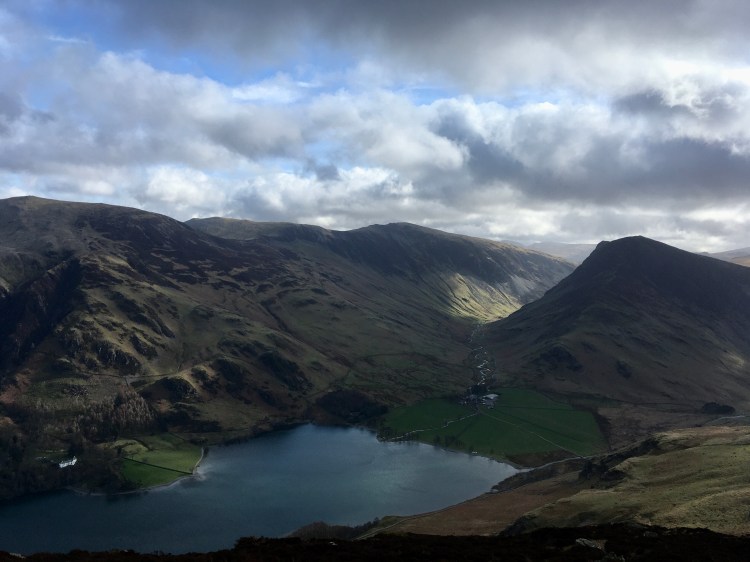
The little farmstead there was still waking up, itself nestled in the crook of Buttermere water’s arm beneath Fleewith Pike.
IMG_4926
Looking down to Gatesgarth

I trotted by, feeling incredibly purposeful, just ticking over as I followed the flat path that looks out over Buttermere to the wide sky beyond to the sea.

Ahead, the next climb appeared, unsurprisingly steep again.

3 hours 50 minutes

I had broken the run down into chunks. The game plan was:

  • There are 4 key climbs:
    • Cat Bells
    • Robinson
    • High Stile
    • Whiteless Pike
  • Eat every 45 minutes
    • Alternate between sugary snack and a Babybell
  • Each 45 minutes should land at a key stage of the run

This last point was immeasurably satisfying, and I certainly feel like I earned 500 points for ultra scheduling. My feed points landed with almost pin-point accuracy at a significant stage: summit, descent, ascent.

Topping out on High Stile, I popped a couple Voom blocks down me as a power up for the descent down Red Pike’s russety chute into Buttermere. Meanwhile, two roaring jets streaked below, their thunder echoing through the valleys long after they had gone.

The going on the path down into Buttermere is hard on the knees – big rocks akin to those on Ben Nevis, but without the security of the grippy granite offered by the Ben. This stuff was mossy, wet and slick.

4 hours 35 minuets 

I had to laugh to myself. I had been going for four-and-a-half hours now – the time it takes for a long classics race – and only covered 25km, but with almost 2000m in that time. And all before lunch.

I read a story of some people stopping in Buttermere for a bacon sarnie and a coffee, but I pushed that out of my mind lest it cause me to stop for an indefinite period of time.

IMG_4935
Looking back to High Stile

From a distance, Whiteless Pike looked a very runnable ascent, and I assume it usually is, but with 2000m already in the legs it doesn’t pan out that way.

This was it, though, the final big climb: 640m straight up and over Whiteless Pike and Whiteless Edge onto the plateau that would bound me across to Grisedale Pike.

As I climbed, the wind picked up, its timing as impeccable as a Swiss train conductor, given the forecast had stated higher winds at midday. Fortunately, they were behind me for now, and I was lifted up onto the plain below Wandhope and Grasmoor.

6 hours

I am dying for a cup of tea.

Genuinely – never wanted one so much.

Why? I feel a little hungover.

Going up Hobcarton Crag, the adrenaline I had been riding since the previous evening was leaking out of me. The wind was up, I was a little sick of Babybells, and I was going slow.

I did eye up a gentleman drinking a brew from his flask and was half-tempted to request a glug, but thought better of it. Instead, I shot another Voom block down me, and that perked me up a little.

It must always be windy on Grisedale – it’s the only explanation for the rather diminutive trig point on the ground. So small, in fact, I walked over it in my search.

A chap about my age was up there with his parents and asked where I had come from, so I replied with, “Keswick”.

“Wow! That’s a good distance”, he said. He seemed keen to know more, so I gave Barry and his folks a little extra information about the ATR before heading back the way I came to the absolute hump-backed whale of a thing that is Eel Crag.

6 hours 30 minutes

Of course the highest point of the round is six-and-a-half hours in. The “fast” route up Eel Crag is via the crags themselves: a steep, shingly zig-zag up its side before the long, sloping summit grind.

The wind was getting stronger. I was feeling too lazy to take my pack off to take my jacket out to then put my jacket on and put my pack back on again, so I just shoved my jacket over the top of myself and my pack so as to look like the turtle I felt like.
IMG_4942

I was quite tired by this point. I was still enjoying myself, have no fear. Without the invisible fiend battering me, the world looked glorious. As I crested Eel Crag, I chanced a look at the Buttermere fells I had been on a few hours before – they looked miles away, and huge! I was there!

Until the past couple of summits, I had been catching sight of Keswick between the fells, checking to see if you could indeed see Abraham’s Cafe from each summit. Now, Keswick lay below in the sunlight, shining like fresh paint on an artist’s canvas.

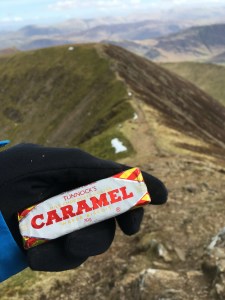
I had one Voom block left, but figured I would save it for Barrow. Instead, I pulled out my “nuclear option” bar: the mighty Tunnock’s Caramel wafer. I chomped on its delicious energy as I scrambled down Eel Crag and over Sail.

7 hours 20 minutes

Rowling End is aptly named (though, why not Rolling End, I ask?): from Scar Crags, the final rolling path towards this jut of a top was a classic Lakeland trail. The trod to its summit is a sublime single track through the heather, almost hypnotic in the way it weaves and rolls through the brownish purple.

The bare patch of grass that marks the unceremonious top acted as the penultimate summit of the day. The last, Barrow, didn’t look so far.

I retraced my steps and descended a little down the walkers’ path before skirting around Causey Pike’s edge on a faint trod, sending the local Herdwicks in a tizzy. During her ATR, Bo mentioned this part as being quite horrible and “bracken bashy”, but I seemed to find the right line.

I was moving well now, and running! Down to the river, power hike up the bank, a quick rest, before running up the climb towards the last summit.

OK – I didn’t run all of it. But I did set a Strava PR!

7 hours 46 minutes

We made it! The final summit. And I didn’t feel horrendous. In fact, I felt strong. I took a quick look up to Causey Pike, over to Cat Bells, Grisedale to my right. This was the last part.

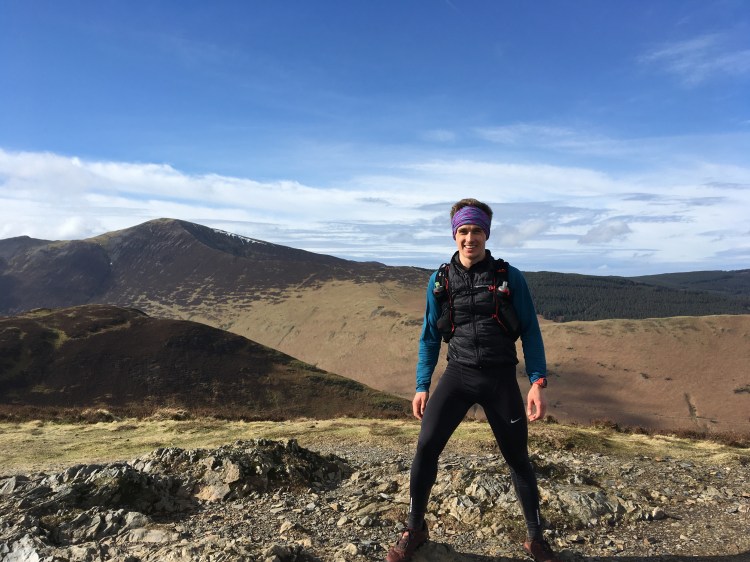
Even then, I didn’t feel like it was in the bag. I caught a chap to ask for a picture and turned to the joyous descent down to Braithwhaite.
IMG_4947
Credit: The lovely chap on Barrow

I was running – properly running downhill (apart from where I fell over, but it was a quick save). I was genuinely astonished.

I had feared back in August that I would get cramp, injured, or mentally lose the will to keep running. But there I was, entering the final 5k of a 30 mile run at pace.

8 hours 11 minutes

I gritted my teeth as I came into Portinscale, throwing myself up the hill past the Farmers Arms. It seemed fitting to be finishing a run here, past the B&B I had stayed in on my first ever trip to the Lake District last May.

I crossed the bouncy bridge over River Derwent, jumping past startled walkers. I kept making horrid grunting noises in a vain attempt to say “hello” to everyone as I normally try to, but given the rather aggressive way I was saying it I decided just to shut up.

The final gravel straight lay out in front of me. I remembered back to my first run up Cat Bells, and that day running with Lewis to Moot Hall at the end of his BGR. And then, out of nowhere, a roar erupted above me as the two jets from earlier soared across the sky.

I was getting a god-damn fly-over, and I don’t accept your argument it was coincidence.

I gave myself a chance to walk and breathe as I hit the tarmac again in Keswick. Come on, I wanted a sprint finish.

8 hours 22 minutes

I gave myself a 10 second walk before picking it up. I bounced up the road, past the traffic lights, the people and shops, up the street towards Moot Hall and on up, up. Arms pumping, I was pre-empting the movements of every sentient being in front of me – adults, kids, dogs, cats, banjo player – dodging them as I rounded the corner to see the huge sign of George Fisher ahead.

8 hours 23 minutes

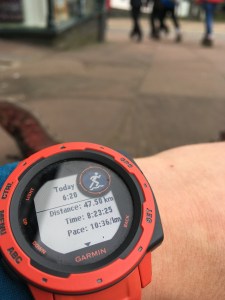
I slapped my hand against the shop door and stopped the clock.

8:23.25

It was done. I was done. I sat on the ground, legs outstretched, sucking in air.

“Have you just done the Tea Round?” a voice said above me. I confirmed, looking up to a woman holding a bundle of shopping under her arm.

“Oh! Brilliant! I could hear someone racing up behind me and I was like, ‘That’s someone finishing their Tea Round!’ How was it?”

I gave a brief summary. Turns out she did hers last year, but had been dealing with an injury since not long afterwards. Mental note: Take time to recover.
IMG_4948

She congratulated me and went into the shop. I pulled myself upright, taking up my John Wayne walk into the store to collect my jacket and shoes Bo had left behind the counter.

The assistant handed me the drop bag and my free tea and cake voucher to produce in the cafe, which is conveniently situated at the top of several flights of stairs.

I ordered a bowl of soup, a scone with cream and jam, and that lovely pot of tea I had been craving for hours. Sitting down, I looked in front of me. Without realising, I had sat directly across from the window looking out to the fells, the peaks of the Abraham’s Tea Round painted on the wall above.

I had sat here seven months previously, and laughed at the idea of completing the round. Now, I was sat with a scone and a cup of tea, content and unashamedly proud that I had done it.

Gruh-gruh-broooooooooooom! Pssssshhhhhhhhht! I opened my eyes as the passengers cried with excitement and the bus inched forwards. Finally, it was time to head home and have a beer.

Strava trace here.

Donate to the John Muir Trust.

🔴 LIVE: Dom Ainsley Wainwright’s Winter Record Attempt

758i VP There is No Map in Hell_COLOUR PLATE.indd
Steve Birkenshaw’s map of the Wainwright’s Round

Dom Ainsley is currently on the Lakeland fells attempting to set a new winter record for the completion of all 214 Wainwright’s.

There is no record currently set for a winter round, but Ainsley is also eyeing up Paul Tierney’s summer record of 6 days, 6 hours and 5 minutes.

The project has been titled #2x214Wainwrights. Live tracking for the winter record attempt can be found here.

Scroll down the page for more information on who Dom Ainsley is.

Do you know Dom? Are you out supporting him? Live locally and have shots of conditions? Share images, stories and videos to up2summit@gmail.com.


🔴 Live Updates of Dom Ainsley’s Winter Wainwright’s Round

Thursday 20 February – Day 5

19:03: Dom has posted an update on Facebook saying he is stopping. He has said he is still determined to complete the #2X214Wainwrights but will postpone his winter attempt to December due to severe conditions.

Thank you to everyone who has followed the live stream and well done to Dom and his team.

17:09: Stand down. Looks like it’s over…unless he’s off for a pie and a pint/ return his pricey tracker. How would it sit with everyone if he came back tomorrow? Still valid? Hardly a single push then, is it? Will check again later to see if he’s gone back and then give my congrats etc.

13:30: Still no movement on the ground according to Open Tracking. There seems to be/has been some disruption in communication between Dom and would-be supporters, and lack of correspondence from support vehicle. No one sure where everyone else is right now.

10:00: No updates as yet. Signal in Langdale Valley is quite patchy. He is 27% of the way through with 4 days under the belt. Does that mean – if he continues – he will be out for just under 16 days? Questions being asked as to whether finishing in March constitutes a “winter” round. At least it’s a leap year…  Weather on Bow Fell to be light snow showers, fog and 43mph constant wind. Wind chill -14C. (Total time: 98:50:18)

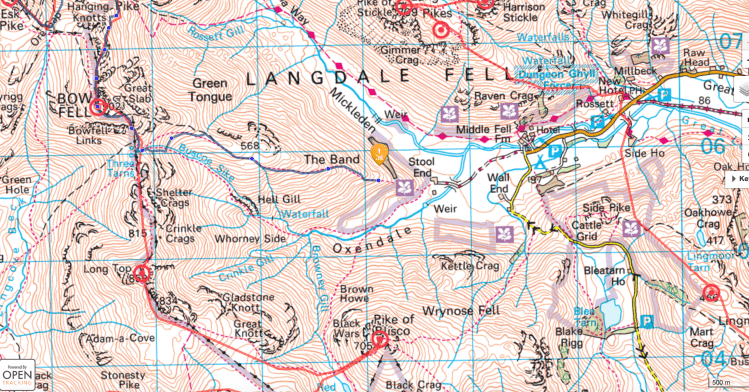
07:50: Morning, everyone. Where are we? Dom headed into the Langdale Valley last night and, according to a Facebook post, was unable to contact his support vehicle for 5-6 hours. Mentally, that will have taken a bit out of him. He has since met up with them, and appears to have been transported round to Wrynose Pass. He hasn’t sent out a signal since before midnight, but it is possible he will be moving in the next hour. Will he head up Pike of Blisco, head back to Long Top and return to Cold Pike? (Total time: 96:40:10)

Wednesday 19 February – Day 4

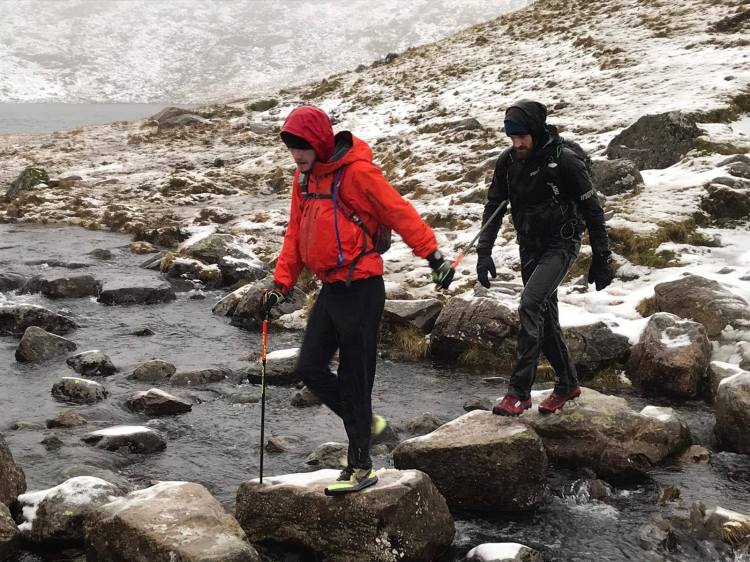
20:12: Post from Paul Tierney on Fellrunners UK: “Myself, Charlie Day and Matthew Beresford went in search of the Dom today on his Winter Wainwrights attempt and trotted for a couple of hours with him. Suggested he accompany us down to Langdale to get out of the grim conditions for a bit but he was having none of it. He eventually decided very sensibly to pop down the band and get a bit of shelter in langdale. I think the 3 of us were in agreement he’s as hard as nails. I’ve no doubt he is strong enough to get round. Just hope the weather gets a little kinder for him over the coming days. Not safe to be on your own in those conditions.”

86970831_10156659844080966_4079270748449931264_o
Dom (left) and Paul (right). Credit: Matthew Beresford.

18:52: A wee birdy tells me Rob Jebb has been out with Dom today. Reports suggest he’s heading to Old Dungeon Ghyll for shelter – unsurprised!. Anyone know if there’s a winter record for a Wainwright’s pub crawl?

Screenshot 2020-02-19 at 18.55.04

17:43: Is this the end? Ainsley is making his way down Bow Fell into Langdale. Support vehicle hasn’t pinged location since 13:37 so unsure of location. Is he calling it a day? Expecting Seathwaite was original stopping point today – a long way away. Weather has reportedly been garbage all day. Just 10 summits touched. Is he collecting himself before another bash tomorrow? Maybe in the Old Dungeon Ghyll! (Total time: 81:20:35)

14:23: Went for a run – what did I miss? Got to hand it to him – every time he seems down, he gets up again. Reports on the ground suggest deep drifts in places along the ridge, potentially explaining the wide detour. Currently ascending to Great End. Split between Lingmell and Scafell Pike only 3 minutes slower than Paul’s, so he appears to be moving relatively well. But cannot compare individual splits too well. (Total time: 78:58:54)

12:48: Dom appears to be taking the longer route around the base of Scafell Crag. Rough ground above and quite a way to drop down. Not sure how he will get back up to main path. The wind is quite strong too, so may be seeking some shelter. Tracker has not pinged since 12:39. (Total time: 76:58:12)

Rake

09:29: He is up and moving. Day four starts from Wast Water, taking in the Eskdale Fells before heading over to Scafell Pike. Weather on Scafell looks sub-optimal, with 60mph gusts and rain/hail. At least there is little quibble as to whether this is being done in winter conditions. Will he hold up for the following days in sodden shoes and constantly wet clothing? Split from Buckbarrow to Whin Rigg is 12 hours 22 minutes. He is a full day behind Steve Birkenshaw’s summer schedule. (Total time: 74:12:29)

Tuesday 18 February – Day 3

20:50: Ainsley joins support team. Just over 60 hours has passed.

19:35: End of day three in sight – just! Support vehicle has been in place at base of Buckbarrow. Dom has been slogging away over Yewbarrow – perhaps the most monumental 627m mound known to Lakeland fell runners. As he progresses, there has been a growing support over social media. I will hopefully get a more detailed update once he reaches his support team.

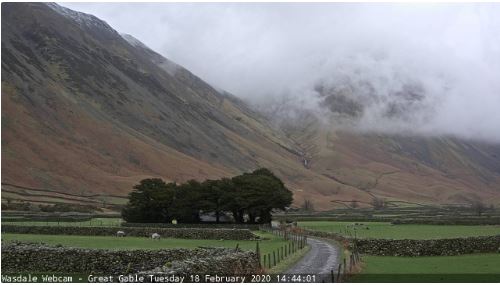
14:45: Dom has been going for a total of 55 hours and has touched 40 summits. Currently making his way around the southern Ennerdale fells and onto Yewbarrow shortly. Webcam shot below is taken from Wasdale. According to post from his support team, he still aims to complete in 7 days – tough to see that happening.

Wasdale 18 Feb 1445

11:30: We are on the move again. Ainsley got onto Gravel Fell just after 23:00 last night and has just started up on day three. Thirty-six fells in that time, a little over 16%.

Monday 17 February – Day 2

16:20: That’s Dom finished the southern Buttermere Fells. A lot of running into the wind all day.

86633704_10221751905490440_5621657855938527232_o
Dom on Fleetwith Pike. (Credit: Charlie Day)

10:50: Just touching the top of Kirk Fell. Not a bad time from Great Gable of 44 minutes – 15 minutes slower than Paul’s split. Weather in Borrowdale appears reasonable, but wind speed high with gusts up to 40mph at groundlevel!

05:10: Long overnight stop. If tracker is correct, a full 10 hours spent in Stonethwaite.

Sunday 16 February – Day 1

21:11: Update on the ground: “Weather was beautiful but wind very serious on top of Place Fell around 2pm this afternoon.” Storm Dennis appears to have left large parts of the fells sodden.

13:55: Ouch. The Pewits must be stodgy today. Storm Dennis still knocking about. Down into Rosthwaite over 6 hours since setting off. Slowly building into it?

07:50: First top – Latrigg in 31 minutes.

07:15: And he is off! Reportedly was set to start at 04:00 but weather has likely put pay to that idea. It will be hard to compare times with that of Paul Tierney or Steve Birkenshaw who both made attempts in summer.


Who is Dom Ainsley?

Dom Ainsley is a relative unknown in the fell running community, seeming to be more associated with mountaineering and climbing.

According to his sponsor Ellis Brigham’s biography, Ainsley is a 23-year-old “climber and mountaineer who has been in and around the mountains his whole life, but recently developed an idea for a series of endurance events that would really challenge him physically and mentally in the hills.”

As well as Ellis Brigham, Ainsley also acquired sponsorship from Audi a month ahead of his record attempt.

He announced he would be attempting the #2X214Wainwrights attempt back in September 2019 on his Instagram.

More than a race: Devil’s Burdens 2020

finish
On the line!

Mud, tents, colourful vests, a field and a hubbub of noise with shouts and cheers erupting all over. You’d be forgiven for thinking it was a music festival.

Put hundreds of hill and trail runners in a field together, and you have an atmosphere as high octane as T in the Park; with cowbells, a new format, and a thumping speaker courtesy of the newly-formed Fellkour Squad, the Devil’s Burden Relays were back in town.

There was a new kind of madness at this year’s event. In the past, the good locals of Fife had to duck and swerve to avoid the ’59 plate Vauxhall Corsas and Berlingos zooming around the impromptu ring road at the base of the Lomond Hills, dropping off their vest-clad occupants at various intervals along the route.

With a new decade came a new format: All relay legs would start and finish in the historical town of Falkland, with a central base for teams to setup tents and watch their runners zip in and out on their various adventures across the Lomonds.

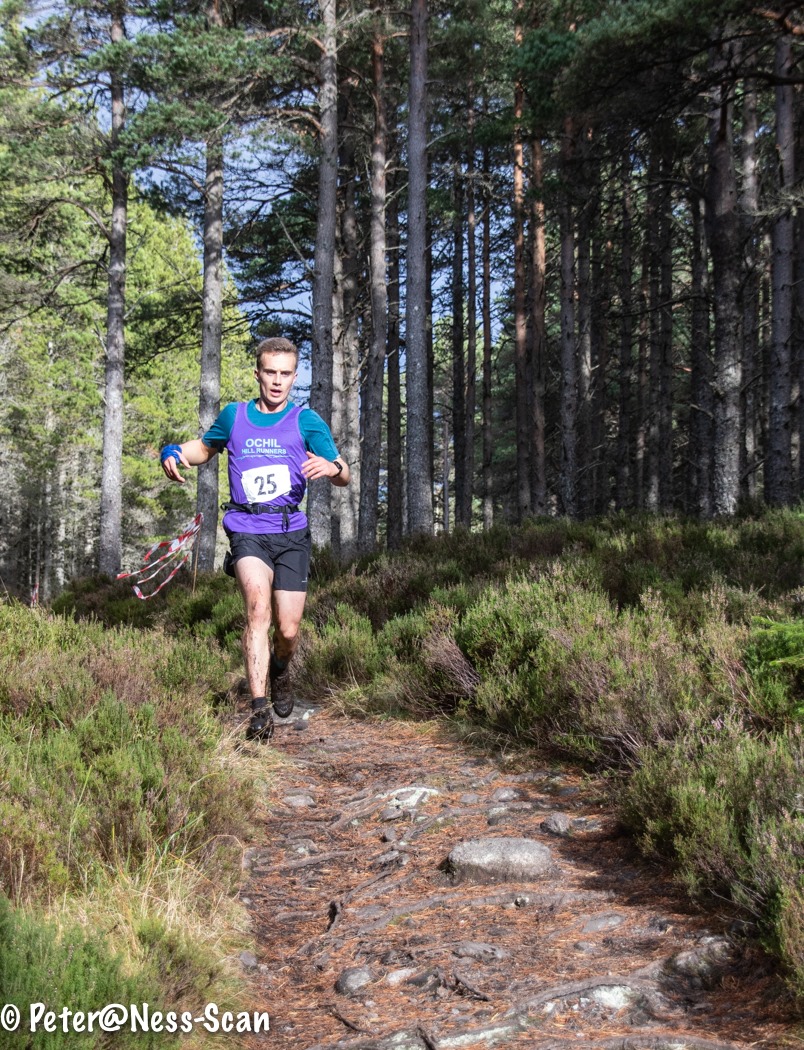
For my sins, I had taken up the mantle of Men’s Captain for the Ochil Hill Runners, following in the large footsteps of John Stevenson. A foolishly uttered, “What does the captain do?” at the Ochil’s AGM in December had seen me take on the unenviable task of organising the teams for the Burdens.

With just 36 hours to go, it appeared some sinister plot was afoot: one tweaked knee, a freak rolled ankle in the garden and a pulled back muscle at work just 24 hours before the race, putting three excellent runners out, sounds like the start of a Midsomer Murders episode to me.

Like a game of Jenga, runners came out and others placed on top – my only hope was the whole thing didn’t come tumbling down.

Getting to Falkland at 9.30am on race day and seeing them all there was quite surreal, like Aragorn in The Two Towers seeing Gandalf and the Riders of Rohan on the horizon: My god. You really came!

They were all there, ready to run for club and county. I could not have done it without former captain John. His knowledge of the club and its members’ strengths was like having Alex Ferguson on my shoulder.

He laughed on the phone the night before as I panicked to get teams rearranged: “You can see why it’s called the Devil’s Burdens, can’t you?”

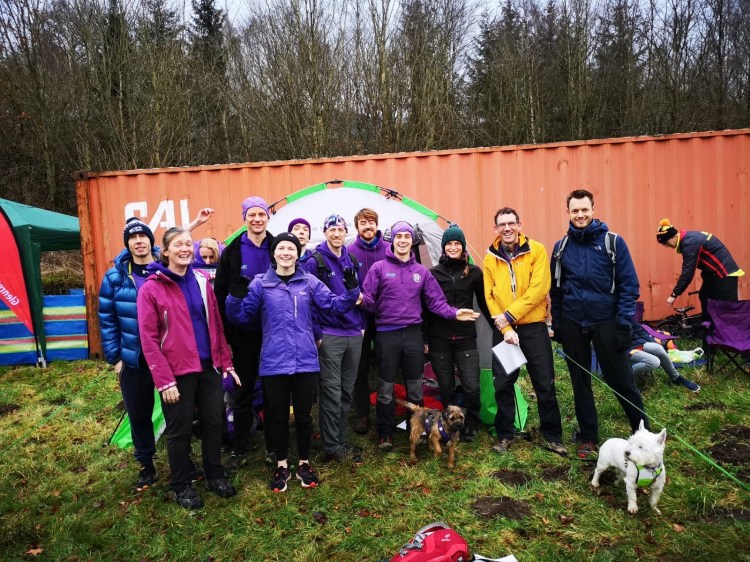
team
Team 2020! (The dogs didn’t run this year)

We clapped out the leg one runners, who marched out the field like the first wave of infantry. I had decided putting myself and fellow Ochil/fellow Ross on a leg together, because that seemed to make sense for the main reason that we had the same name. Ross is a strong runner, so I knew I would have to be on form to keep up with him.

Ross and I jogged around the field, anxiously waiting for Lewis to return from leg one. I half contemplated quickly dropping the kids off at the pool, but decided against it as Ally Beavan shut the loo door behind him and a queue stood agitated in line.

A flash of purple and Lewis was in the field. We were ahead of the Ochils MV40 team! At last! Heart thumping in my ears I cried, “He’s here!” to Ross and stood at the changeover point.

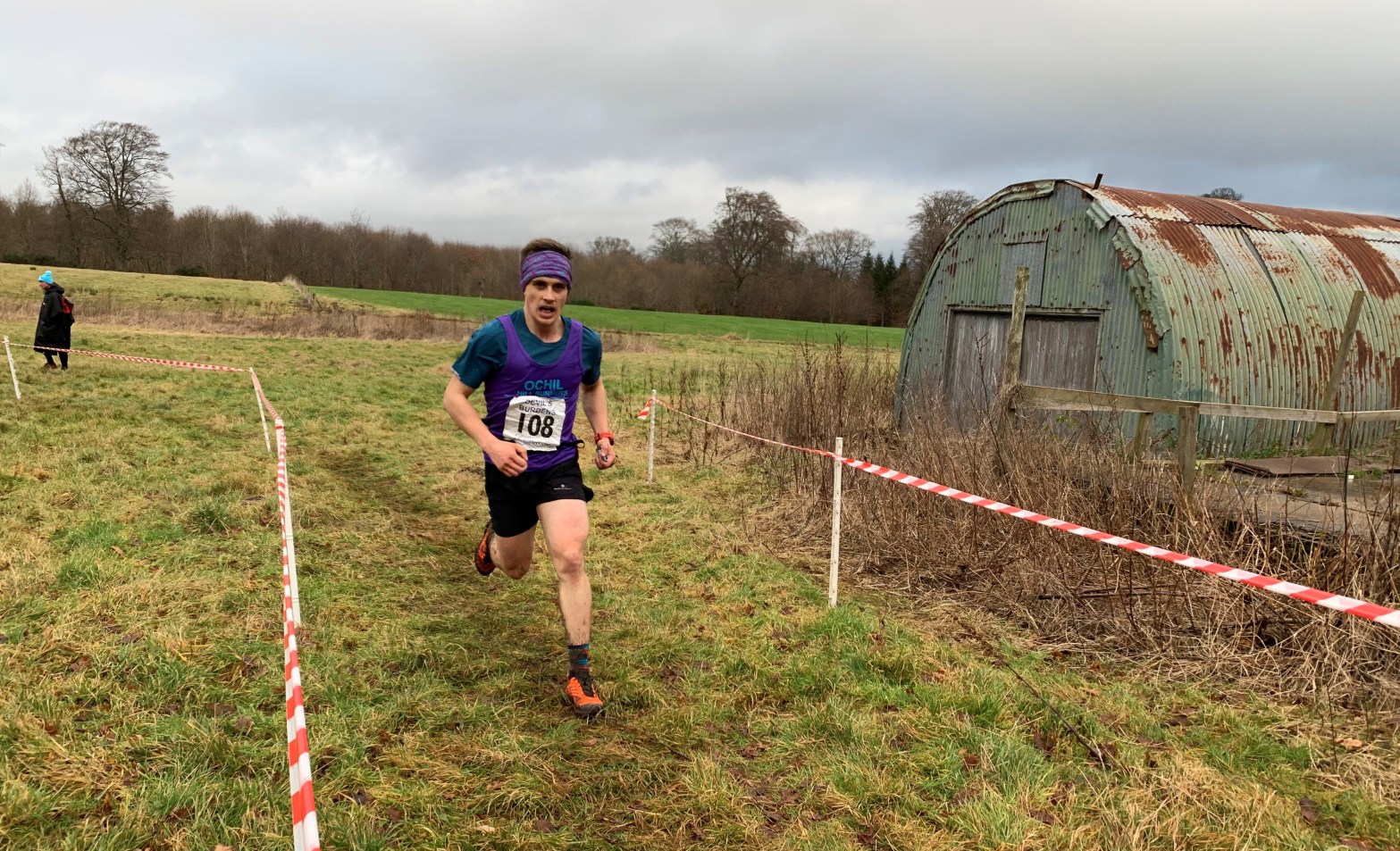
Lewis had ran brilliantly, hurtling around the ankle-twisting field in 7th place.

Then we were off. “Come on, Ross!”, “Go on, Ross!”. Cowbells clattered in our ears as the brain switched into race mode. At least people didn’t have to worry about shouting two names as we tore out the field.

After all the excitement of the start, it feels strange to suddenly be on a solo mission up the road. The Ochils MV40 leg one runner, Graeme, passed us heading toward the field. We were being chased.

We fell into a rhythm, my legs ticking over nicely as we climbed steadily to CP1. The Fellkour Squad passed us in their new traffic cone-coloured vests, steadily building a gap as we climbed up the first grassy bank.

The route snaked itself through a stumpy plantation, the lower branches forming a shadowy tunnel. Ross hovered by my shoulder, coolly punching our card at CP2 as we left the gloom.

Ahead, a wrath awaited us: Sheets of rain were being dragged across the barren plateau on a deasy wind, the entirety of West Lomond capped with an upturned bowl of pea soup. For the next 3km we followed the wide track that thrusts its way across the plain, taking advantage of the lulls in the wind offered by the lumpy landscape.

Leaning sideways into the gale, we followed the two fluorescent orange vests as they bobbed like fireflies ahead of us. The steep ascent up West Lomond jolted us into remembering this was, in part, a hill race. Thankful to leave the ATV track behind, Ross took the chance to set the pace, marching straight up the slope as I chomped on oxygen.

I had taken great pleasure in my clever move to set the compass bearing in the field for the only bit of navigation we might need on our leg.

As we reached the top of West Lomond, I pulled out my compass and performed what I thought was another cunning tactic. I pointed to an unremarkable tussock in the general direction of ‘not-the-way-we-just-came-up’ and we dived down the hill just as another two teams came up behind us.

DB200271
Yes, you are going up there

Soon, though, I shouted to Ross, “BEAR LEFT!”. We did, contouring below the cloud base in the direction my compass was actually pointing. I managed to convince myself that my navigational fumble was actually a cunning move to throw the other teams off the scent, smiling as I saw a few continuing their hunt on our previous trajectory.

What a strategist.

Through a combination of running and bum-sliding, we reached CP4 and began contouring back in an easterly direction. We had gained some ground on the Fellkour Squad, and we tried to close the gap before they reached the dreaded fire road.

The final 4km of the leg followed an excruciatingly runnable track. Normally, this would finish me off, but somewhere during winter I have found flat speed! My legs felt excellent as we made the (extended) home sprint, running like the MV40s were right behind us.

Emerging from the forest into the finishing straight, I made towards the gap into the field, nearly rugby-tackling the marshall in my commitment to get to the handover as fast as I could.

After battling through the tussocked field, we hit the changeover, sending our next runners on their way.

Ross had stuck in for the final 4km, his legs refusing to turn in their usually well-oiled fashion after a month off with a back injury. If they had, I think I’d have had a rather different experience. We had done it, though. We had done our part.
As more runners came in, I went back to the Ochil Hill Runners’ tent, layering up to cheer the rest of our teams in. Shouting and running back and forth to take pictures of them coming in – it’s hard to say whether I enjoyed the racing or the spectating more!
When the winning team, Carnethy, came in, the assembled runners and watchers jumped up and down, boosting them around their final lap of the field like a wave to a surfer.

It might not be T in the Park, but tea and soup in a hall of rainforest-level humidity after such a phenomenal day takes some beating.

Huge congrats to all the Ochil Hill Runners teams over the day. The Open Seniors finished 9th overall, beating the MV40s by two spots! The MV40s finished 3rd in category. Our other two teams, Mixed Seniors and FV40s, both finished 2nd in category.

Full results here.

Strava here.

Starting 2020 with a bang – and a bump

82831624_1060590074292251_158187150204993536_n
Out the gates hard at Scout Scar! Credit: Benji Grundy

“Right, I’ll just shout, ‘Ready, go!’. Ready! Go!”

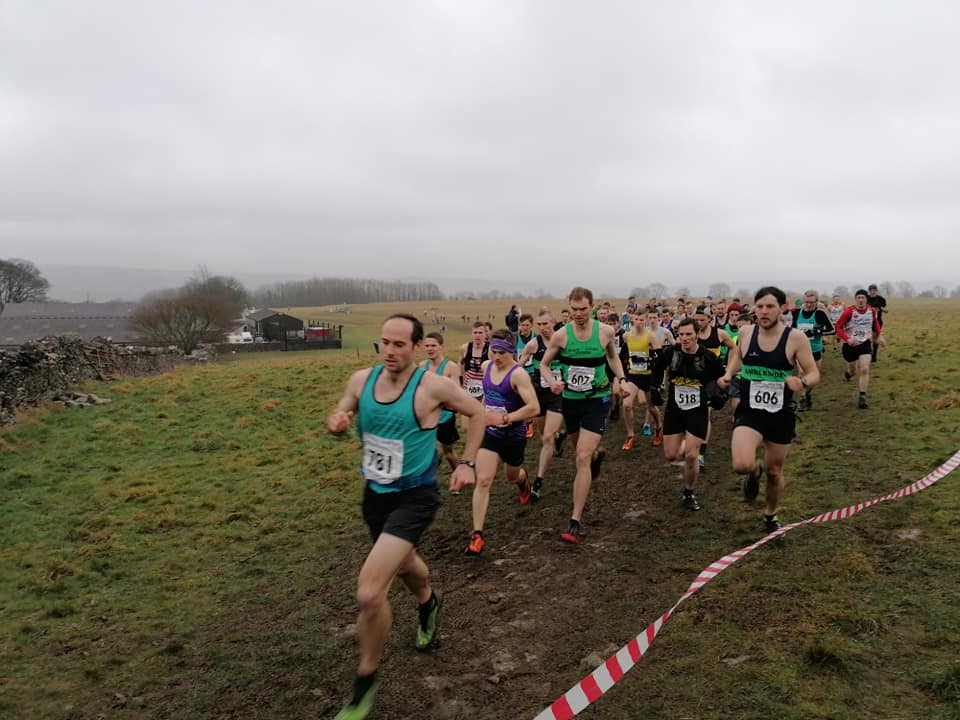
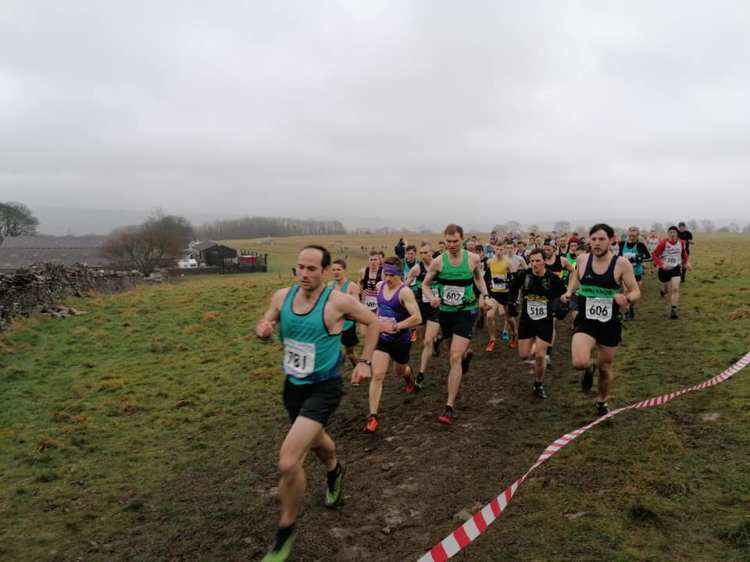
The molecules in the air turned from transparent to thick brown as Catherine wheels of mud spiralled through the air around us. Leaning forward, we pulled our feet from the quagmire beneath us, urging bare legs to turn quicker.

Four hundred runners stampeded towards the narrow gate just 100m ahead of the starting line, a thick wind blasting our faces as we made the leg-sapping first ascent up the limestone cobbles of Scout Scar.

Like the waves of drizzle and clobbering wind, the terrain of the Scout Scar, just outside Kendal, rose and fell with demoralising frequency. But there was hardly any time to take that in.

Breath coming in short rasps, feet sucking through heavy mud, a dozen runners around me, each in various degrees of under-dressed-for-the-conditions by any reasonable individual’s standards.

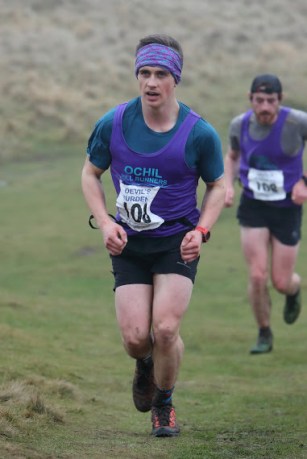
Two minutes before the start, I looked around me as other runners took off jackets and waterproofs to reveal short shorts and vest beneath. Looking down at my own get-up of a t-shirt under my racing vest, I felt positively over-dressed.

If a bunch of lads from the Lake District were bearing all in these driech conditions, what kind of Scotsman was I to layer up? Naturally, the t-shirt was ditched, but I decided to stay sensible and at least kept my buff around my head as a headband.

After all, I am not a complete maniac.

Twenty minutes into the race, we took another of the greasy descents from the escarpment, leaning forward into the gorse-lined trod. As I past another runner, the opportunity to pass another via a cheeky corner cut presented itself.

I jumped into the straight line, taking just enough out the corner to nab a spot. The next left-hander met me with a suddenness I had not expected. As I tried to make the turn, I felt the grip of karma on my heel.

The graceful sideways slide went on for what felt like forever. Eventually, I had to park it to stop myself sliding into an abyss of gorse. I performed the best breaking manoeuvre I could think of: I planted my backside on the ground.

It just so happened, though, my parking spot was not exactly a “soft landing”. As my Pops would say, I got “a right boot up the arse” from one of the innumerable rocks crumbled upon the ground.

It knocked the wind right out me, my coccyx yelped as it thudded into the hard ground.

“Y’a’right, lad?” asked the chap I had just pulled a sneaky one on in his lolloping Cumbria accent. I waved a hand by way of confirmation, adrenaline pulling me back to me feet.

Accelerating again from nought to 60 as quick as I could manage, I continued down the path, which was now greasier than a napkin in kebab shop takeaway, attempting to make the slides work for me.

We turned left, with the hope that this might be the final climb of the race. The wind blew again, my cheeks feeling the cold bla-

Wait. Which cheeks? As I powered up the gradual incline, I lowered a hand to the back of my shorts. In retrospect, I thought of it as a kindness to my pursuer that I put on the burners, only hoping that maybe the under-short was actually not ripped.

Finally, we rejoined the path we had previously ascended, turning back down towards the narrow gate. For spectators, the Scout Scar race is an excellent one to watch, because you can stand within 100m of one spot and see the runners three times.

I passed my girlfriend for the final time as we hurtled back into the starting field, I attempting to get my legs to pull themselves out the mud and lactic acid just that little bit faster to pass the runner ahead.

In the end he pipped me at the post, which is maybe best for both of us. Thankfully, my hard work paid off – the next runner was another 20 seconds behind.

I sucked in oxygen through wheezing breaths, planting myself on the (soft) wet ground. Looking around, shaking the mud-splattered hands of the other runners, I smiled.

Bo wandered up, handing me my extra layers.  “How was that, then?” she asked. Before I could moan about my sore backside, the fact I could have been quicker, that I should train more on the flat, I laughed and said: “Awesome”.


81183448_10212550078620806_9160772304400023552_n
Supporting Lewis’s Bob Graham Round

2019 had been a year of incredible experiences: from days above the clouds in the southern highlands, to many days in the clouds like on the Trotternish Ridge; from beautiful solo mountain experiences, to supporting friends to take on their challenges; from cramp-filled purgatory on the Ochil 2000s, to descending lunacy in the shine of Ben Nevis.

Beyond race results and times, 2019 was a year of people and places. I had so many incredible connections with people in amazing landscapes in the past 12 months, and I look forward to sharing more of those experiences with them and the readers of this blog.

2020 started with a bang (and a bump). Long may that continue!

Full results here.

Strava here.

Heart to heart

“So, it’s called supra-ventricular tachycardia…”

My interlocutor looks at me slightly dumbfounded.

“You can just shorten it to SVT.”

“Is it, like, deadly?” they asked.

“I mean, not exactly. It can fatigue the cardiac muscle, which might be a problem, but rarely does anyone succumb to it.”

“But, what does it feel like?”

I rest my palm on my chest over where the thumping drum of life pounds away slowly.

“I guess, if you are running full pelt for two minutes, your heart is right up and you aren’t able to form a full sentence because you are out of breath…it’s sort of like that.”

“Right…”

“But it can happen when you are tying your shoe laces.”

“Damn. Should you currently be running 10 miles from the nearest road on a mountain in shorts then?”

“Nah! We are fine, let’s keep going.”

thumbnail (1)

When I was in my late teens, I was “diagnosed” with SVT. Those of you who have run with me might know what I am talking about.

At some point on a run, I can experience a sudden, stratospheric increase in heart rate. I can be running along quite happily at 130bpm – and then be at 190bpm for really no reason.

It isn’t always exercise induced, though. It has happened when tying my shoes, stretching, emptying the dishwasher, climbing stairs, hopping off a step. Often I can tell it is about to happen, just due to the way I have moved.

This does not happen all the time, I must add, and I rarely experience the “warning” symptoms of dizziness and nausea. Bouts can be half a year apart, or a few hours, it is totally sporadic.

When my heart does decide to have its own little party, it can last anywhere from two minutes to thirty. And when it stops – it stops. Within a single beat, it can drop straight back to resting, as quickly as it jumped to maximum.

Why am I telling you this? Well, let me explain some things first.

What is supra-ventriclarry tachycaca something something?

Supra-ventricular tachycardia (SVT) is a cardiac arrhythmia that affects around 35 in 100,000 people.

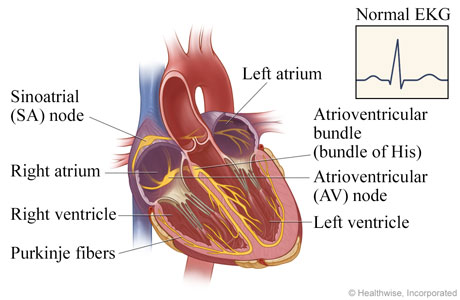
In the picture below, you can see the heart has two nodes, the SA and AV, happily pinging off electrical signals to contract the heart. Along with that is the atrioventricular bundle (a bundle of His, or Hellos, or any other form of greeting, I guess).

h9991262_001

What happens is an incorrect electrical signal is emitted around this bundle, causing the heart to rapidly accelerate over 100bpm. When exercising, it can obviously go higher.

Essentially, the bundle of His wants to steal the party and send the happy bu-bump of the heart into a bubumbubumbubumbubum.

Diagnosis

I cannot remember exactly what made me go to get my heart checked out. I remember when I was around 16 or 17, I was given a mini ECG machine. Any time I got a bout of SVT, I was to slap several sticky readers onto my body and record it with a machine.

Naturally, this was hard, because the bouts were totally unpredictable. No matter, I got some and sent them back to the hospital.

Diagnosis sounds too scary, so I prefer “identification”. The doctor told me I had SVT.

“How do you fix it?”

Well, acute treatment can be used with a drug called adenosine (for those of you who did anatomy, yes, this is art of the adenosine tri-phosphate chemical which assists in energy production).

That isn’t a long-term solution, though. Beta-blockers are also an option, but that can really lower your blood pressure and, as someone with already low blood pressure, I did not fancy that.

The permanent solution is radiofrequency ablation: a small wire is fed into the heart, zaps the bundle of His to form a slight amount of scar tissue, which resets the whole thing.

E0667BBB-8578-49F0-97C0-BD7EEFF0E94B

Great, so now what?

At the time, I did not want to get the treatment done. I was relatively young, and the doctor said it could just work itself out. He told me to avoid excessive interval training and straining too hard, and I was out.

I then proceeded to go into powerlifting, cycling and hill running, pushing weights and doing intervals. And, to be honest, not much happened. I never go crazy with these things, and I never had a problem in those sessions and, in fact, still don’t. Even when racing, I never have issues.

Nevertheless, the discourse started to change around heart health in athletes.

“A recent estimate of SCD [sudden cardiac death] incidence ranged from 1 in 40,000 to 1 in 80,000 athletes per year.”

Now, SCD is a different beast altogether to SVT. However, these were still young, incredibly fit athletes who also tended to be male that were dying due to SCD.

A close friend of mine had two friends pass away due to the condition. Meanwhile, high profile instances of SCD, particularly in cyclists, hit the news. Michael Goolaerts’ death during Paris-Roubaix raised serious questions over the safety of young cyclists and athletes in general.

Although I was not at imminent risk of cardiac arrest (the risk in SVT is very low), my friend was adamant I get my heart checked out. Indeed, with greater discussion about heart health in young people thanks to organisations like CRY, people are getting screened for serious heart issues.

Back to the present

Recently, my instances of SVT had become slightly irritating. After moving out, I had started running with new people. The last thing I wanted to do was to be blowing out my backside to keep up thanks to my rather rubbish super-powered heart going into hyperdrive.

As it is with these things, it tends to be a self-fulfilling prophecy! As soon as I got anxious about it, the SVT would kick off. Classic. I’d then have to do the: “Yeah, well, it isn’t that serious, and I have had it checked, and it is not going to kill me it is just annoying, sorry it’ll go away.”

Or, I will make the excuse to need to take a leak just so I can try get rid of the thing. This usually involves pinching my nose and blowing hard (a valsalva, as it is known). So, if you run with me and go “Huh! Ross has been in the bushes for a while,” and see me emerging looking cock-eyed and red-faced, do not be alarmed.

Success rate for the valsalva manoeuvre is about 80%, but when it does not work, that is really annoying.

Recently, I spoke with my masseuse about it. Her daughter has some heart issues too – and does horse vaulting, spending time upside down which makes her face look like a beetroot (her words, not mine).

She theorised it was to do with the preload of the heart that was causing my episodes. A lot of the times it kicks off (bending down, running after not moving for a time, sudden jumps, etc.) the preload to the heart increases. The science sort of loses me here, but any further information you may have, let me know!

Anyway, all I really know is the frequency of the bouts has increased slightly of late, and it is just annoying now. So, I went back to the GP.

thumbnail

Back to the GP

I lay half naked on the white bed in the GP’s, a small nurse applying a dozen cold patches over my body.

“So, you are quite fit then, I see”, she said.

“Ah, I keep myself busy.”

She laughed.

“Do you go to the gym, then?” she asked.

“A little bit,” I said, which is 100% true and not just being annoying. “I tend to run a bit more, though.”

“I see. Through the woods?” she asked, indicating towards the Hermitage beyond Dunkeld.

“Sometimes, but usually up the hills.”

She looked away from the ECG monitor and looked at me. “You run up the hills? Like Birnam?”

“Yeah, but I enjoy Munros and stuff.”

We quickly got chatting about her brother, who likes to climb Munros, but “I don’t know how anyone could run them!” she exclaimed. She was great.

“Well, your heart rate is very healthy. Resting is around 40bpm.”

She quickly popped next door to show the GP. I put my shirt back on. She came back in, saying the GP was pleased at the ECG and would refer me on to the hospital.

What now?

Well, now we wait! My referral could take some time. I will be getting the radiofrequency treatment to permanently disable the electrical pinging in the bundle of His to get back to a normal heart rate.

Why are you telling us this?

I suppose the reason is two-fold.

First, do excuse me if you see me emerging cock-eyed and red-faced from a bush.

Second, your heart should not give you cause for concern – it is too valuable. You are doing no one any hassle in getting checked out. If you, or someone you know, are experiencing an abnormality in your heart, get it checked out.

My condition is far from terminal, but I am close to what you would describe as an athlete. I train, I race, my heart is important. As soon as my bouts became more frequent, I went back to the GP.

If you have SVT, please do get in touch! Leave a comment, or find me on social media on Instagram or Twitter. I would be interested to hear your stories.

Until then, spread joy, dream big and keep it wild.

Meall a’ Bhuachaille Race 2019

My eyes slid open. I had been in a restless sleep of waking dreams, curled up like a hibernating hedgehog, goosebumps like prickles across my neck.

It was cold. I had a flashback to that cold bivvy above Kinlochleven at the start of the month. At least this time there was an extra layer of tarpaulin between me and the wintry air of the Cairngorms this time.

I pulled myself from my sleeping bag. The libations of the evening had not quite frozen since the temperatures had dropped. Lifting open the zip of the tent, the cold air rushed over my face like the breath of a fridge.

Around me, tents sparkled with constellations of water droplets, shimmering all the brighter in the frosty night. As I stood up, my hamstrings, calves and feet or yelled in protest at being awoken from their state of relaxation.

I hobbled off to the bathrooms, trying to figure out the question: “What had made my legs hurt more – the race, or the ceilidh?” One misconception about hill runners is that they are a weedy, wimpy breed without much muscle.

I can attest, as I shuffled across the damp grass, rugby matches tend to be tamer.

73261237_2636644826401103_3348478128845488128_o

The festivities marked the end of the 2019 Scottish Hill Running championship calendar, with the Meall a’ Bhuachaille race taking place the same day.

Since a phenomenal performance at the Ben Nevis race in September compared with a reasonable result from the longer Ring of Steall Skyrace, I hoped to replicated that good performance on the shorter course outside Aviemore.

At 13km with 700m elevation, Meall a’ Bhuachaille appears relatively tame. As it always is with these races, though, take out one element and another comes in; this time, it was speed that was the name of the game.

The day was clear and cold. After hitching a ride with friends from Fort William, I pinned on my numbers and got off on a thorough warm-up. The ever-pessimistic MWIS had forecasted for -15C on summits for the day. If they were true, it may have crossed the minds of some of the hill running die-hards to don more than a vest and shorts.

As it was, extra layers appeared a scarcity in this cohort, despite the lazy wind cutting through us.

The field was stacked for this race. Up front were Finlay Wild, Rob Sinclair, James Espie, Sam Alexander, John Yells, Andy Fallas, Robbie Simpson, Caroline Marwick and Heather Anderson. The men’s field was much deeper than the ladies for some reason this year.

I enjoy the hive mentality at the start of a hill race. Even if you can’t see the race organiser reach for his horn or whistle, a rustle of silence falls and faces turn to stone as we set ourselves for the start. Usually a “Oh! So, we’re starting” is voiced in surprise, such is the casual nature of it.

The horn blasted. Within seconds, the whole field is over the start. Within seconds, the leaders are 100m ahead, racing along at 3:30/km pace – about 17kph.

As I did at Ben Nevis, I kept my head level, keeping a constant turnover going and holding onto a different set of heels until I felt a need to pass. The first two kilometres went past at similar paces, around 4:08/km. This might have been a touch fast, so I reeled it back a little, conscious of a steady climb to Meall a’ Bhuachaille’s summit.

We left the fast fire tracks behind to follow the Allt Coire Chondlaich and the stepped path into the coire from which it takes its name. The south easterly wind picked up, splashing a chill over each of us as we climbed steadily higher.

We made it to the bealach, turning right towards the summit. By the halfway point in this climb, the leaders were making their bounding strides towards us. Finlay was some 45 seconds ahead of second placed James Espie.

As I neared the top, a slight nervous excitement bubbled up in me. I was briefly transported back to a jelly-legged descent in similarly blustery and cold conditions on Scald Law during the Carnethy 5. How long ago that seemed. It seemed appropriate to start and finish the 2019 season in similarly baltic conditions.

I rounded the cairn, wondering whether my legs would ping to life or fall to pieces with the change in gradient. Thankfully, the former was true. The cold seemed to take all feeling from my legs, meaning I could take obscene leaps and daring lines down the rocks and over the heather.

I felt like I was floating. My legs just turned beneath me, my torso levitating across the plush ground. I was passing people, flying down the side of the hill towards the bealach.

We joined a trod, leading us on the 600m contour around the base of Creagan Gorm. I settled in behind another runner, using him as a bit of a bog canary to find the holes ready to ensnare weary legs (all’s fair in love and racing, right?).

The climb up Creagan Gorm is another steady gradient, made easier with the wind to our backs. I passed two more, joining a mini tit-for-tat between two other runners who kept exchanging positions. Off the summit, I opened the throttle again, enjoying the freedom I was feeling in each descent.

75453433_2637244199674499_8690551347734380544_o
Finlay Wild on his way to a new record

I snagged two more positions with a cheeky line to drop below the pair of them. I led them off through a bit of a bog as we chased the summit of Craiggowrie, keen to make use of the frozen patches to cut some corners.

The frost meant the ground was firm in a lot of places (though, I was slightly chastised for mentioning this by a lady at the dinner who complained it was “alright for you fast sods! It’s a quagmire when we get there”, to whom I apologise).

I chanced a look up as we rounded the final cairn of the day. Our position at the prow of the plateau gave a tantalising, crystal clear view over the River Spey, lying like a blue ribbon wrapped around Aviemore.

There wasn’t much time to consider the view. From 670m, we had a muddy rollercoaster descent of 200m back into The Queen’s Forest. The rush of the descent took me with it. I was flying down through the rocks and mud, avoiding the grasp of the bogs by the skin of my teeth. Anywhere I put my feet, there seemed to be a sure landing, a firm portion of ground to spring from.

I battled with another guy right up until the forest before he nipped ahead when my luck ran out and I sank knee-deep into bright green moss. Not all was lost, though.

The final 2km is on an arrow-straight descent on fire roads, the type you just lean forward, take the brakes off and let gravity do the work. Ahead Stewart Whitlie – a competitor I benchmark off of when I am feeling good – came within touching distance.

I know he is a V50, but there was a small amount of satisfaction in pulling off a smooth pass of this unassuming terrier of a racer. I could see another Stuart ahead – Crutchfield – an even more coveted scalp, one I had never come close to, was in sight.

Over the last 200m, though, the road flattened out. The matches had largely burned out, and it was only with a lot of gurning and hurling of arms I threw myself through the last straight, over the bridge and across the line to finish in one of my best performances of the season.

In a time of 1:15.10, the Meall a’ Bhuachaille race was over, and with it the SHR championships. I must extend a massive thank you to Highland Hill Runners for an amazing event; Scottish Hill Runners for a fantastic ceilidh (particularly Angela Mudge and Dave Scott for all their work on the AGM, prize giving, dinner, etc.); my friends and clubmavtes for lifts, company and laughter this year; and to the hills and nature for being an absolute gem and existing.

75196331_939355409753874_1217003237001920512_n
Lee and I have had some amazing adventures this year. Looking forward to more before 2020!

Lastly, congratulations to Finlay Wild on a new record in the race (missing out on a sub-1 hour by eight one-hundredths of a second), James Espie for winning the championship and Jill Stephens for winning the ladies championship trophy.

This year, I had set the goal of completing the Long Classics and championship. For 2020, perhaps with a wiser head on, I will make the latter the priority. I have enjoyed the challenge of the longer races this year, but they don’t light up the fire in me like the shorter races.

With a slightly lopsided regime, I had gotten injured in the middle of racing season, missing a couple of championship races, meaning I did not complete the series. Next year, though, I am excited to take on those just announced for 2020:

  • Cioch Mhor
  • Stuc a’ Chroin
  • Yetholm
  • Hart Fell Horseshoe
  • Glenshee 9
  • Tom na Bat

I will do a full review of the year later in 2019. Until now, I am excited to set my sights on my first A race of 2020 (Stuc a’ Chroin) and begin winter training!

Until then, keep your running wild, your head in the clouds and your soul happy.

Full race results

Strava trace 

Simplification: Central Highland Bikepacking

“Do you guys want some cookies?”

A red Mazda had pulled into a lay-by, the driver exiting with a bag in his hand – a bag he was now holding out like a soigneur in Le Tour de France.

Andy declined, probably out of surprise. Bingo. I grabbed the bag in a single movement, cried “Thanks!” and put the bag of double chocolate cookies into the back of my jersey.

After riding 130 miles with another 50 to go, we might need a few cookies.

C2FC7FF7-020A-449A-A901-64012A55949D
Heading into the longest, loneliest and loveliest glen in Scotland

When I moved to Pitlochry, I went on a hunt to find people to run and cycle with. Some messages returned blanks; others, like the one Andy sent me, returned friendship.

After his successful West Highland Way attempt, Andy and I started talking about the next adventures. Bikepacking (cycle touring) became the subject of one run’s conversation.

I had bought a gravel bike before moving to Pitlochry, keen to explore new places, experience a journey through leg power, and be self-reliant. No sport is free, though, no matter how much people say it! However, a fortuitous conversation with a colleague who competes in this type of thing presented the chance to buy some touring bags.

Now the adventures could begin.

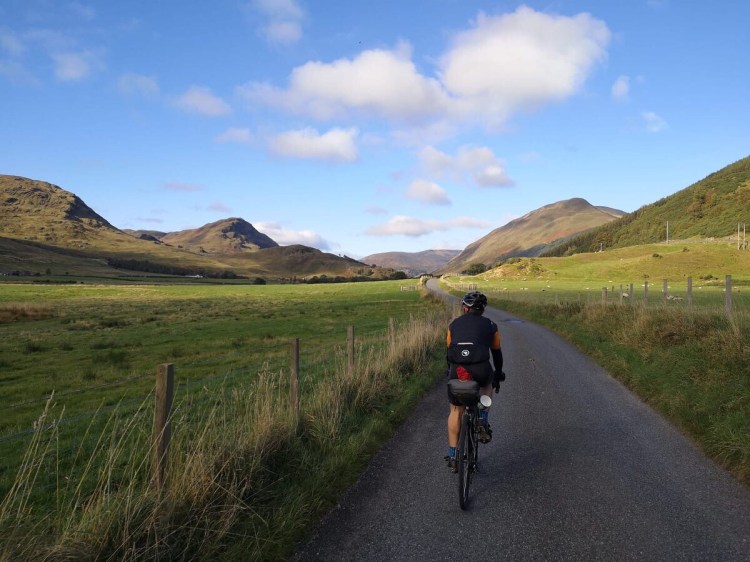
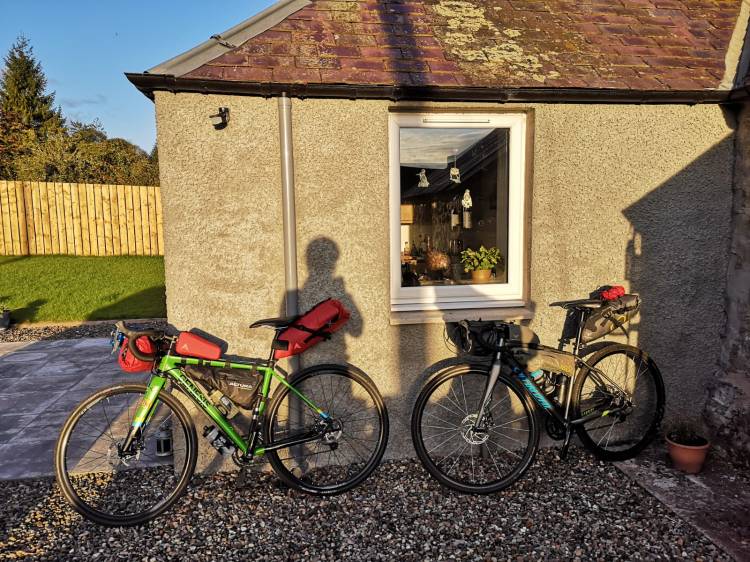
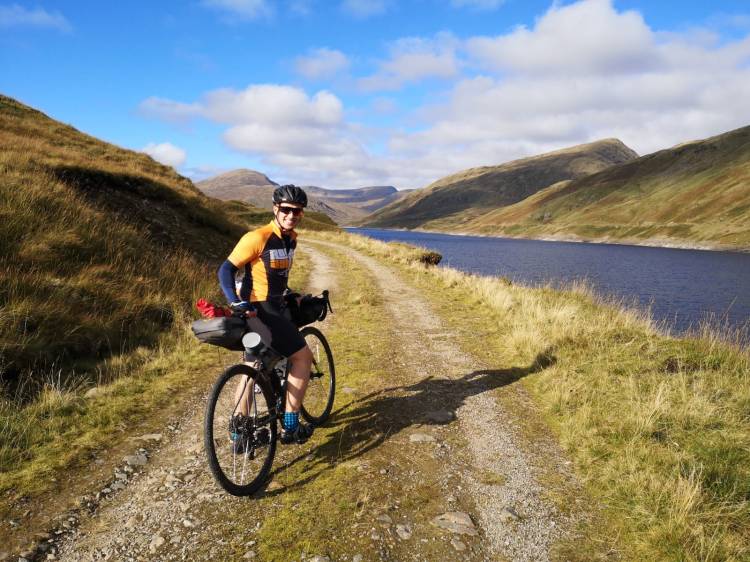
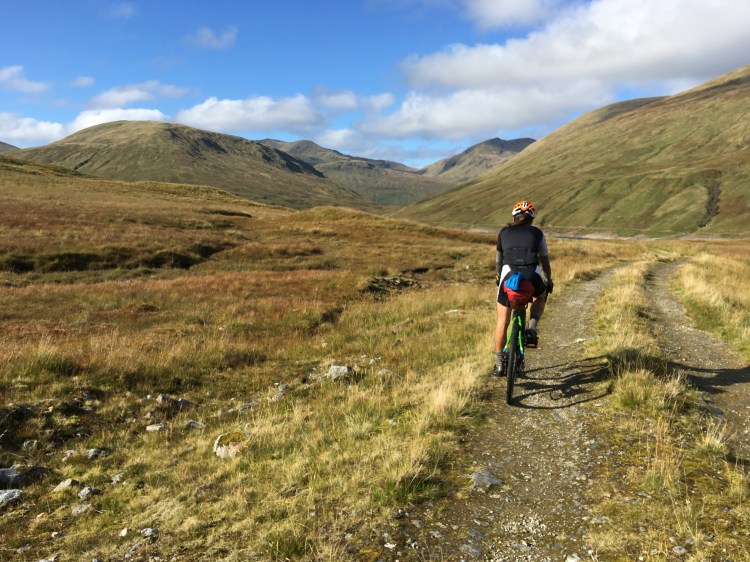
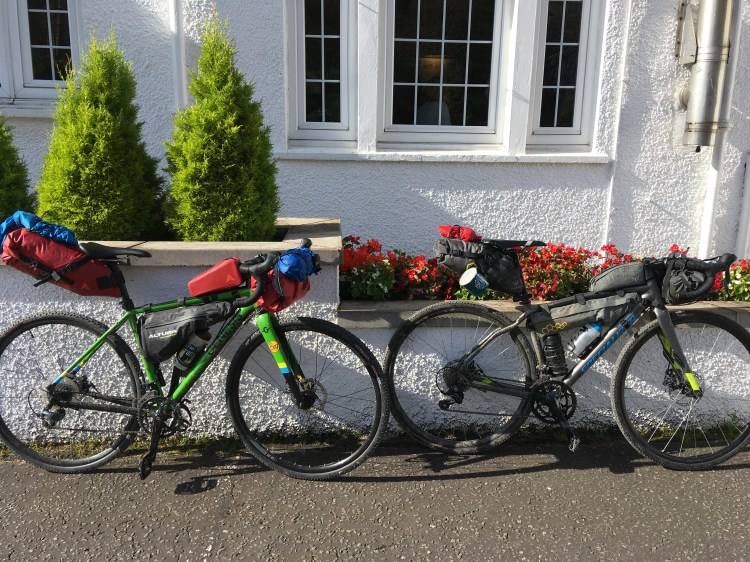
After Andy completed a tour of the Cairngorms over two days, it seemed logical to do a similar circular route out west. We settled on a route from Pitlochry to Kinlochleven, via a gravel road from Glen Lyon to Auch. After an overnight camp, we would take the West Highland Way to Fort William, before heading east to Dalwhinnie and following the A9 cycle path to Pitlochry.

There was one thing giving me a sense of trepidation, though. It’s easy to conceptualise a ride of 180 miles with 7500ft of gain; it’s a lot harder to ride it. I remembered this approximately 48 hours before the undertaking.

I had ridden 100 miles in one go several times, but that was a while ago. Since then, running has taken centre stage, with an occasional ride of 30 to 50 miles splattered into each month for added colour.

While I like my running wild, I quite enjoy my cycling on roads, but such an epic allowed for the wonderful blend of both pleasures – without the potential (read: certainty) for injury through mountain biking, which appears to dog me any time I touch a suspension- based two-wheeled contraption.

Plus, there is something deeply relaxing in the thought of taking a road bike with big tyres out with all of your gear, not out to break records but just to ride for the sake of it. You could drive to these places easily, but there is a thrill in doing it under your own steam.

4448b8e5-3504-4d94-9947-1112db480c1e
All packed and ready to go!

I performed the packing origami of fitting everything I needed into 25L of bags. When mindfulness coaches recommend you to uncluttered your life, removing that which is troubling or adding extra weight to your thoughts, you can do the same with an overnight trip: You can get by with very little when you are limited for space.

The morning broke; a crisp, misty morning with a dusting of ground frost and the subtle hint of dazzling sunshine to come. You can sugarcoat it a lot of ways, but there was a blatant fact: it was baltic.

A figure appeared through the mist. Andy was clad in all his layers, face obscured by a balaclava which emitted puffs of steam in the cold air.

“It is f*****g freezing”, he shivered. We had decided not to head off too early, waiting for the world to warm up a little.

Once everything was checked over, we wheeled out, speech muffled through our balaclavas and fingers numb with the near-zero temperature. We headed west, encouraged along by a gentle easterly wind that carried us towards Glen Lyon.

By Fortingall, the sun had burned off the sleepy mist of the morning, but it still sat low along the Tay to our left. After shedding some layers, we entered one of the most beautiful glens in Scotland.

IMG_2563
The winding road to Loch Lyon

Glen Lyon is a true treasure; quiet and undulating, its bends open and close the vista like a palace. Widening in grandeur and narrowing to allow enjoyment of every bend in the road. Walter Scott described it as the “longest, loneliest and loveliest glen in Scotland”. At 34 miles, it is the longest secluded glen in the country.

I had never been beyond Bridge of Balgie before, so as we pedalled our way towards Loch Lyon, I was like a kid in a sweet shop with the new landscape. Here, the comfier plantations rolled back, leaving broadleaves and pines coalesced on the banks of the sleepy hills.

The dam rose in front of us, charged with the hardest task any piece of infrastructure can be given: to hold back water. Poignantly, this monolith of human innovation was a reminder of some of the smaller but no less significant innovations of the communities who lived among these hills: MacGregors, Lyons, Menzies, Stewarts, Macnaughtans, MacGibbons and the Campbells of Glen Lyon.

The crumbled tarmac gave way to gravel. After an initial push, we began the rolling journey on the south side of Loch Lyon.

Andy had counted 7 river crossings on satellite images from Google. Some were more passable than others, and the first could be avoided by a “bridge” that made you quite glad you hadn’t packed that extra pair of undies that might have made the difference between getting across the bridge and not.

a809d454-4374-4463-8449-7fbf9e6ea5ff

We were really lapping it all up though. Here we were, the only people for miles around, riding through a beautiful glen on a grand adventure. You really start to get a feel for this bikepacking thing.

After a while, we reached the turning point in the road where we would head north and then continue west to Auch. There was, however, one final river crossing. With fatter tyres, there would have been no problem in riding straight through it. As it was, we looked for a narrower point to cross, preferably with some stepping stones. There were none to be found. We did entertain the idea of using the two girders which had been lashed together to create a DIY fence across the water. Upon a light push, however, we realised it was more swing than bridge.

We opted for the wet feet option.

We followed the rough track through Gleann Achaid-innis Chailein, dodging massive boulders and – with our new wading confidence – taking the direct routes through the rivers.

IMG_2568
The gravel track around Loch Lyon

After a few miles along the West Highland Way, we zoomed into Bridge of Orchy, stopping at the hotel for lunch.

Anyone who knows me will probably hear me wax lyrically about Harviestoun Brewery‘s ‘Broken Dial’ beer. It will usually be accompanied by my story that it is “impossible to find” and “I once found it in an isolated cafe outside of Falkirk”.

Well, I am pleased to inform – and Andy can attest – the Orchy Hotel also stocks ‘Broken Dial’ – ON TAP! I had to have some. We ordered chips and sat out in the sun, enjoying the October sunshine that, unlike in summer, doesn’t see you running back inside due to either wasps or midges. The chips, by the way, were out of this world – as was the beer.

IMG_2573
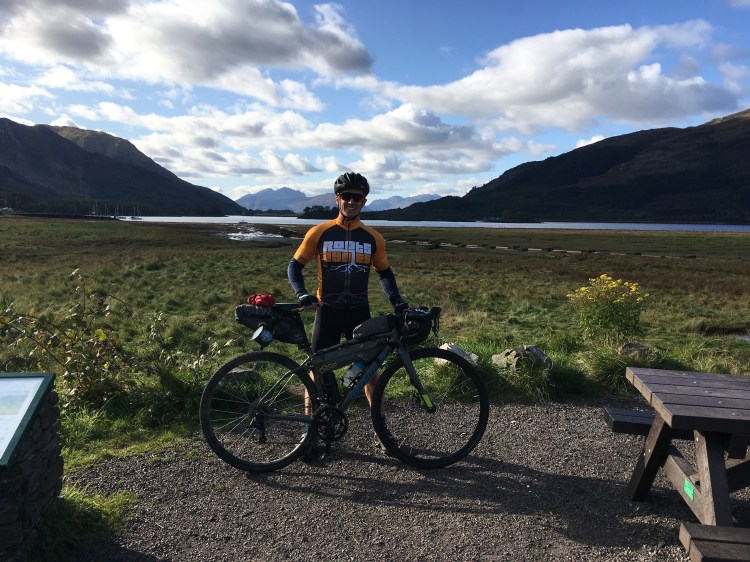
Bridge of Orchy pitstop

After a couple of hours on gravel, it was nice to be back on tarmac. The other good thing about October is that Glencoe is a lot less busy (there were actually points where no cars or buses were in sight!).

“It’s a dramatic glen, isn’t it?” I said to Andy. You can understand why tourists flock here: each bend is another photo opportunity, another snapshot into some essentially wild terrain beyond. Perhaps the flanks of the mountains act like curtains to people who do not scale them; dams to wilderness above and beyond their picture-perfect faces.

Yes, the buttresses and the slopes are impressive, but to those have not walked amongst and over them, perhaps the allure comes as much from the unknown as that which can be seen.

IMG_2588
Bhuachaille Etive Mor

The sun was lowering on the horizon. After starting almost 8 hours earlier, we turned towards Kinlochleven. We had toyed with the idea of pushing on, of gaining more ground, but our legs had given up. Plus, we reminded ourselves, this was not a race. In fact, the shorter the days were, the less satisfying they would be; less time spent here and not at a desk. We wanted to absorb as much as possible – to push on would be to imply we wanted it to end.

IMG_2593
The shores of Loch Leven

After a meal in the Tailrace Inn, we pushed up the West Highland Way, myself having flashbacks to racing up and down this during the Ring of Steall. We found a camping spot away from the path, with a beautiful view towards the Pap of Glencoe.

The temperature fell as the sun dropped below Loch Leven, fingers warmed by our slightly lamentable campfire. As the fire began to snuff out, we decided to turn in. I turned to my bivvy bag as the temperature dropped to 3C, glad I had four or five layers on!

e963f75f-1609-4807-978b-f0d3a9d3c72e
It didn’t look like this for long!

Even with that, it was a cold night. It’s hard to sleep soundly outdoors – especially when rutting stags are bellowing through the glens, the stars above are as bright as a pop stage, and your legs start to feel like frozen logs.

I lay there for 10 hours – whether I slept or not, I do not know. All I know is I was glad to be awake to watch the stars be slowly dimmed and replaced by a pastel blue sky as the gold dawn grew in the east.

Despite being cold in a sleeping bag, the idea of leaving any semblance of warmth behind is a mental struggle, only combatted by knowing that moving is a far more effective method of heating.

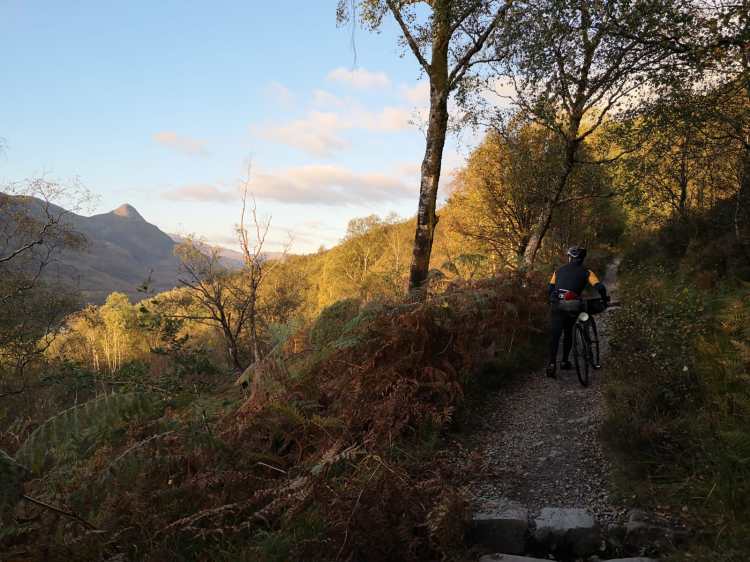
After packing up, we continued our vertical push up the WHW, eventually topping out on a wide ATV track at 300m. The track which hugs the back of the Mamores is rough. Large rocks and scree-like stones forced us to push again. Some old mountain bike skills came in handy in a desperate attempt to stay on the bike, taking some exciting lines at the edge of the path, back wheel swinging almost out of control at times.

Dropping down, down, down, the sun slowly warming the glens, we finally reached tarmac after a jarring 10km which took us nearly 90 minutes to cover!

330b0d3d-329c-44c9-ab42-f48100af625b
The big push up the WHW

Despite all the pushing and hanging off the back wheel, our legs were still trying to remember how to pedal. It was because of this that, upon joining tarmac which slowly bent skyward, we were huffing with burning legs. To our left, Ben Nevis loomed into our senses, even more imposing by being smothered in cloud.

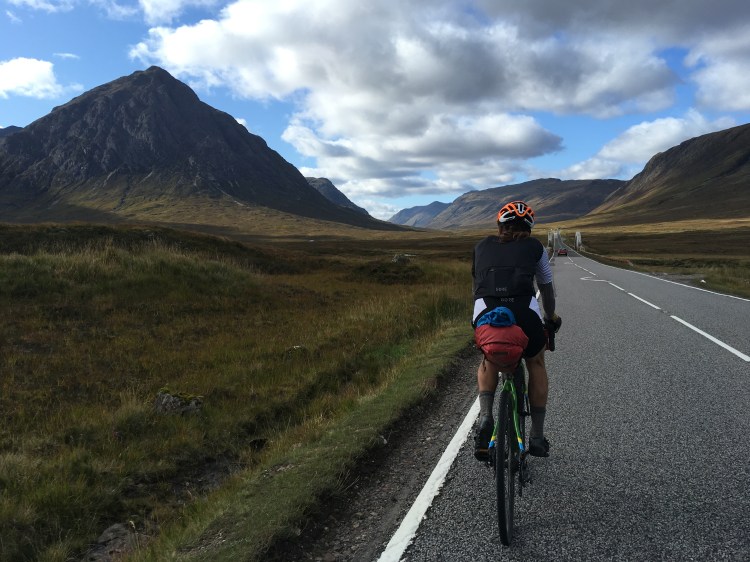
We zoomed into Fort William, stopping briefly to grab a banana and Jamaican Ginger Bread in Tesco. This marked the end of our solitary journey, soon joining the busy road through Spean Bridge to Dalwhinnie.

By this point, the bikes had gained some weight through mud clinging to chains and gears. Andy’s chain was beginning to sound like the Clangers, all the oil peeled off to make a constant singing of metal.

Thankfully, our timing was good in missing any large volumes of traffic to Spean Bridge, and once we were beyond that we had mostly open roads.

The wind had turned direction, turning to assist us again. We were pushed along the road as the giant high-way of the Grey Corries, Aonachs and Ben Nevis passed above us.

IMG_2605
Riding along the West Highland Way

A quick break at Creag Meagaidh Nature Reserve to top-up on water and we made the final push to Laggan, entering the snaking road through trees and hillocks to the open Strath Mashie.

I have always imagined cycling along the rippling road from Laggan to Dalwhinnie, and it always came in my mind as part of some great adventure. I guess I achieved that dream!

8fed4ed6-224a-410c-bd37-fa0cb4b10c66
Dropping into Loch Laggan

Andy had been raving about the egg and tattie scone roll from the cafe in Dalwhinnie, so we made one more stop to refuel. I am pretty sure I had been eating all day, but after a night of tossing and turning, I wasn’t surprised to have been in need of a few more calories. At least, that’s what I told myself.

The newly surfaced cycle path down the A9 is wonderful, the wide tyres on our cross bikes humming like Formula 1 cars. On a road bike, this would have been delightful, but I was actually glad to get back on some gravelly, pot-holed road that hadn’t been resurfaced.

IMG_2617
Ben Vrackie up ahead!

With a north-west wind and an egg roll in our bellies, we flew down the final thirty miles. We passed through House of Bruar, and Ben Vrackie pierced into the horizon. Half a bonk and 45 minutes later, we pulled into Pitlochry.

The day after, I was surprised not to be sorer, the main thing that hurt were my glutes from all the hovering off the saddle and balancing on the rougher tracks.

There was something incredibly satisfying about pulling into Pitlochry after over 180 miles of cycling, sleeping under the stars and enjoying the simple pleasures of waking with the sun.

Our indoor lives have disassociated us from the natural cycle of the day and year. You can go out all day hiking, running or cycling, but to go that step further and extend it by a day, two days or more, you achieve something people spend hundreds on in mindfulness classes and yoga: Simplification.

Simplifying your thoughts to moving between geographical points, eating and drinking, finding a place to sleep and relying on no one but yourself takes effort, but it is far more satisfying than anything I know.

Choose your adventures and experience them. You can go a long way with your imagination.

Strava trace for day one and two.

Kit list

On the bike

1 x Endura short-sleeved jersey
1 x long-sleeved base
1 x Endura Pro SL gilet
1 x Montane rain jacket
1 x pair POC leg warmers
1 x bib shorts
1 x Hilly Merino socks
1 x shoes
1 x cap (for extra points)
2 x 500ml water bottles on side-entry cages

Saddle pack

1 x Vango Ultralite 350 sleeping bag
1 x The North Face Summit Assault Bivvy
1 x multimat roll mat

Handlebar Bag

1 x Mountain Equipment Arete Down Jacket
1 x Findra Enduro L/S base
1 x thermal tights
1 x Bridgedale thick socks
1 x spare Hilly Merino socks
1 x Rab skull cap
1 x Petzl Reactik Headtorch
1 x merino gloves

Frame Bag (excl. food)

2 x 35-44c inner tubes
1 x multitool
1 x pump
1 x puncture repair kit
2 x tyre levers
1 x Blackburn 400 lumen bar light
1 x Blackburn rear light
1 x miniature of Ben Nevis whisky!

Top Tube Bag

Phone, food, wallet

  • Food (approx. 2500 cals of nut/cereal/protein bars, Soreen, nuts and Voom bars)

Stairway to Heaven – Ring of Steall 2019

71173207_552161858923487_2733260347577204736_n

I sat down.

Above me, the cascading sun poured over the surrounding mountains, the autumn light pooling shadows in the creases of the landscape. Below me, the dizzying staircase from the foot of Steall Falls zigzagged up to me.

Now I knew how those who built the pyramids might have felt, looking down to the levels below as their fellow men, bent double in the sun, made their way towards the heavens.

The wind on my face, the sun on my neck – I wanted to lie down and crack open a cold beer right there and then.

It was Muhammad Ali who said something along the lines of: “I don’t count my situps. I only start counting once it starts hurting, because they’re the only ones that count.”

I forged my own timeless aphorism “I don’t count my meters. I only start counting once it starts hurting, because they’re the ones that count.” The big problem for me was, after nearly 2000m, it was hurting – a lot. And I had counted most of them.

I wasn’t exactly floating like a butterfly up An Gearanach, but it was stinging like a huge bee. As I looked around me, though, I could not think of a better place for a pain cave.

71498997_602231160309953_6781194769822384128_n

Skyline Scotland had captured my imagination in 2016. I wasn’t running concertedly back then, but obviously had visited the area many times with a rucksack and boots.

That year, Jonathan Albon had swung, climbed, slipped and slid from the obstacle course racing scene into the realm of mountain running, snatching victory from established mountain athletes like Tom Owens, Marc Lauenstein and Finlay Wild.

By the time 21 September 2019 came around, I had done my reasonable share of longer training runs and races – Trotternish, Ochil 2000s.

To the untrained eye, 32km with 2500m sounds more demanding than 28km and 2500m. Yet, the Ring of Steall packs those meters in, gives no quarter, and adds in some ridge running to boot.

70867199_696603797483130_722350595096182784_n

The weather could not have been kinder. Standing in a sun-dappled sea of colourfully-clad runners, chatting excitedly with friends as the build-up music played from the massive PA system next to Ice Factor in Kinlochleven. We could have been on the start of the UTMB.

The massive countdown board ticked closer to 10am. The piper struck up his skirl, the sound bouncing off the roof of the canopy above the start.

“Five, four…”

The countdown started – take off had arrived.

“Three, two…”

I was ready, ready for that “GO” and to start running. My heart rate jumped up, ready to head out the gates.

“One – GO!”

Nothing happened. Well, yet. Such was the volume of runners it was 20 seconds before we crossed the starting line, pounding down the road on the start of a great adventure.

To avoid going down a rabbit hole, 1000 runner is a lot of people on a 26km course. Five hundred would have been a lot, but twice that had me nervous for the impact of the event. Though I know Ourea consult the John Muir Trust, I hope the numbers don’t run away (if you pardon the pun).

The race narrows very quickly, backing up like an airport check-in queue. Some forwent the queue and squeezed past over the embankments, others were happy to stop to breathe.

As we emerged from the trees, a line of hunched figures stood out on the hill side against the clear sky. The open hillside is rocky at first, turning boggy and wet. I passed some more people, being very cautious of my effort.

After an hour, I neared the bealach between Am Bodach and Sgurr an Iubhair. As I came over the lip of the climb, the landscape unfolded in front of me, unfurling like a green mast. Imagine when your lift up a duvet and it slowly settles back to earth, creases forming through it – it was like that on an enormous scale. I was an atom in a giant’s quilt.

IMG_2494
Aonach Beag from Coire an h-Eirghe

I beamed from ear to ear as I continued to climb Sgurr an Iubhair, dropping down and rising again to Stob Choire a’ Mhail. The Devil’s Ridge is veiled in a mythical cloth – noted as a hair-raising scramble.

In reality, it is a simple ridge. The descent before it is like dropping from a rollercoaster, the path swooping suddenly and the sides dropping below you.

Most people dropped to the right, but I knew the ridge and took the quicker bypass path, picking up a handful of spots.

Once over Sgurr a’ Mhaim, I tried to stay sensible: everyone says the descent can trash your legs for the next climb. Whatever you do, the next climb will trash you, so I took a 50/50 approach – at my peril.

If you aren’t full gas or walking a descent, the middle is a dangerous place. So it was I twisted my ankle halfway down. Nothing serious, but enough to shake me up a bit and become overly cautious as the scree immersed itself into my shoes, grit encasing my feet.

After a top up at the aid station, I made up time from the descent along the road, passing some people who’d overtaken me on the descent.

Steall Gorge is famously known for its links to Harry Potter, but there was no broomstick there to take me out of the gorge. I made quite an event of wading through the river (I think a photographer being on me encouraged some Rambo-like splashing).

71285971_1419591588195810_8413342377355247616_n

The initial climb up An Gearanach was wonderful. I was refreshed, bouncy, cooled down after my splashing and quite relieved it wasn’t that bad…it didn’t last long.

Like some insane flight of stairs, this infamous climb goes up and up and up. Anyone with some reason would take the direct line through them, but no one had that fire. As one guy below said, “I hope this isn’t a death march.”

If it was, I didn’t realise the stairway to heaven was such purgatory.

After the climb (which, before finally concluding, throws in a final 200m kicker at the end), is the finer of the day’s ridges. Although the exposed edge can be bypassed, the congestion was such I took the ‘racing’ line across the arête, drawing a few scolding looks from competitors below. In the end, it is a race.

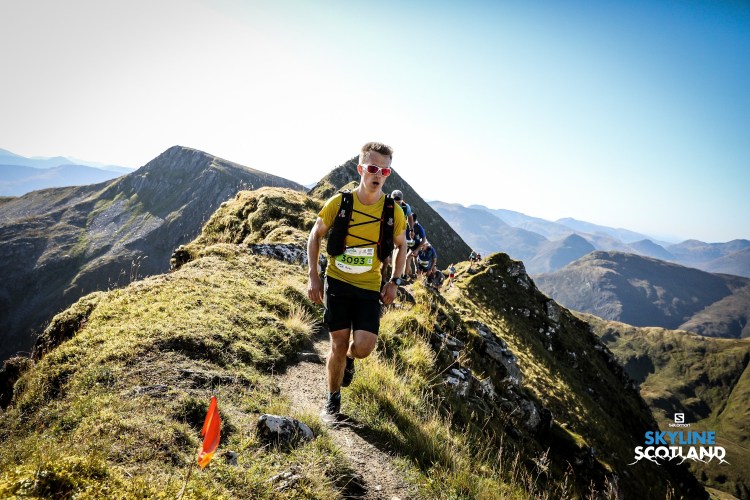
As I descended into the fold between An Gearanach and Stob Coire a’ Chairn, I could hear bagpipes in the wind, shouting, cowbells, barking – was there a crowd on the next summit? Or is this some level of Dante’s Inferno – have I lost it?

Soon, though, I met the exuberant dog, barking to every competitor. As I neared the summit, I could see the drones of the bagpipes, skirling out a dizzying AC/DC song. It was just two guys and a girl, screaming at everyone going past like they were your best friends, smacking a pan and piping to the sky and back.

As I left them, Flower of Scotland rang out. I confess to a being a total sop here and being glad for wearing sunglasses. I blame the altitude, the previous 18km and 2000m of climbing for making my chin wobble.

A friend who had perhaps gone out a little too hard had ground to a halt on Am Bodach, the final climb and the last ‘scramble’ of the day. The heat, dehydration and wind were mixing together to turn some people’s stomachs upside down.

70183656_591247764740919_1355831908746919936_n
That “S**t – do we have another climb?” face

My heart dropped slightly as I got over the summit: the delirium had not left me yet, and I genuinely thought we had another climb to go, before realising it was the back of Sgurr an Iubhair again. Thank God.

I had caught my second wind after the piper, and skimmed down into the bealach and began to descend well into Coire na h-Eirghe. The passage of almost 1000 runners had turned some of the bogs into soup, conveniently concealing some of the more problematic rocks. I rolled my ankle again – this time it really hurt.

70216158_511754376058687_6403752077482262528_n

“Mother of ****, ****”, I blurted out as some poor old lady passed me. I felt she might clobber me about the lugs for my profanity, but thankfully not.

After a few gingerly-trod meters I tried to loosen up again. Eventually, once we hit the West Highland Way again, I felt like I at least had a foot again (albeit a sore one), and pushed into that wall of effort. I imagined myself like a bulldozer, passing people on the little rise and just grinding on.

It was just 3km to the finish. My descent through the forest was smooth considering my battered ankle, picking up a few more spots.

As I neared the road again, I chanced a glance at my watch. My goal time of 4 hours 30 had passed 50 minutes ago, but I could still finish in sub 5 hours 30 minutes.

71114169_681515082352372_6531582523393179648_n

I touched tarmac and starting swinging my arms like I was skiing, creeping around the bend to bring the finish straight in sight. As if I was drugged, the 100m stretch to the line seemed to extend beyond reason, but I had started to switch off, utterly determined to blast through this like I was being chased for the win.

Everyone was cheering like I was the leader, it was phenomenal. Cowbells rang out, transporting me from Kinlochleven to Zegama, Zermatt, Colorado, the Pordoi couloir – all those places I had seen in videos during the Golden Trail Series that had got me so excited for the day.

I rounded the corner, the MC saying something and a photographer there to catch me crossing the line. I didn’t look at the time above me. I later found out I had managed sub-5:30 – by about 10 seconds.

I was beaming. As I stood in front of a giant picture of Emilie Forsberg with a medal in my hand and smiling at the camera, I had resolved – one minute after finishing – I was coming back. Somehow, although I was 110th, I felt like I was a professional and had won the race, such is the nature of the event.

FREE_FINISH_BOARD_0420

I had hoped to be faster but, in the end, what captured me about this race was the venue. Perhaps my legs screamed for me to stop so I could turn around and admire where I was. I am pleased that I heeded their wants occasionally, reminding me of how lucky we are.

We go through a lot of pain, realising our weaknesses. But more than the limits of our own body humbling us, it is the mountains that do. Sure, I can do that outside of a race, but competition is the greatest testing ground, and if it helps others connect with wild places then so be it.

Hopefully it inspires them to give back to these beautiful places to conserve it for future generations.

Full Strava trace.

Steall Gorge and the summit of Ben Nevis are both protected by the John Muir Trust, the conservation charity for wild places in the UK. If you want to learn more about the Nevis property, visit the Trust’s website. Ourea Events gives 1% of sales to the Trust to mitigate environmental impact of the Skyline Scotland events.

Between control and chaos – Ben Nevis 2019

277C84CF-6CDB-49B0-B4E7-ADA5C5B4857A
Credit: Kirstie Arran

The year is 1895, and Fort William barber, William Swan, makes the first timed ascent and descent of Britain’s tallest mountain.

Fast-forward to 1951, and the first officially organised Ben Nevis Race sees 19 mavericks follow in Swan’s footsteps. Of the 19, nine finish – 10 are “mislaid“.

As 1955 rolls in, change is afoot. The winner of the race is legend Eddie Campbell, the local taxi driver, who is the new men’s record holder. But the main focus comes over an hour after he finishes: the first woman to compete, Kathleen Connochie, crosses the line.

It’s 1980. Eddie Campbell leads a rebellion of runners to the summit of the Ben and back after organisers halt the race for adverse conditions. The rebels report the weather to be perfectly fine.

It’s 1984, and Kenny Stuart sets the Ben on fire with a new record that remains unbroken to this day: 1.25:34. That same year, a man was born who would become synonymous with the Ben Nevis race. Indeed, his birthday is within days of the race.

RA-0098-main
Races rarely come so pure: to race up and down the highest peak in the UK.

His name appears on the finishers list in 2006:

13th – WILD, Finlay, Aberdeen UNI, 1:45.23. His bib number? 1.

By 2019, he has won the race nine times in a row. Standing somewhat further back is me – running my first Ben Nevis Race.

About a month before the race, I turned at the top of the Ben and located the race route down. I gingerly picked my way through dirt and stones that moved like some insane escalator beneath my feet. We would be going up and down this on race day, I thought.

I love the Ben. I always have a fun time on it. Last year, I finished 10th in the half Ben Nevis race. Since 2008, I have ran or walked it about a dozen times. I have bad running days, but they never seem to fall on a day up Ben Nevis.

And yet – going down that racing line – I was bubbling with nerves. Why? I had done races double the length and elevation gain of Ben Nevis several times. I know the mountain.

Nevertheless, that long list of legends, the excitement, the old school place it holds in hill and fell runners’ hearts is – to say the least – mesmerising.

Header11
A race with heritage. Photo: BNRA

Speaking to a few people on the line, you capture that same sentiment: the nervous blow-out of the cheeks and the wan smile – with a sparkle of madness in the eyes.

After being piped around the field, we stood in our battalion of 500 awaiting one o’clock. Those three or four minutes have to be the longest three or four minutes I have ever experienced. Everyone is bouncing on their toes so much I am surprised we aren’t increasing the amount of elevation we have to climb.

The start gun fired, but everyone was already moving. We cantered round the field, like hounds chasing the blue and white ribbons of the Lochaber AC hares.

Unlike most hill races where it is quite easy to tell where you are in the field, I found the pressure lifted as we ran along the road to the foot of the mountain. There wasn’t much telling as to where you were in the field. Places came and went. You find a pair of feet, follow them for a while, then find another.

The staircase begins, gentle at first but ladder-like soon. I noted the sounds of ragged breath around me, but I was still comfortable after holding back out the gates. I felt light, springy, relaxed. I wasn’t muscling my way up the hill, but being lifted by it; drawn by a cord upwards.

I kept passing people, less passed me. I held a line with a friend for a while, but found myself able to pull away as we turned right towards the Red Burn. I passed my parents at the side of the path, our dog barking so much to cheer on the runners I could hear her 500m higher on the hill!

A small amphitheatre had formed at the Red Burn. I amused myself as I put myself in their shoes.

Some had probably just conquered a feat they had trained for weeks for; others simply enjoying the window of sunshine. To be wandering pleasantly down the UK’s highest mountain and to find a runner in vest, shorts and a bumbag springing past you – followed by a dozen, two dozen, three dozen others – must be quite a sight!

I hiked after the Red Burn. Everyone does. The key is to stop before it hurts too much. Remember: You have the longest free fall in the UK to tackle. Cheering above: “Yes, Finlay! Yes, lad! Come on!”

The monarch of Glen Nevis came bounding past me, arms up and a bashful smile on his face as he thanked people for being out. Even when hurtling down a mountain at a law-defying pace, he still had breath to say, “Thanks”.

People had said it was the day for a course record. I looked at my watch – just under an hour and 10 minutes. Unless he pulled a set of wings out of his bumbag, Kenny Stuart’s record would elude Finlay for another year. 35 years and counting*.

As Finlay touched the road, I touched the summit. I knew there were people there: 10, 30, 200 – I could hardly tell. Memory has a funny way of removing that which is unimportant. In that moment, the thing at the forefront of my mind was dropping my band into the box and focusing on the descent. And grabbing a fruit pastille.

I have used this phrase before: “My eyes were in my feet”. I hardly looked at the ground as I moved across that high plane – my feet knew where to go.

We dived down the rocks, skiing on scree, boulder hopping and dancing through the dust – somewhere between control and total chaos.

BenNevisRace1955R
Somewhere between chaos and control. Credit: Steve Bateson

As I hit the Red Burn, I bent quickly to top up on fluids – and cramped. Frustrated, I just shook it out and took some long bounds on the descent to the main path below, eventually easing it off.

The second half is my favourite. On the Half Ben Nevis Race last year, I picked up a dozen places here, and it was the same again on the full race. There is something about the sheer instinct of the running that drives me on – brain off, reactions on.

Pitter-patter, left, right, left, right, drop, skip, fast feet, dodge, all the way to the infamous road section. All the tales of cramp, fatigue, dead legs came to me as I touched tarmac.

I reminded myself of one thing: The guy behind me was hating it as well. No one enjoys this part – you just have to keep moving.

As the hot tarmac slowly seeped into my legs, turning my muscles solid, I rounded the final bend and into the short descent before turning into the field. My family were all there, including my grandparents who had got the train up just to see me race.

I made every effort to put a burst of speed to the finish. To everyone in the field, it probably looked like I was running backwards, so hard were my arms throwing back and forth to move me on.

The clock stopped – 2:04.47. Finlay had been back for over half an hour. His tenth win.

However faint it might be, a strand now threaded its way from 1895 and William Swan’s groundbreaking run up and down the Ben to me, lying on the sunlit grass of Claggan Park at the end of my first Ben Nevis Race.

How, after that day, could you not love this sport? The atmosphere could have made the worst weather feel insignificant.

In some ways, I wonder if that is what caused Eddie Campbell and his rebels to report the fine weather on that wild day in 1980: a fire that has blazed for 123 years.

Next stop – the Ring of Steall. You can track me here.

Full Strava from Ben Nevis race.

Full results on BNRA website.

*Finlay has mentioned after a stumble higher up, he played conservative and went for the win and not a PB. Smart thinking. There’s always another day

In the grip of the Cuillin

IMG_1983
Into the palm of the dragon’s claws.

We stood at the rim of Loch Coir’ a’ Ghrunnda. I felt as though we were in the palm of some prehistoric beast, its gnarled fingers reaching to the sky with names equally as striking: Sgurr nan Eag, Sgurr Dubh Mor, Sgurr Alasdair.

To illustrate just how rocky the Cuillin Hills are, it is interesting to note that – of the 39 Munros named ‘sgurr’ (i.e. sharp rocky peak) in Scotland – nine are in this 12 kilometre ridge of unforgiving land. The highest concentration in the country*.

From our vantage point in Coire Ghrunnda, it was easy to see why these spires had inspired the gods of Scottish mountaineering to make it their playground. In a range of just 12 kilometres, it contains 22 peaks, 11 of which are Munro status.

For those completing the full traverse “the reward is an intensely satisfying blend of hard physical and mental work mixed with some of the best scenery in the world.”

IMG_2002
Climbing Sgurr nan Ean

We made the steep ascent to Sgurr nan Eag. As we reached the top of the initial climb, rock gave way to air as the ridge line poured over the edge to the corries below. We turned right and summited before clambering back down into the bealach to Sgurr Dubh Mor. The midges were tempestuous, swarming any moment we stopped to consult the guidebook.

Never before have I felt I am in the hills only with their permission. The Cuillin inspire a power over you, a sense that – at any moment – those claws could grip and snuff you out.

Every handhold, every placement of the foot was only granted through the permission of these gabbro talons. These are hills to be respected.

These thoughts came to me as I considered Finlay Wild’s inconceivable 2:59.22 record for the traverse. Only someone with a unique connection to the landscape could have achieved that. Yet, he is no master of them; they retain the control, much like placating a dragon, allowing him to pass unscathed.

Here and there, pale rocks lay dotted around, reminding me, again, of dragon scales shedded from the higher tops, which have cascaded down over the centuries. Incredibly, looking east towards the Cairngorms, one gets the sense of how time has – and will forever – shape this landscape.

Miles away, Ben MacDui looked towards us climbing a range of mountains almost 400 million years younger than he. These peaks racing each other to the clouds, vying for head space, will in time return to the sea from which they were born. Nothing is inevitable, except gravity.

IMG_4193

It is not hard to understand what the seekers of the ‘sublime’ in the 18th century must have felt: the clutching sense of fear and the releasing sensation of wonder. These terribly beautiful hills inspire a fearsome joy. There is much to relish, and much to revere.

And yet, beneath our feet, it wasn’t just hunks of gabbro and chunks of basalt. In this volcanic land, blaeberries burst forth beneath old magma, rippling veins of iron criss-crossed the rock. Above, two caped ravens cackled as they had a mid-air battle.

IMG_1987
Amongst the volcanism.

As we made the final climb to Sgurr Dubh an Da Bheinn, we looked back to the  Caisteal a Garbh-choire – a looming tower of basalt, adorned in places with climbing slings from years of exploration. To reach the final Munro of Sgurr Dubh Mor required just as much thought as physical effort.

58635526013__82A80B09-1538-4A6B-8683-DA5EF7BD6651
Ascending Sgurr Dubh Mor

We walked thin lines, climbed over rocks that had never been created to be climbed, and reached the final summit of Sgurr Dubh Mor.

The midges chased us from the summit before long, but for a brief moment, I could hear the beating of the dragon’s heart. The ridge twanged with the strength of eons, reducing the power of humanity to insignificance.

Never have I felt so at the mercy of a range; never so thrilled by its majesty.

The Cuillin have gripped my imagination and I intend to return soon.