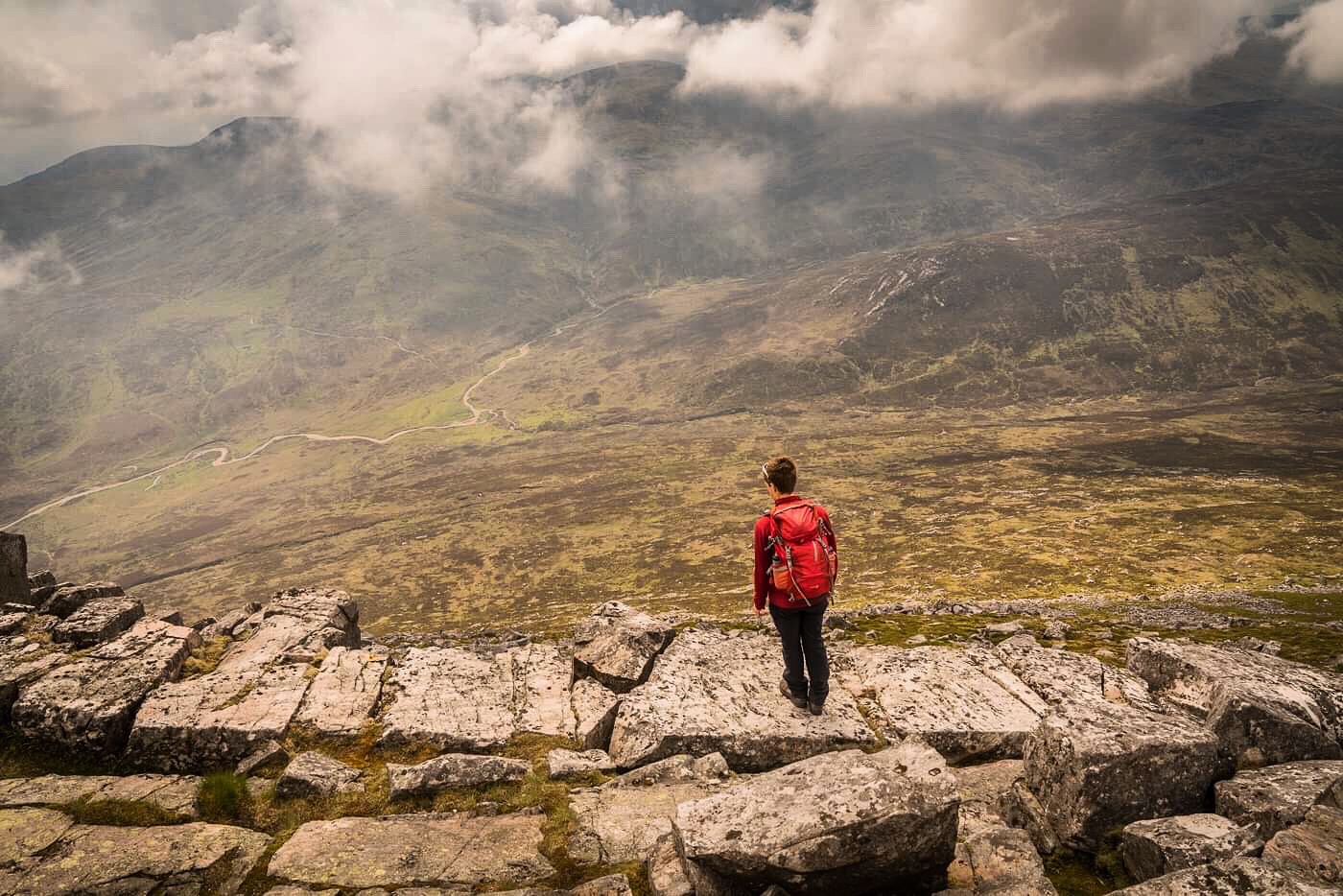
I have worked in the environmental sector for six years, and over that time I have experienced an evolution in my perspective and position as an ‘environmentalist’. As a child, nature and the outdoors were the pillars of my upbringing, and so choosing to work in the sector seemed only natural (if you pardon the pun).
Starting out as an intern with Keep Scotland Beautiful, I was using my limited knowledge of climate and litter to craft social media content. As I moved on to the John Muir Trust, I brought what I learned at KSB and combined it with my love for the outdoors and wildlife.
I would say those years at the John Muir Trust were utterly profound in shaping my opinions on climate and the environment. Foremost, I never looked at a landscape the same again. It was as though I was looking at a landscape through a camera and suddenly the aperture had been adjusted and I saw things that were previously hidden to me. For the first time, I could see how Scotland’s (and the world’s) ecosystems were completely out of balance.
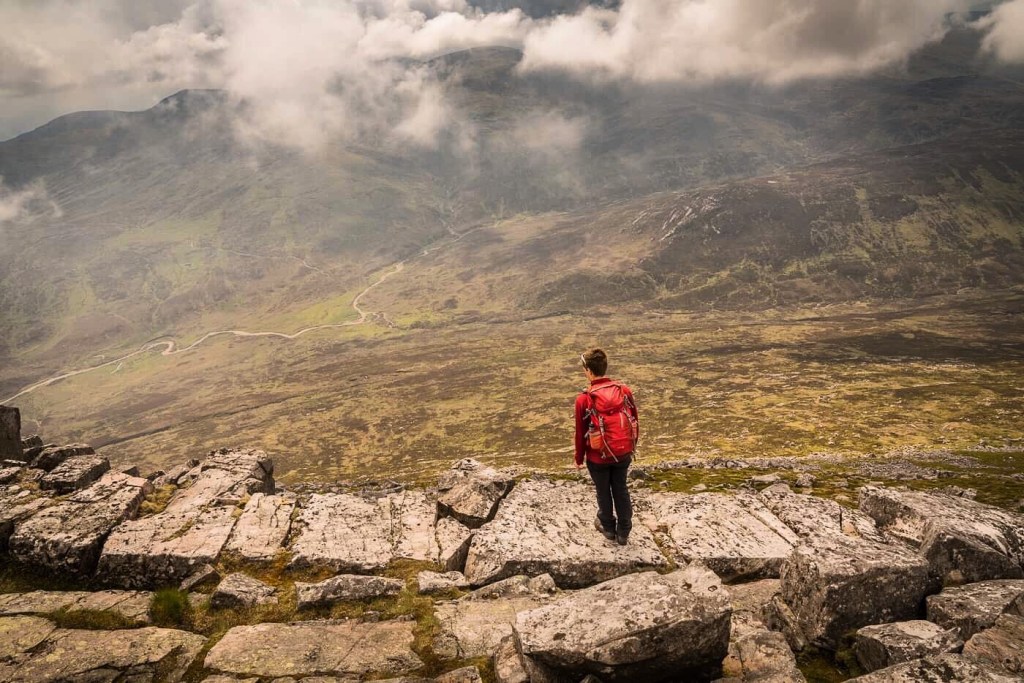
I began to understand how humans had shaped the world around us in seemingly imperceptible yet dramatic ways, and how those impacts cascaded through food chains, influencing the very soil beneath our feet. I will never look at a landscape the same again.
Recently, I worked as a freelancer for The Green Runners, a grassroots group of environmental activists. The Green Runners are full of fire and urgency, but I also discovered something in them I had not heard from many other groups: Pragmatism.
Every job I have had in the sector, every book and document I have read over the years, every loud debate and every quiet confession I have had with activists and experts has led me towards something I never expected.
That – in equally frustrating and liberating ways – is nuance.
I bring all this up because I have had a couple of friends half-jokingly making comments on my current lifestyle. I have never publicly stated what my environmental commitments are, because I never really felt the need to. Furthermore, I have never found myself to be in a position that required such transparency, nor have I ever been vegan, painted buildings orange, or blocked a highway.
However, I am aware I have described myself as an environmentalist, and have a (if very small) public persona. That puts me in a position where I should be at least somewhat transparent, which is why I feel it’s good to talk about it, not least because I hope what I have to say might resonate with others who crave a little bit of honesty.
I am going to do a few things: First, I want to look back on where I’ve been; next, I want to look at reasons for optimism; and, finally, I will lay out my approach today, plus some tips for you.
Environmental paralysis
At the start of my environmental journey, I fell into a tribalism and absolutism that some might recognise in environmental discourse: “Never do this”, “never do that”, “don’t drive”, “don’t eat meat”, “fossil-fuels are the worst”, “plastic is killing our oceans”.
This coincided with when I started living alone, and I became overwhelmed with a crowd of noises and incessant guilt that came simply from existing. It absolutely sucked. Everything in my life came under a microscope and I became paralysed by indecision.
I am not alone in this. Many will be aware of the rise of eco-anxiety, especially in young people. According to the journal Nature, 72% of people aged 18–34 said that negative environmental news stories affected their emotional well-being. These results are reflected in several other studies. What’s good is that this anxiety is resulting in pro-environmental behaviour, but what’s the good in that when we feel depressed about it?
Things are getting better
Lately, I have found a lot of solace in Hannah Ritchie’s book Not the End of the World. In it, she describes a childhood and adolescence astonishingly similar to my own when it comes to climate anxiety. She writes how, for years, she assumed things were simply getting worse. She references another incredible book I read recently – Factfulness by Hans Rosling – in helping her realise that we are, in fact, going the right way on many data points relating to the environment.
Here are a few excellent points Hannah makes in the introduction to her book:
“To get this out of the way, let me make one thing absolutely clear: I’m no climate change denialist or minimiser. I spend my life – inside and outside work – researching, writing and trying to understand our environmental problems and how to solve them.”
And…
“…our impending doom leaves us feeling paralysed. If we’re already screwed, then what’s the point in trying?…I can assure you that after reframing how I saw the world, I have had a much, much bigger impact on changing things. When it comes down to it, doomsday attitudes are often no better than denial.”
At the end of her introduction, she makes a call for “urgent optimism”, and that “if we want to get serious about tackling the world’s environmental problems, we need to be more optimistic”.
This is so refreshing for me, because reading it felt so relatable and lifted a weight from my shoulders, knowing that I do have a role but that there are certain things I should focus on and that things are actually getting better, not worse.
According to Ritchie, the average person in the 50s and 60s emitted around 11 tonnes of CO2 per year. Today that figure is less than 5 tonnes. In 2009, solar cells cost around $360 per unit of electricity; that’s now down to below $40 per unit – solar electricity now costs 89% less than it did in 2009.

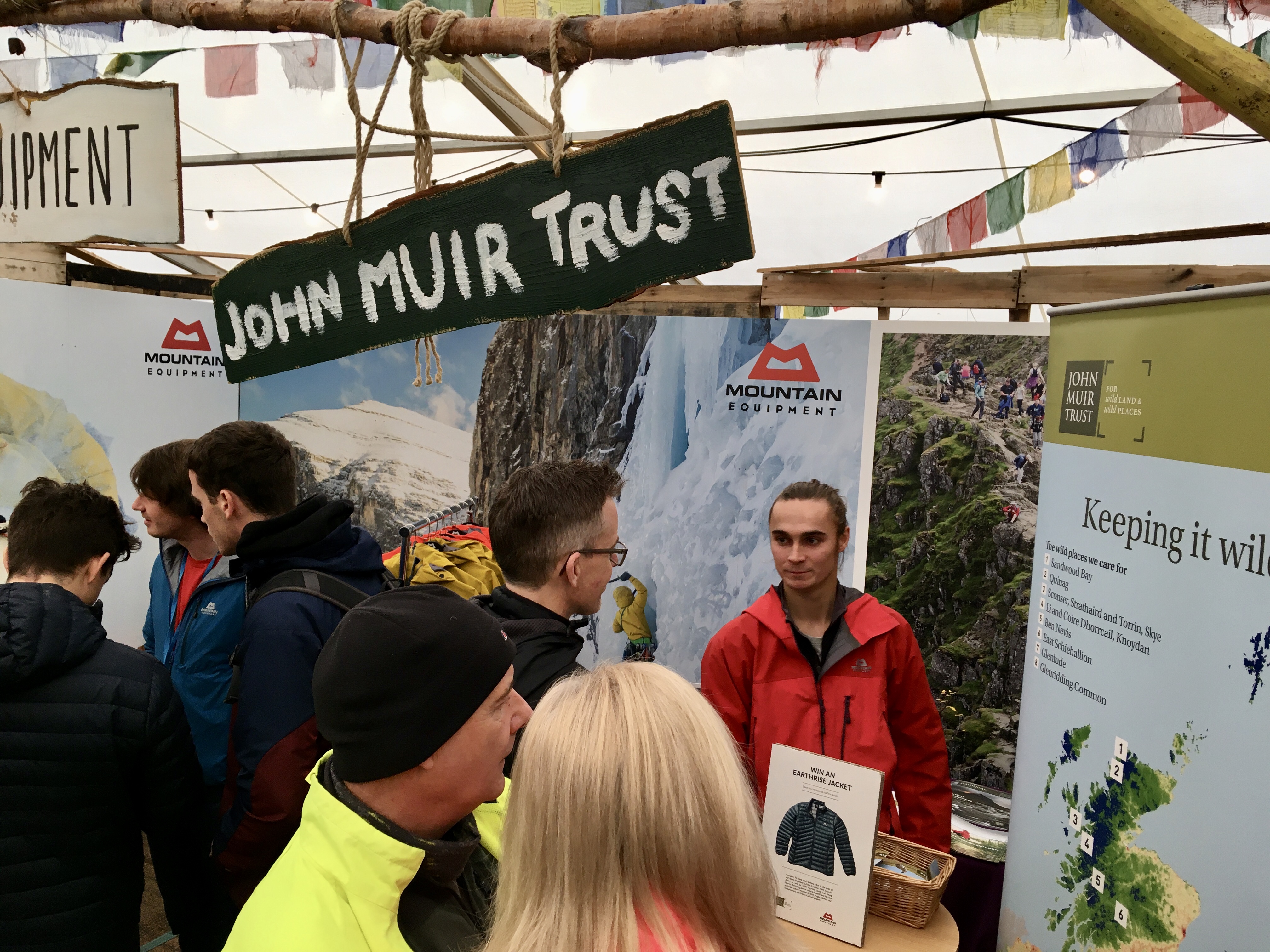

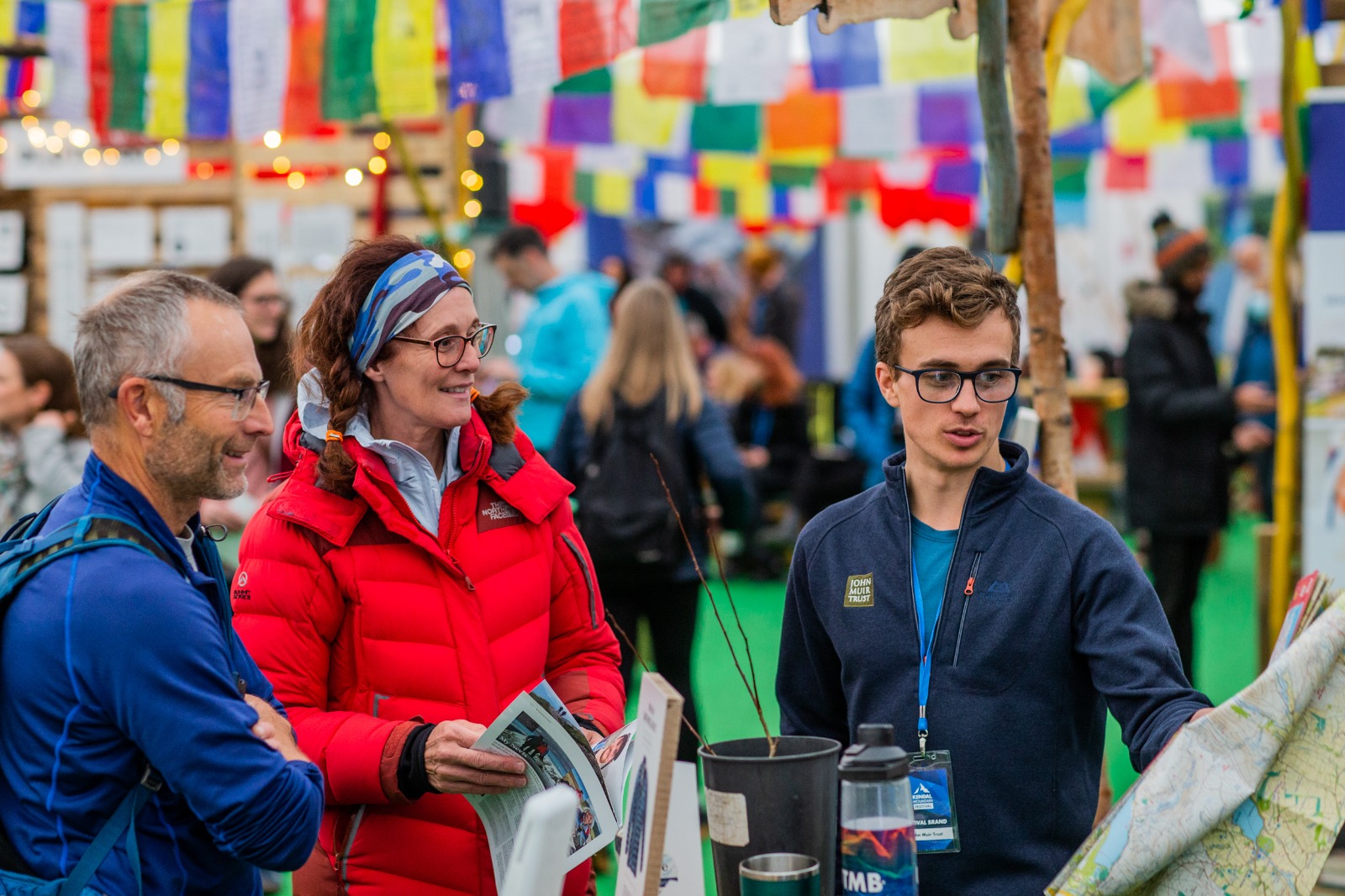
Above: Hosting various talks and events over the years with the John Muir Trust
For those yearning to travel but still consternating over the environmental cost, remember where we were in the early 1800s with rail: Trains were coal powered, horribly polluting, and desperately inefficient. In 200 years (a long time, yes), we’ve moved from zero passenger rail journeys powered by electricity to over 57% in the EU, and that is with an expanding network. Given our reliance on aviation today, I can only expect it will become an increasingly efficient form of travel.
Nevertheless, appetite for aviation is continuing to grow, with a 4.1% growth in passenger air traffic expected in the next 20 years. However, the usual western markets are not the source: The majority is from emerging countries like Vietnam, India, and Saudi Arabia where income levels are growing. This is great news in a way, because as countries develop they also tend to move away from fossil-fuels. Just look at most European nations today versus in the 1950s.
All of this goes to saying that things are improving, and there’s still progress to be made.
The travel conundrum
I no longer work in the environment sector. In fact, I might even work in its polar opposite: Travel. I work for EF Education First, which provides education-based travel experiences to people of all ages. You probably know of EF from the cycling team, but the company goes well beyond the vivid pinks and funky designs you see in the Tour de France.
To facilitate the travel of all their travellers, flying is an integral part of how the company operates. Yes, flying, the pinnacle of environmental sin.
But I see it differently. I applied for the role at EF for a whole range of issues, but above all it is their belief that “the world is a better place when we try to understand each other”. I believe that statement is perhaps more important today than ever.
In his book Let My People Go Surfing, Yvon Choinard, founder of Patagonia no less, mentions how his trips to the Himalayas, Andes, Alps, and so on opened his eyes to the impact climate change was having on his beloved landscapes and the people that live in them.
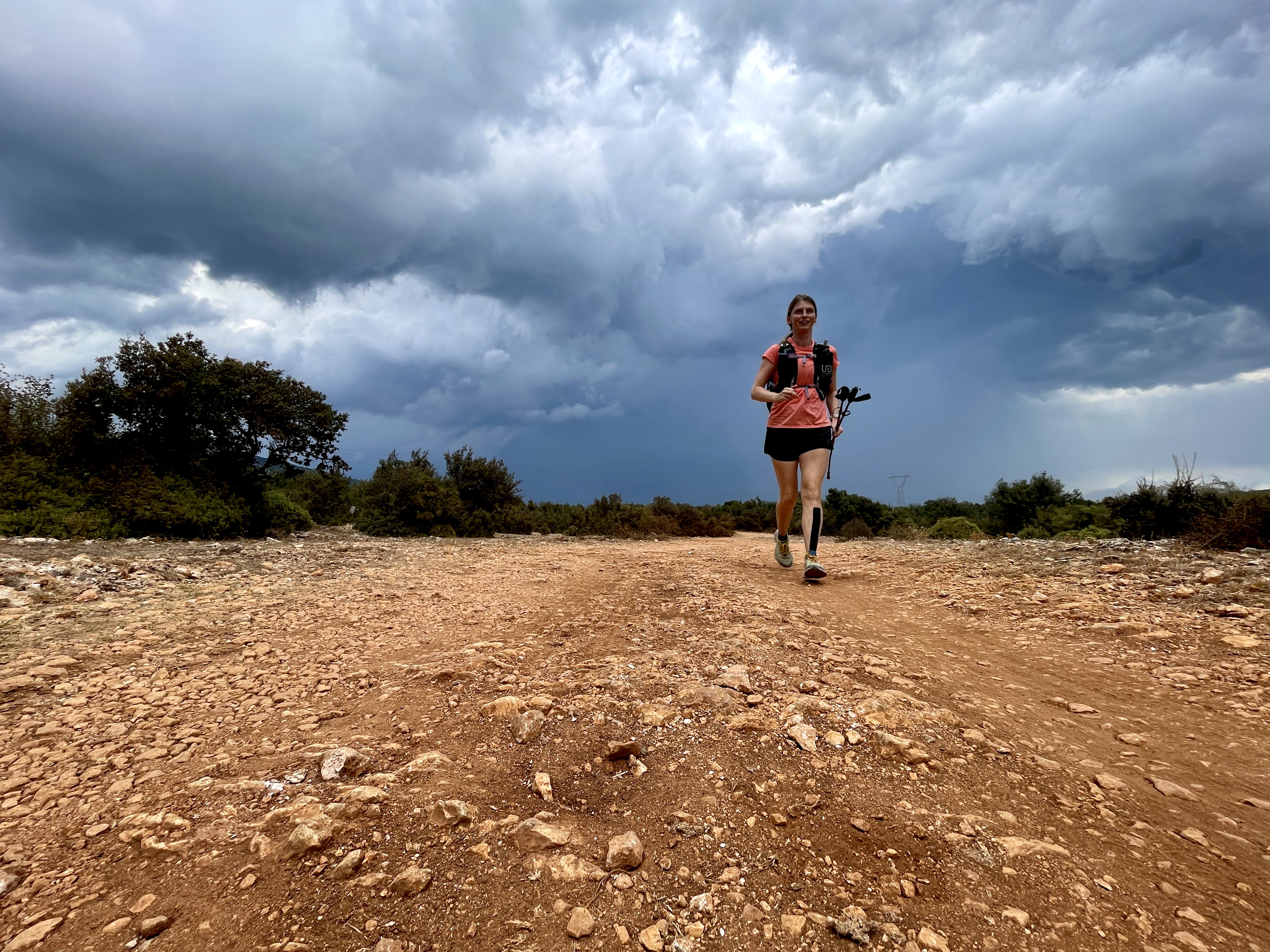
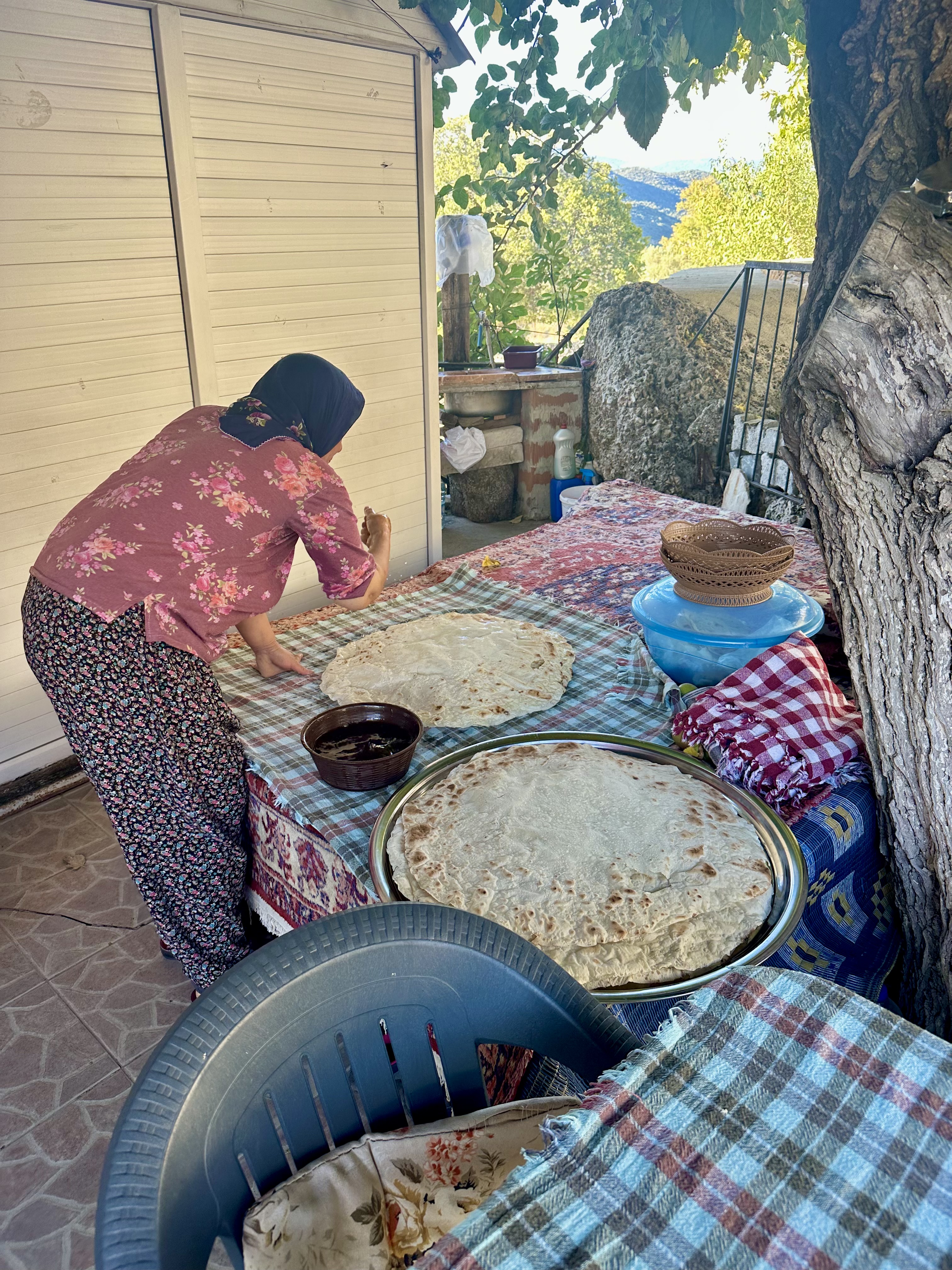
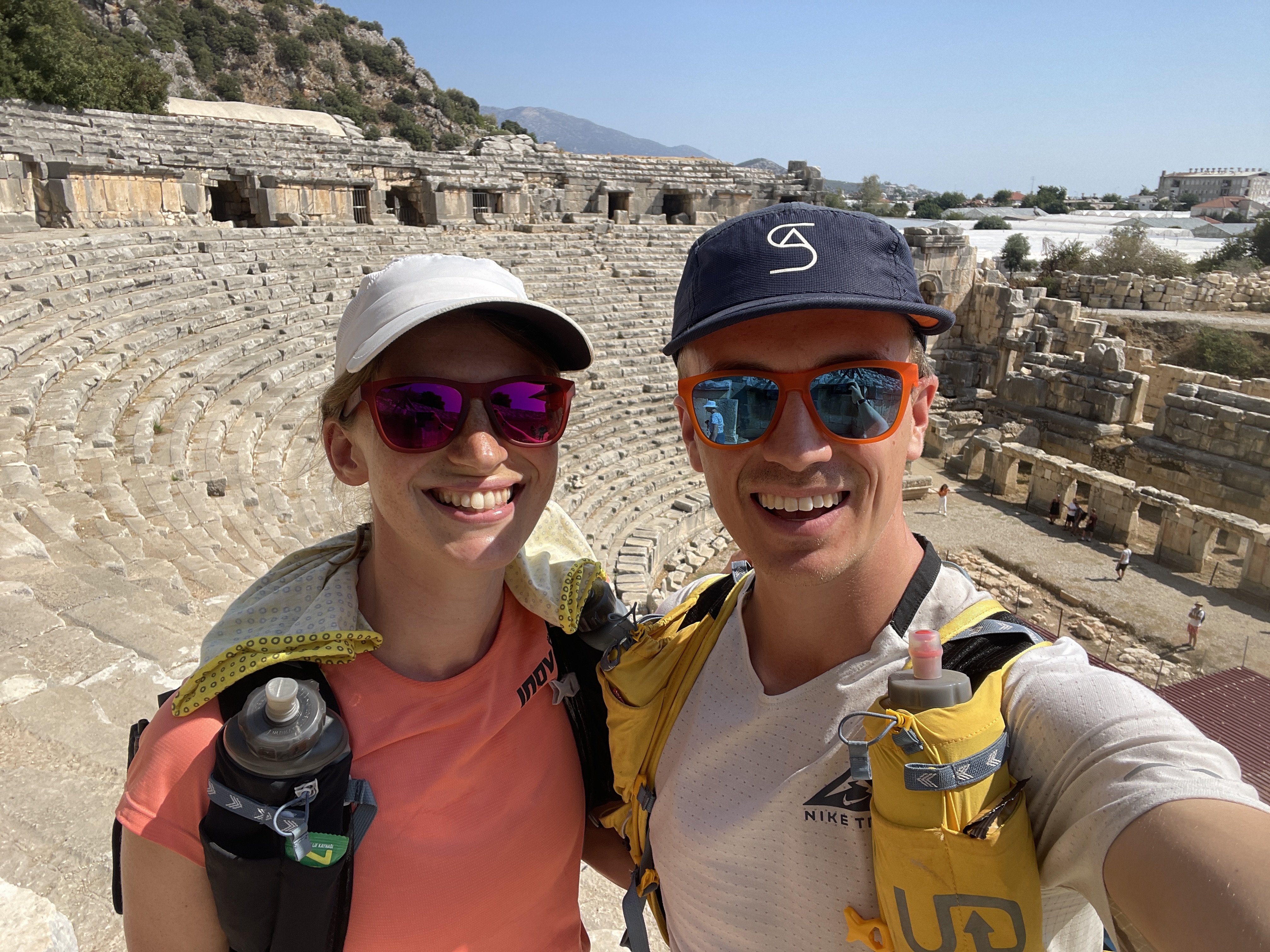
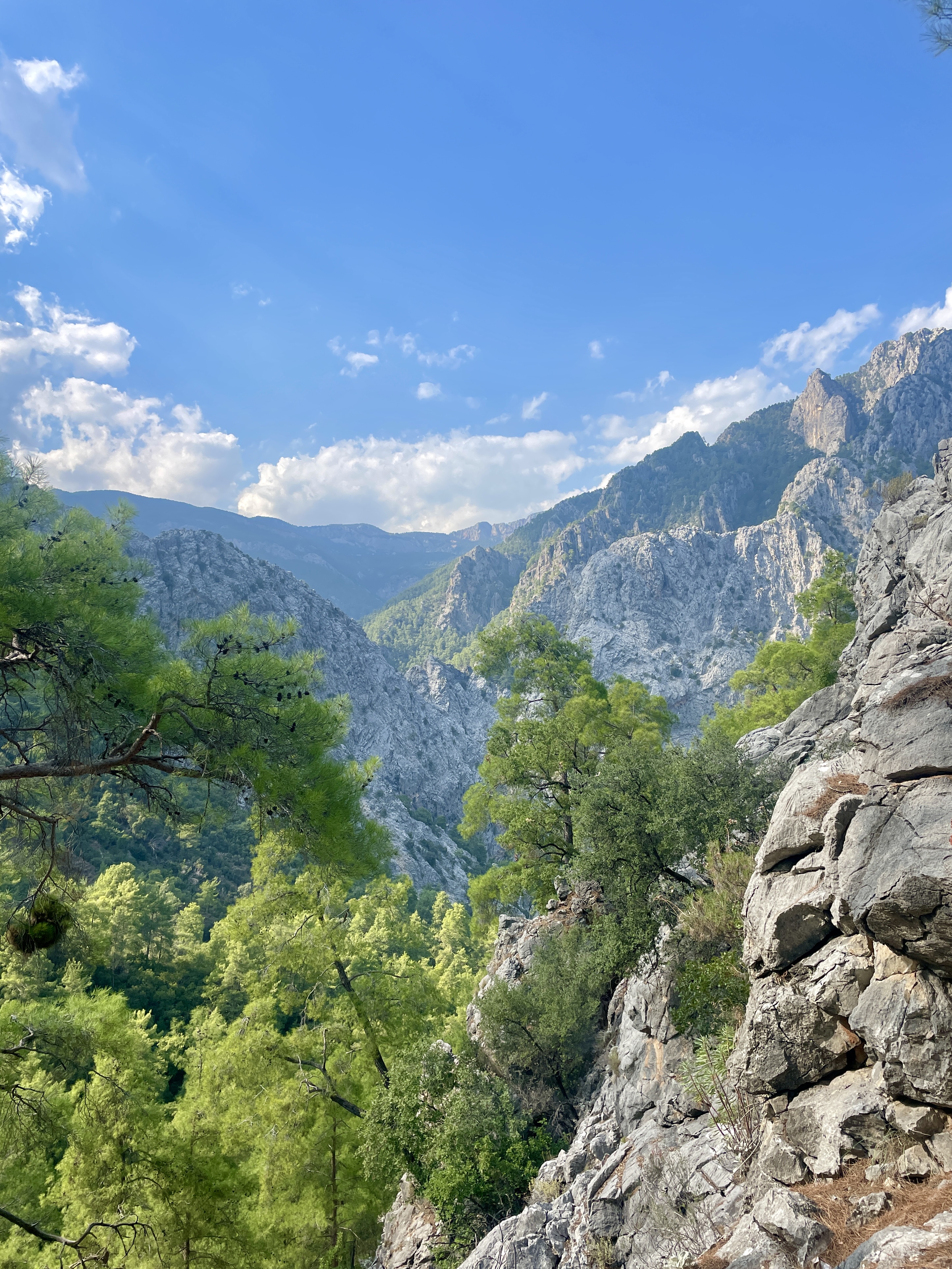
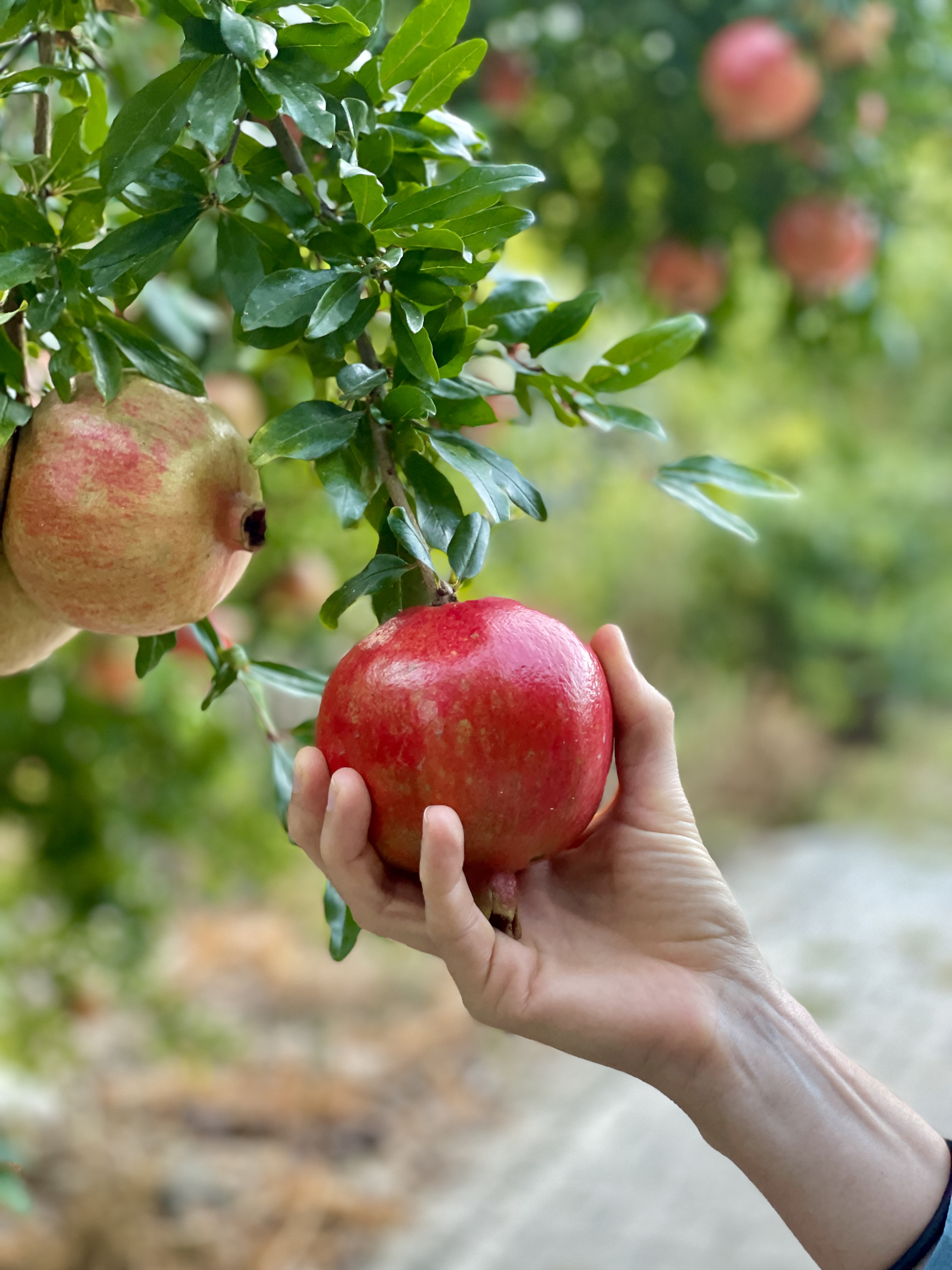
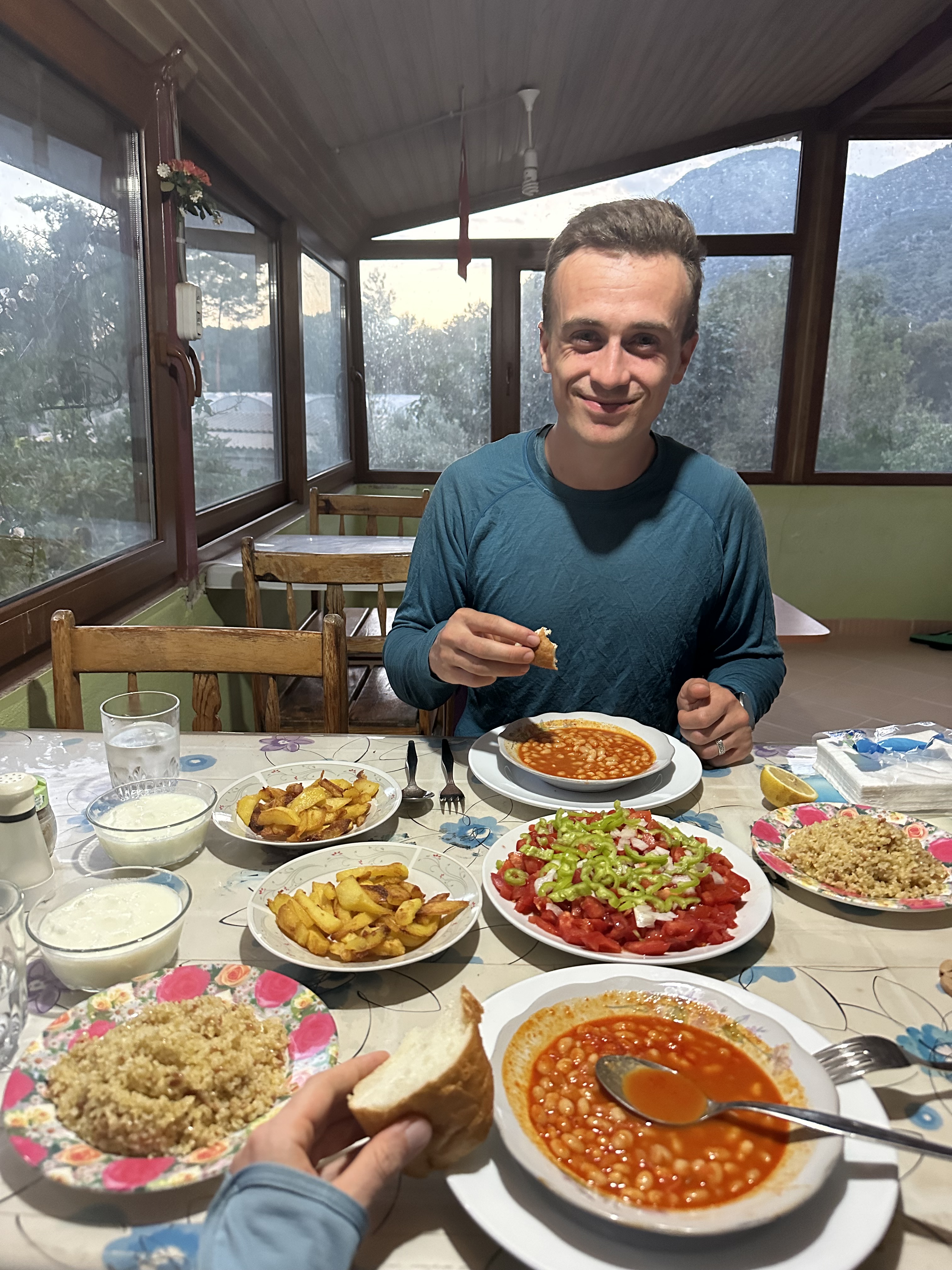
Above: Experiencing the colour and culture of Türkiye
I have spoken to many friends about the conundrum of wanting to go on adventures and write about incredible places, while also balancing that with my environmental beliefs. I know flying is inordinately worse for the environment than overland travel (depending, of course, on the type, capacity, and how it is powered), but I also know that reading about these places is an inferior alternative to experiencing it first-hand.
In Europe, we are incredibly blessed with having exceptional rail networks (in most places) that are also powered by electricity created with renewables. However, if you live in the U.S., it is almost impossible to experience other cultures without hopping on a plane. In fact, it’s sometimes impossible to see your relatives within the same country without doing so.
For that reason, I no longer want to vilify people for flying (to a degree), nor feel horrendous when I choose to do so. I genuinely believe that seeing other parts of the world and engaging with different cultures is essential, both in tackling the rising tide of xenophobia as well as ignorance over climate breakdown. Climate change is having observable impacts on communities right across the world, but without engaging with those cultures it’s hard for people to comprehend it.
I read countless testimonials from EF customers of how their experiences shape them and their perceptions, which is exactly the kind of travel we should be encouraging.
Travel is just one example where I have started to understand the complexity and fallacy of seeing environmental issues in such binary ways. Instead, my once black-and-white opinions have mellowed the more I have read and discussed problems with people.
It leads me back to what I think is at the heart of all of this: Intent.
My new philosophy
“The unexamined life is not worth living” – Socrates
Every decision I make I weigh up with the planet in mind. I always ask myself whether this action is necessary or whether a more sustainable alternative is available. To use The Green Runners’ four pillars, it affects how I fuel, how I travel, how I kit up, and how I speak out.
What I cannot abide are the people who go about their daily lives without a care in the world for the environmental consequences of their actions. Whilst others may wish to decry the actions I take as not being the most sustainable, what they fail to recognise is the energy I – and many others – expend anguishing over various decisions.
Travel is perhaps the biggest issue I get pulled up on – even though I have only started travelling fairly recently. Since 2020, I have taken eight return flights and one one-way flight. Three of those return flights were for work, as was the one-way flight*, taking me to five personal return flights over four years**.
In the preceding 25 years, I rarely travelled outside of the UK, taking just three or four overseas and two domestic (as a child, something I’d never do today) return flights. You could wag a finger and note that in just four years I have doubled my lifetime of flight-based emissions, but that completely misses out several key personal changes, such as marrying into a family that lives in another country, and moving to another country myself.
However, despite all that, I would say that today I (and by extension, my wife) probably live more sustainably than I ever have. Firstly, I eat about 50% less meat than I did pre-2020, and thanks to the fact I now live in a city I only drive once per week at the absolute most compared to every day when I lived in the UK.
While I had no influence over the building of it, the fact our apartment is built to some of the highest environmental standards in Switzerland was a big factor in our choosing it. We’ve not used our heating since we moved in thanks to incredible insulation, and everything is powered from 100% renewable energy, primarily hydro and wind.

It’s also rare you will find me buying new clothes nowadays and, if we want to talk about running, I am rarely purchasing new kit. I am also in the very fortunate position to have a wife that works in the running industry, meaning I usually get samples or test items that don’t require additional production.
This leads me to where I sit on the environmental debate. I try not to see things as so dualistic anymore, nor get myself paralysed by potentially environmentally-harmful behaviours. Every day I make adjustments to what I do to try to live more sustainably, as many others do. I also recognise what I do today is not what I will do tomorrow, or maybe in 10 years. Lives change, and we need to be a little more pragmatic with the parts of our lives we can make solid environmental choices in.
We need to see systemic change
We also need to support one another in these changes, because many of us are living in a system incongruent with environmentally-friendly choices. It’s like being given a rubber hammer and told to build a house.
Many of us are limited in our choices due to geography, time, money, and more. What I want to see is those factors minimised as much as possible, due to expansion of infrastructure, technological advancements, reduced cost of more sustainable options, and employers providing flexible working options and support for sustainable travel. At the John Muir Trust, staff are lucky enough to receive two additional days of leave called Sustainable Travel Days for exactly this purpose.
Secondly, while individual choice matters immensely, robust systemic change is absolutely vital. During the Covid-19 pandemic, when many of us were locked indoors and entire economies ground to a halt, global CO2e emissions fell by just 5.4%. This isn’t nothing, but it’s not much given how our lives stopped.
Another great example was reported today, with BP now dropping all its green investment plans to appease its shareholders. It’s unsurprising. BP is looking at its competition and wants to avoid losing out. Without legislation to level the playing field, capitalisms endless pursuit of profit will trump sustainability every time. Who foots the bill for the greed of the already mega-rich? It’s you and me.
This is not an attempt to eschew responsibility, because I believe systemic and individual change go hand in hand. We can bring it about in how we vote and what we buy. Politicians and businesses adapt depending on the will of voters and customers, so what we do does matter and we should be fighting for that.
Just as fossil-fuel companies sought to sidestep responsibility by co-opting personal ‘carbon footprints’, so now we are taking the responsibility to sort things out ourselves. This follows the narrative for the injustice of climate change as a whole, where it is those contributing the least to climate change who are being affected the most. As we’ve seen, individual behaviours are changing, but we need system-wide changes to help us.
Some parting thoughts
You might disagree with everything I have written above. Perhaps I am being too woolly, complacent, or eschewing personal responsibility. That’s not what I am here to do.
I still believe we all need to change our behaviour every day, and that requires a personal responsibility to remain educated on the issue. Every step we take towards living more sustainably is a step in the right direction. But that should not paralyse us from living life.
We need to have the resources to make sustainable choices. To get them, we need people to push for them. This, I believe, is where our greatest power lies: In our votes, in our voices, and in our wallets.
We also need to be better stewards of our planet. I have long been passionate about enhancing biodiversity, and I believe when nature thrives, so do we. In my job, I have spoken to amazing people running community projects built on this philosophy, and it gives me hope for a different future for us all.
Furthermore, I want to see the debate on the environment reflect the complexity of the issues we face. Unfortunately, social media is currently not a space for nuance, and while I’d love to post and share things about sustainability on Instagram, I am all too aware of how that works out. It’s for this reason most sustainability accounts are fairly purist, because without total devotion there’s a risk of being seen as hypocritical. Damian Hall, co-founder of The Green Runners, is an excellent example of how to challenge that dynamic.
Still, that doesn’t mean we have to stick our heads in the sand or vacate a space and leave it for denialists. Share what you do – even if it’s small – and speak in the positive, because it’s far better to tell people what they can do instead of what not to do.
Finally, I want to leave you with this: No one is perfect. And I mean, no one. Because what does ‘perfect’ mean for the environment? Well, to not exist. We cannot be measured against something indefinable; that’s impossible. Nor can we all be expected to comprehend, interpret, and action upon things that people spend entire lives researching. We can only do that which is in our power and that we can fit into our lives. Again, placing enormous responsibility on this without the time, money, or knowledge to do so will simply paralyse us.
I hope you find solace in this. In some ways, the enormity and complexity of the issue is both anxiety-inducing and comforting. Each of us can do our part, but those with the levers of power have the greatest influence. Thankfully, we do have some power over them, as we can now get into.
What should I do?
The final final thing I want to leave you with are a few key things I feel are of vital importance when it comes to environmental stewardship. My philosophy of environmental pragmatism and keeping the planet at the top of your mind in your decisions obviously comes first, but here are some key things to remember:
Speak out and get involved
Whether it’s pushing for your employer to offer flexible working to accommodate overland travel, emailing local representatives to share your views, or participating and organising events locally, speaking out and getting involved is one of the best things you can do for the planet. These actions don’t have to be public; it can simply be reading manifestos to ensure you vote for pro-environmental parties.
While individual action is excellent, we can multiply that tenfold if we get businesses, governments, and communities to unite. I still need to find this outlet in Switzerland, but writing this blog has motivated me to find it.
Education, education, education
Read books, blogs, articles. Speak to people, share ideas, share worries, discuss and debate. Crucially, support others to learn too. There are a plethora of books, including the ones I have mentioned, that can help you on this journey. Here are a few which, while being largely UK-focused, I found helpful:
- Not the End of the World, Hannah Ritchie
- Factfulness, Hans Rosling
- Let My People Go Surfing, Yvon Choinard
- The Future of the Responsible Company, Vincent Stanley
- We Can’t Run Away From This, Damian Hall
- There is No Planet B, Mike Berners-Lee
- English Pastorial, James Rebands
- Silent Spring, Rachel Carson
- Feral, George Monbiot
If you’re a runner like me, check out The Green Runners – their philosophy and guidance is excellent.
We also have to do anything we can to support women and girls to learn, especially in low income countries. If you can do this, help.
Fix more, buy less
Producing stuff requires a huge amount of resources, and emits vast amounts of carbon. That’s why we have to reduce how much we buy. I see far too many frivolous and thoughtless purchases, which are costly for the environment and, well, you.
Do you need something or want something? This is the question I ask myself every time I go to buy new kit or clothes – or anything, really. Do I have something that already does a similar job? If it’s because something broke, can you fix it? If not, can someone else?
If you want something, can you buy it second-hand? If you can’t, which brands have the best sustainability credentials?
You can see here how there are half a dozen questions you can work through before you buy something new from a planet-unfriendly brand.
Eat more vegetarian and vegan foods
Take just one look at this blog from Our World in Data and you will see why I am saying this. I am constantly trying to balance my nutritional needs and preferences with the needs of the planet. Any opportunity you have to choose vegetarian or vegan, go for it.
Something I hadn’t considered a lot is dog food. Our spaniel is still on a diet of around 40% meat (mostly fish with some lamb), so there is a consideration to be made there, too.
Opt for overland travel more
I have talked about it a lot now, but wherever and whenever you can, fly less. If you do fly, find a way to make it count, either by attaching it to other plans or extending the trip. Later this year, my wife and I will go to Japan, attaching a holiday to her work commitments. If you’re thinking of flying, see if you can change your plans to avoid it. I recently changed a holiday in Spain to one in Italy so I could take the train.
I recommend checking out Rome2Rio, which can be a helpful way of finding how to get places via alternative transport.
With these changes, you are already making huge progress in reducing your carbon emissions. I hope you found what I had to say useful, and that there are lessons and comforts you can take from it.
Thank you to everyone I have debated and discussed these ideas with over the years, especially my wife, Bo. Also a big thank you to Alex Roddie for reviewing the initial draft of this piece.
*I want to differentiate between personal emissions and company emissions. For a start, the company’s with whom I flew measure that carbon as their own, but also because how much influence I can have over such situations is minimal. Though, I do seek to push for change wherever possible.
**It’s worth remembering emissions from aviation are far more problematic for the environment due to the altitude at which the emissions are produced.
 Ross Runs Wild
Very well written article – I’m also working in the environmental sector, and whilst I’m concerned about the environment, from various experiences I know what a massive hurdle it will be to mitigate (not only climate change, but also waste, pollution, increased energy consumption through eg AI). Nevertheless, I try to consider all actions in respect of their environmental consequence (I still fly, but when it’s necessary), avoid unnecessary purchases, reduce meat consumption, and do most of my local travelling by bike. By European standards it’s certainly a big step, but internationally we have a long way to go. Nevertheless, I hope these actions will inspire some others on the way – that’s the best we can hope for at this stage.
LikeLike
Really appreciate this comment. Thank you. You’ve hit the nail on the head. Seriously recommend reading Hannah Ritchie’s book if you are looking for that little extra inspiration!
LikeLiked by 1 person
Thanks for the tip!
LikeLike