I am now on Substack! For the time being, I will be posting both here and on Substack, but willl like be posting a little more over there so feel free to subscribe!
Marketing is no longer about the products you sell, but the stories you tell
– Seth Godin
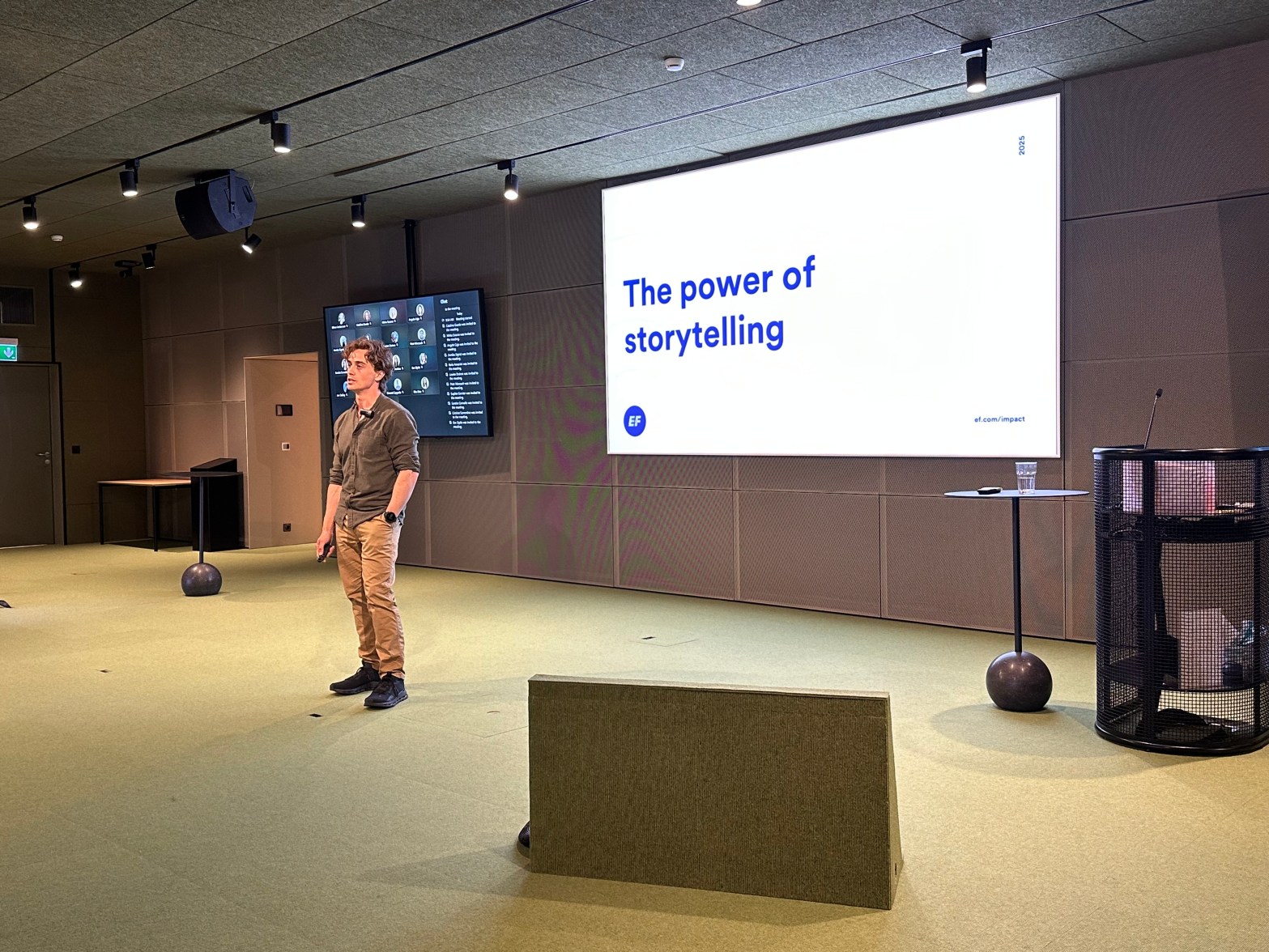
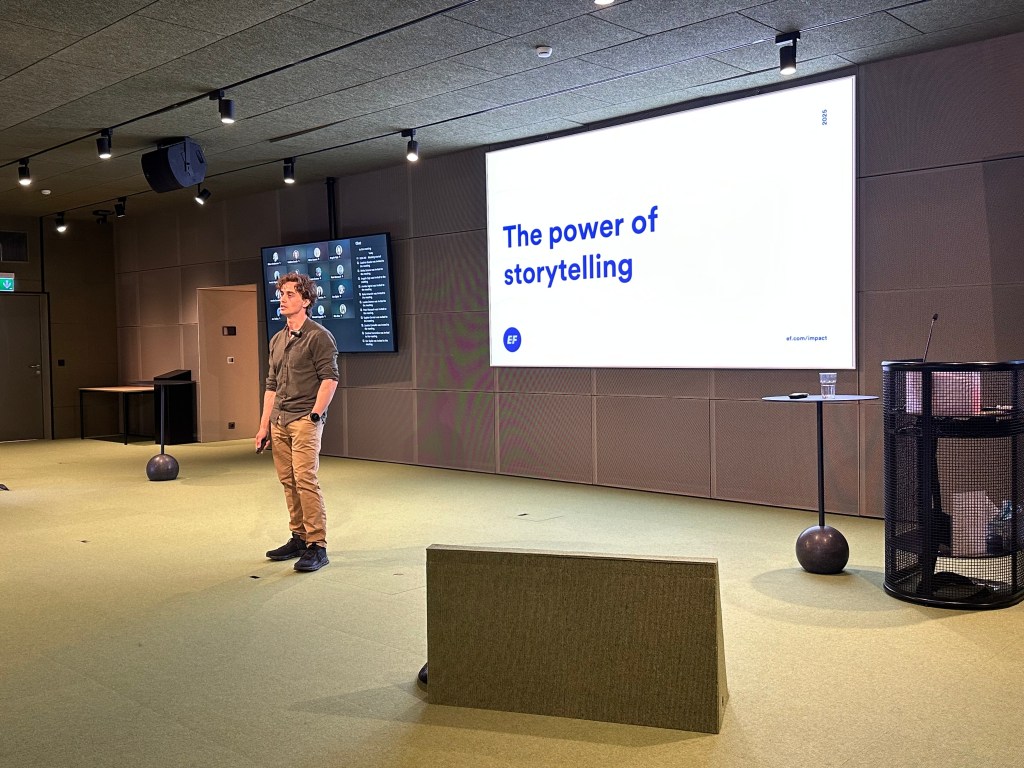
I used this quote yesterday in a talk I gave at work. For context, I work as a content writer and editor for EF Education First, managing their impact website.
My talk was centred on the idea that storytelling is more important now than ever – in fact, I’d go as far as to say it always has been important, we just keep forgetting that it is.
I am extremely privileged in my job that it is my responsibility to find, research, and tell incredibly moving stories about the work of EF. Yes, EF is a profit-driven company, but – as I said to my audience – I believe what it is doing is extremely powerful and pertinent in today’s world: That the world is a better place when we seek to understand each other.
It’s a powerful, impactful belief, one that transcends bottom lines to become a global message of intent; a railing against the current trend of entrenchment and protectionism we are seeing the world over.
As I took my audience with me towards my thesis that stories are crucial in spreading this message of EF’s impact, I saw many of them nodding along at my points on diversity, creativity, and storytelling.
Speaking to a few of them afterwards, I learned many of them don’t work in marketing, communications, or brand. Many of them came along simply because the title – “the power of storytelling” – resonated with them due of their love of stories.
Stories are in our DNA
One of the big messages in my talk was that stories are utterly intrinsic to us as a species. Stories are some of the oldest and most memorable forms of communication available to us. We can all recite the old stories we learned as kids (The Boy Who Cried Wold, Little Red Riding Hood, etc.), and that’s because they lodge themselves in our memory.
They’re part of who we are. All the way from campfire stories to TikTok videos which – albeit they are a facsimile for genuine storytelling – are often human-centred stories, and take a heck of a lot of work to do right.
As I prepared for my talk, I voraciously consumed presentations, videos, and articles on the rising trend of brand storytelling.
Everywhere I looked I was repeatedly told that people want to connect with brands at a deep level. While, yes, what a brand does and how it’s products stack up to its competitors is still a big decider in what we purchase (more on that later), we actually look for brands that say something about who we are – about what we believe.
According to the World Economic Forum, 70% of people buy from brands that align to their values. This isn’t news to many, but it’s what turns us from simply a laptop user into a Mac user; what turns us from a Nike person into an Adidas person; what turns us from fast fashion into a Patagonia wearer.
Patagonia, in particular, has planted its flag firmly in this territory, to the extent they are reducing the visibility of their logo on some of their products in what I believe is an attempt to prevent people buying purely for the status. Instead, in their products, in their marketing, in their positioning, they are sticking true to their brand.
And by goodness are they good at telling stories that reflect that.
The force-fed consumer
This all sounds wonderful to me. I’m a storyteller, and you’re telling me that more and more people are looking for brands that are values-based, and that more brands are putting money into storytelling? Hurra!
Then I think about AI…and I get confused.
Last week, Mark Zuckerberg (sorry) stated that Meta could start producing AI-driven advertising content for businesses. Some of this isn’t news: Meta’s algorithm has been customising ad content for years by determining which combination of copy and imagery yields greatest results.
But the actual outsourcing of the creative process to AI is a slippery slope. I don’t think many large businesses will want to lose control of their brand in such a way, but I can’t help feel like the foundations are already compromised.
I read a blog that the reason many brands are doing this is to “keep up with the demand for content”. When I hear that statement, several big questions come to mind:
- What measurement are you using to determine this?
- If it’s true, what kind of content are people actually looking for?
- Is this less about consumer desire, and more about business desire for profit?
For me, hearing people like Mark suggest that we are all dying for more content makes my stomach curdle. I hate to use this analogy, but it puts me in mind of animals being force-fed before being sent to slaughter.
Except, on this occasion, it’s us being force-fed a bunch of low-nutrient, fast-food content before we’re packaged up and sent to the checkout to buy the next item we don’t need.
Perhaps the writing has been on the wall since the dawn of capitalism – and the consumer. And, sadly, capitalism itself has turned many of us into output-oriented consumers as opposed to process-oriented humans; where they creation of what we consume matters very little to us.
What next?
This leaves us with a bit of a head-scratching situation. On the one hand, data shows we want brands that walk the walk and don’t just talk the talk, and that we can see human-centred stories are something we crave. On the other, we are seeing more executives saying to “keep up with content demands” they are outsourcing creativity to robots.
I am not a complete anti-AI individual. I believe it has some advantages. However, I do not believe we are all on the hunt for the cheapest, lowest-nutrient content out their to fill our insatiable desires.
Attention spans may be small, but we still see films over two hours long topping the billboards. We still see story-centred brands like Patagonia soaring. We still see brands like Adidas, and On pouring millions into genuine storytelling.
I don’t see a world where a brand outsourcing its stories to a machine can say anything about who we are, or what it means to be human. It’s the antithesis of that.
That just leaves me to say that I want this story to end with the hero – human-centred stories – the victor. And I believe we should be celebrating brands sticking to that belief. Yes, AI might have a hand in their creation – perhaps in ideation, automating some repetitive tasks – but that, in the end, they are stories that only humans could create.
And if I am wrong, I don’t believe human-centred brand storytelling will go anywhere. Perhaps, just as with the hospitality industry, we may see a separation of fast-food AI content, and beautiful Michelin star storytelling.
What you need to remember
If there’s anything I want you to take away from this, it is this:
You are in the wonderfully privileged position to choose what you consume. Mournfully, a cow in a battery farm does not have that choice. It’s life is already determined.
Yours is not. You can decide to eat AI slop, or you can seek out green fields of genuine storytelling. Where you find content that is AI-generated drivel, turn your back; when you see stories that light up your imagination, praise them.
We are still consumers. Right now, the capitalist machine wants our money either way – an issue I feel is almost far too complex to try to unpack here. However, Big Tech believes we want more content, but I’d encourage you to remember you are in the driving seat here.
So, go out and tell a story.
 Ross Runs Wild