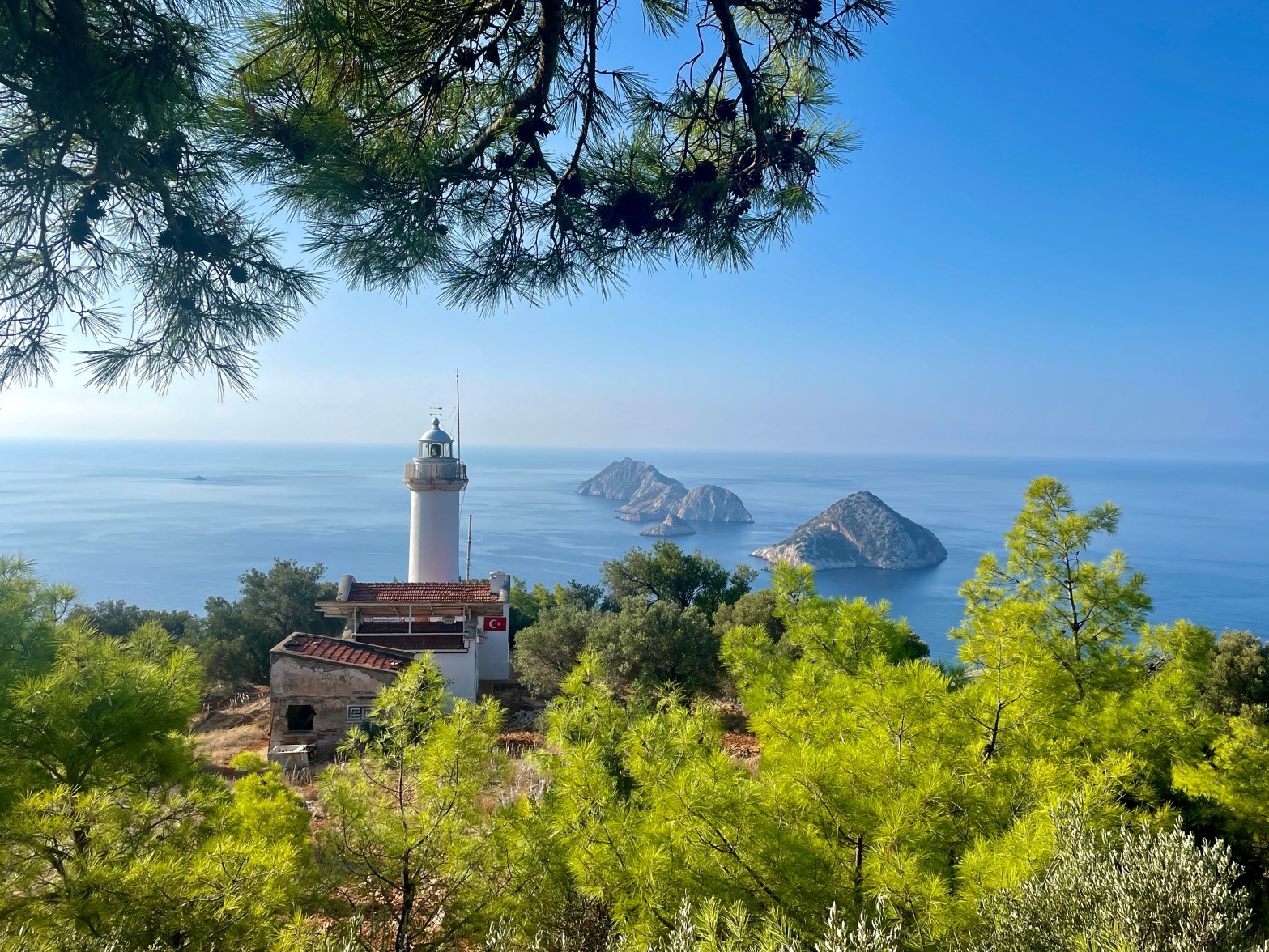
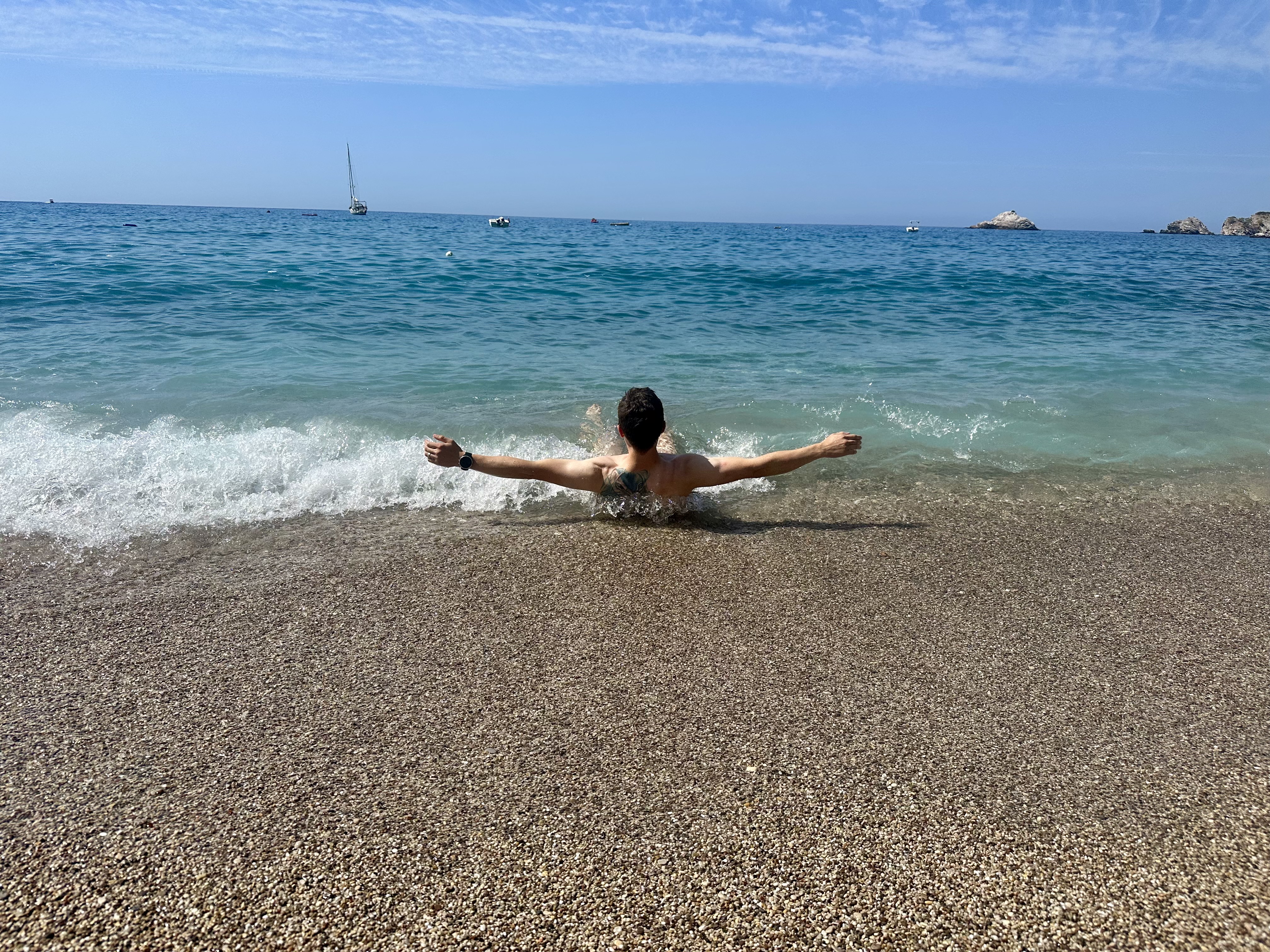
The waves washed over my dust-covered legs as the sun shone a spotlight on this little corner of the Mediterranean coast. This tiny pocket of paradise, hemmed in tightly on all sides by sweeping mountains and the seemingly never-ending sea, was the first stop on our Lycian journey.
As I slid into the water, I let the warm sea envelope me. As a Scotsman, the novelty of temperate open-water was not lost on me. The sun glinted on the rocks as the light danced across the turquoise water.
The taste, the smells, the sounds, the scenery – it all brought to mind images of, well, here. The definition of Mediterranean paradise.
Washed clean of my earthly coat, water running in rivers down my legs, I plonked down into a chair next to my wife. The dust was soon replaced by crystallised salt as my skin dried quickly in the afternoon sun. Tired, invigorated. The first day of our Turkish fastpacking adventure was complete.
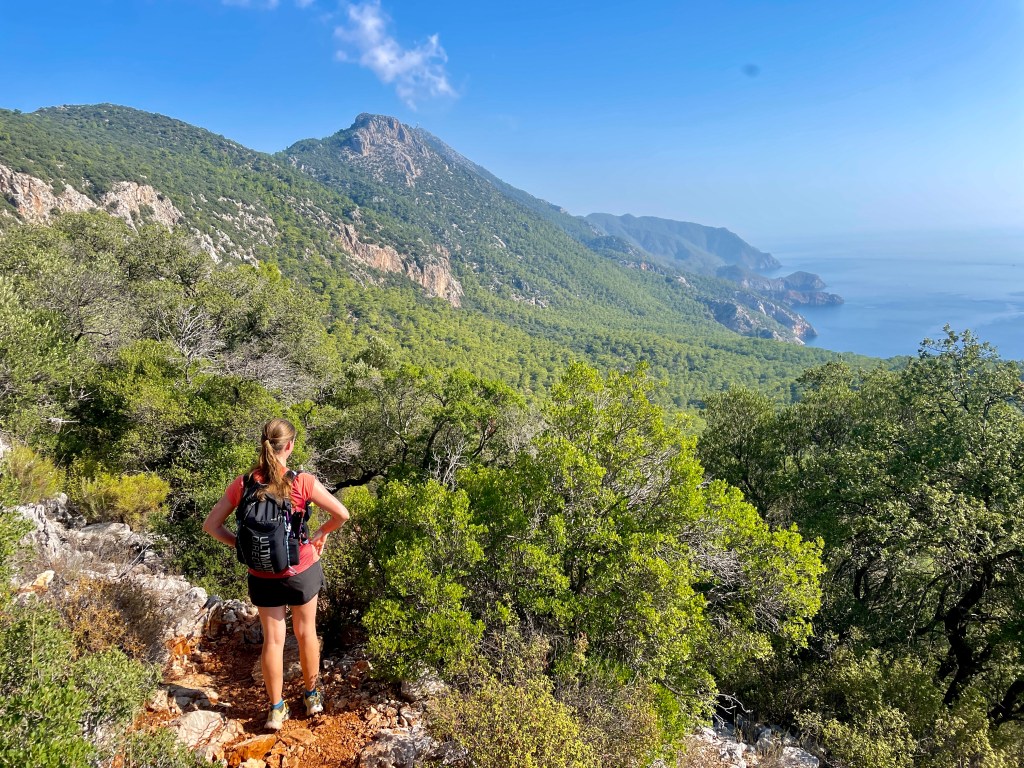
The idea
It’s now a year since that magical day on the Lycian Way in Türkiye. I wrote about the preparation for the route in a previous blog, but since then the small matter of living in a van and exploring Europe took over my mind, and so returning to that trip has been a protracted endeavour.
As I mentioned before, my wife, Bodil, and I got married last April. The honeymoon had to be a grand adventure, so we spent several months poring over maps and guidebooks, reading blogs and burrowing into the clunky websites of half-forgotten long-distance trails in Europe.
We set out a few parameters: Novel and unique; adventurous but ideally not requiring camping kit; and something that would take 2-3 weeks to complete. The more we researched, the more the Lycian Way cropped up. And so, after reading Kate Clow’s guidebook, we set our sights on the ancient Lycian coast of Türkiye and the route that navigates its historic roads and trails.
Before we begin…
To avoid this blog being tens of thousands of words long, I am going to spare you the full 2-week account of our journey. Here and there I will dip into anecdotes from the trail, but largely this will be a practical guide to help you either hike or fastpack the Lycian Way.
In order to allay any notions of grandeur: If I make reference to ‘fastpacking’ or ‘running’ the route, remember the trail is over 400km-long through harsh and, sometimes, mountainous terrain. If I were to put a number on the amount of time spent running in those 450km, it would likely fall into the 20-25% range.
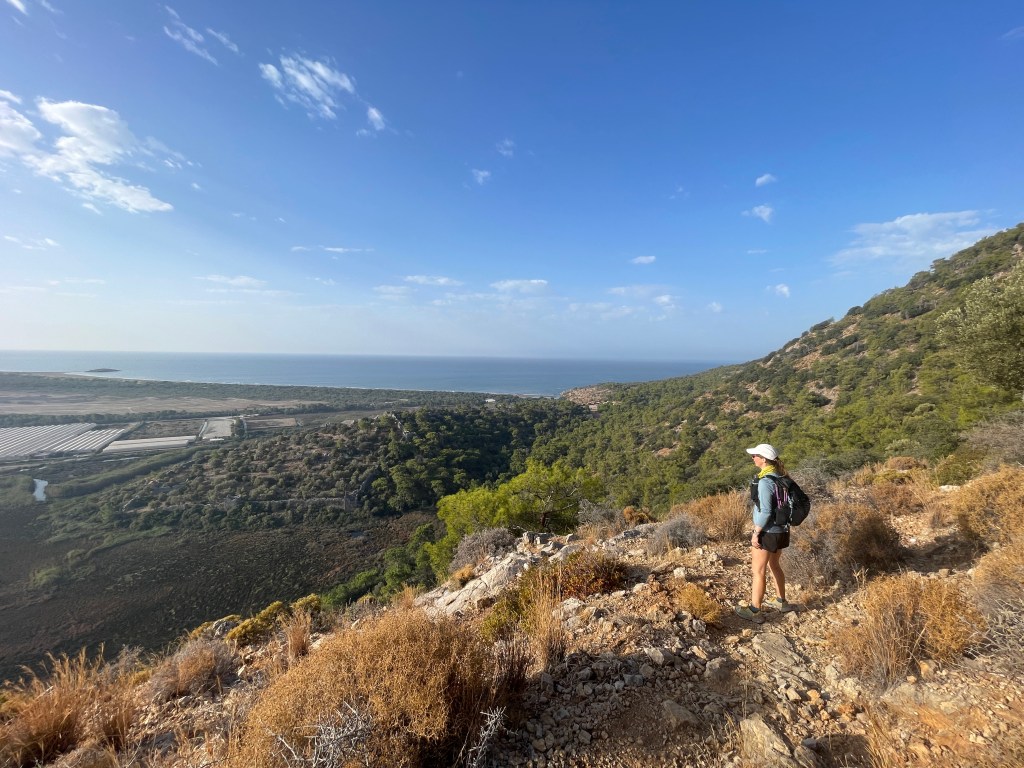
The key difference between what we were doing and those hiking the trail largely came down to how much we packed. In reality, I believe any proficient hiker could complete the trail in the time we did so long as they were disciplined enough to dispense with luxuries and slim their packing list down.
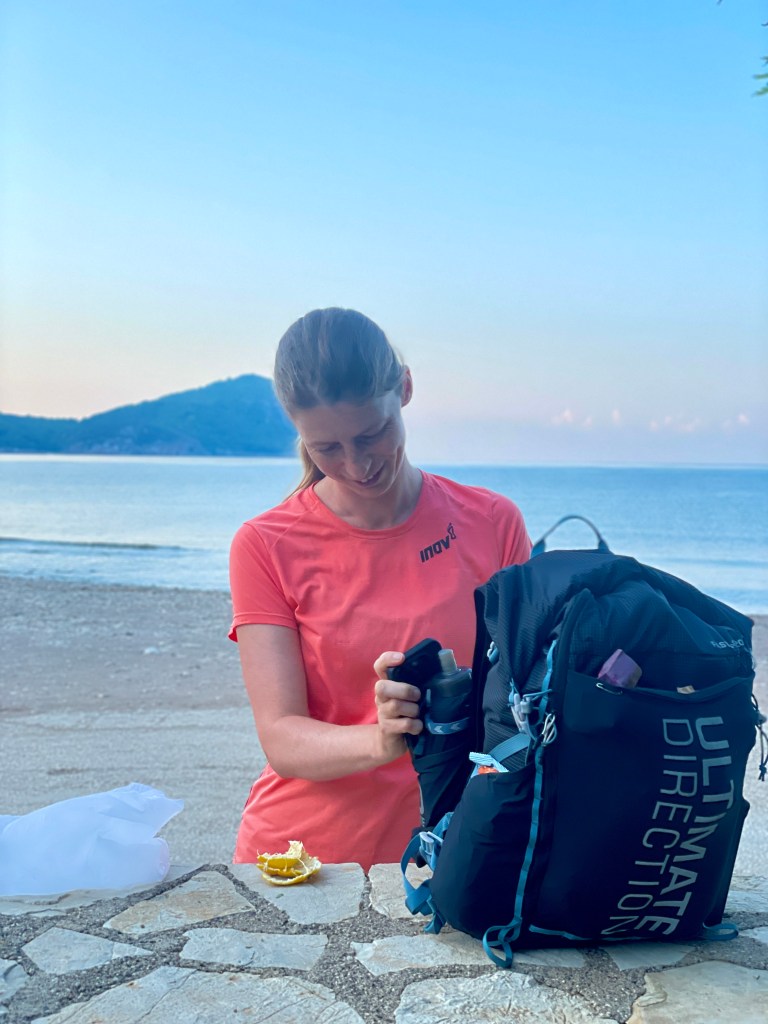
We ran with 20L backpacks (Ultimate Direction Fastpack 20s to be precise) and found them to be more than suitable. You can find the full packing list in the preparation blog I wrote previously.
The essential items
To get the most out of your Lycian Way journey (and save yourself headaches and confusion along the way), make sure you do your research.
That research includes reading any blogs available (like this one!), but also picking up a copy of Kate Clow’s guidebook.
The guidebook is dated in places but new versions have been released since the original. Kate is based on the trail, so what you are reading is her first-hand account of the route.
To supplement the guidebook, I strongly recommend downloading the TrekRight: Lycian Way app and making it available for offline use. You would be surprised the number of times we relied on this for finding the trail and supplies along the way.
Every evening we would sit reading the next day’s section, reviewing the GPX files we had on komoot, and cross-referencing those with the app. Discrepancies always creep in, so make sure you have reviewed everything at your disposal to give yourself the best chance of having a great time!
When to visit Lycia
Another way to ensure you enjoy yourself is by choosing the right time of year. This is southern Türkiye, meaning the mercury can easily pass 40ºC in summer, so avoid visiting at this time.
Thus, shoulder seasons are the best. Higher sections (particularly those above Çirali) still hold onto snow until early spring, so late April to early June is perfect, especially given the riot of spring colours and greater supply of water at this time.

We chose September and October to visit, mainly due to work and other commitments. The climate tends to be more agreeable but we still faced temperatures in the mid-30s, meaning we had to start most days before 7am.
One day, the temperatures hit me particularly hard. I will go into the route in a moment, but on the day from Kaş to Sahil Barak my legs and head turned to jelly in the heat. This particular section was exposed and the trail taunted me, going this way and that before disappearing altogether. In the end, I wobbled to our accommodation with what was likely heatstroke feeling utterly drained.
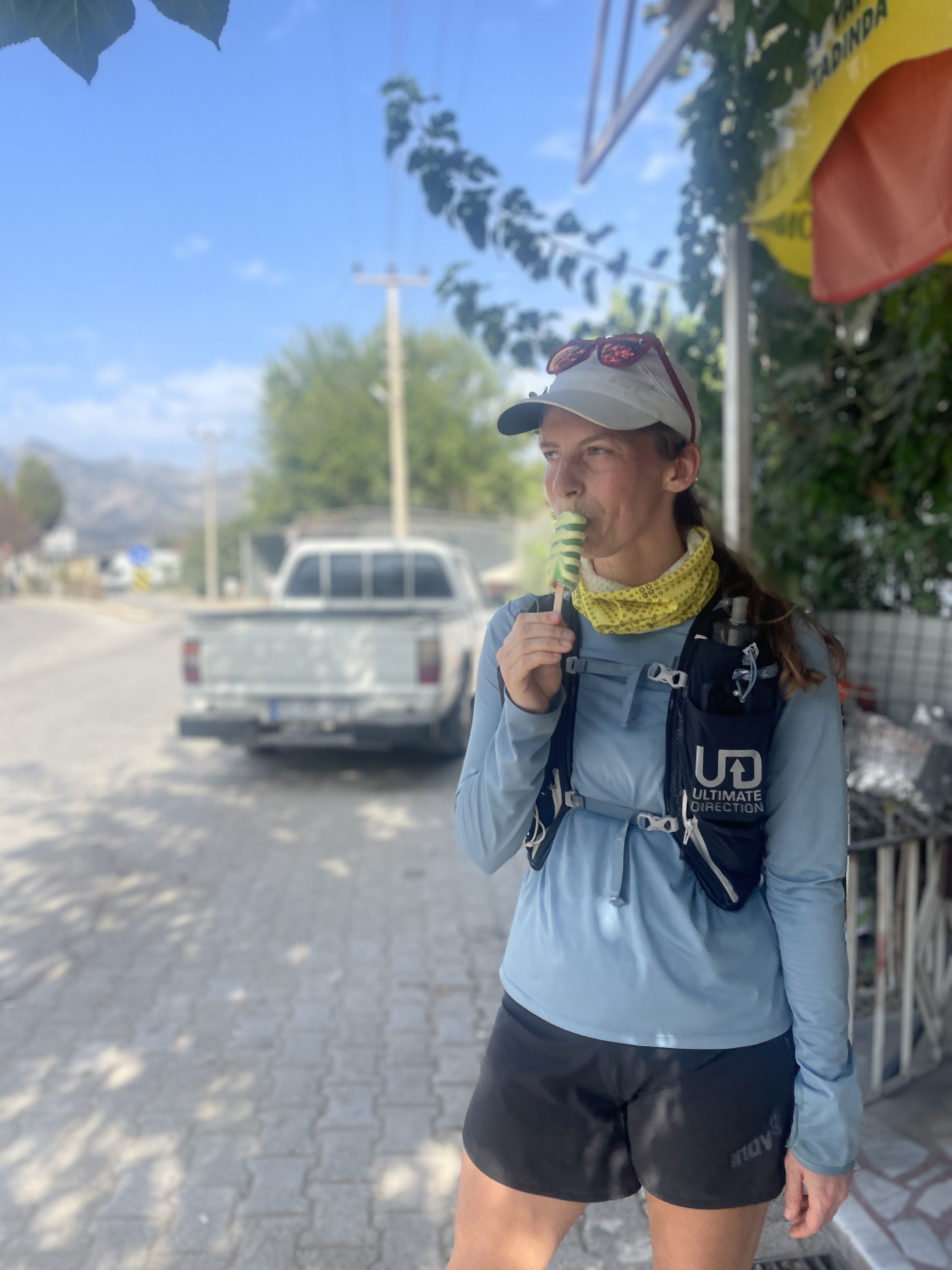
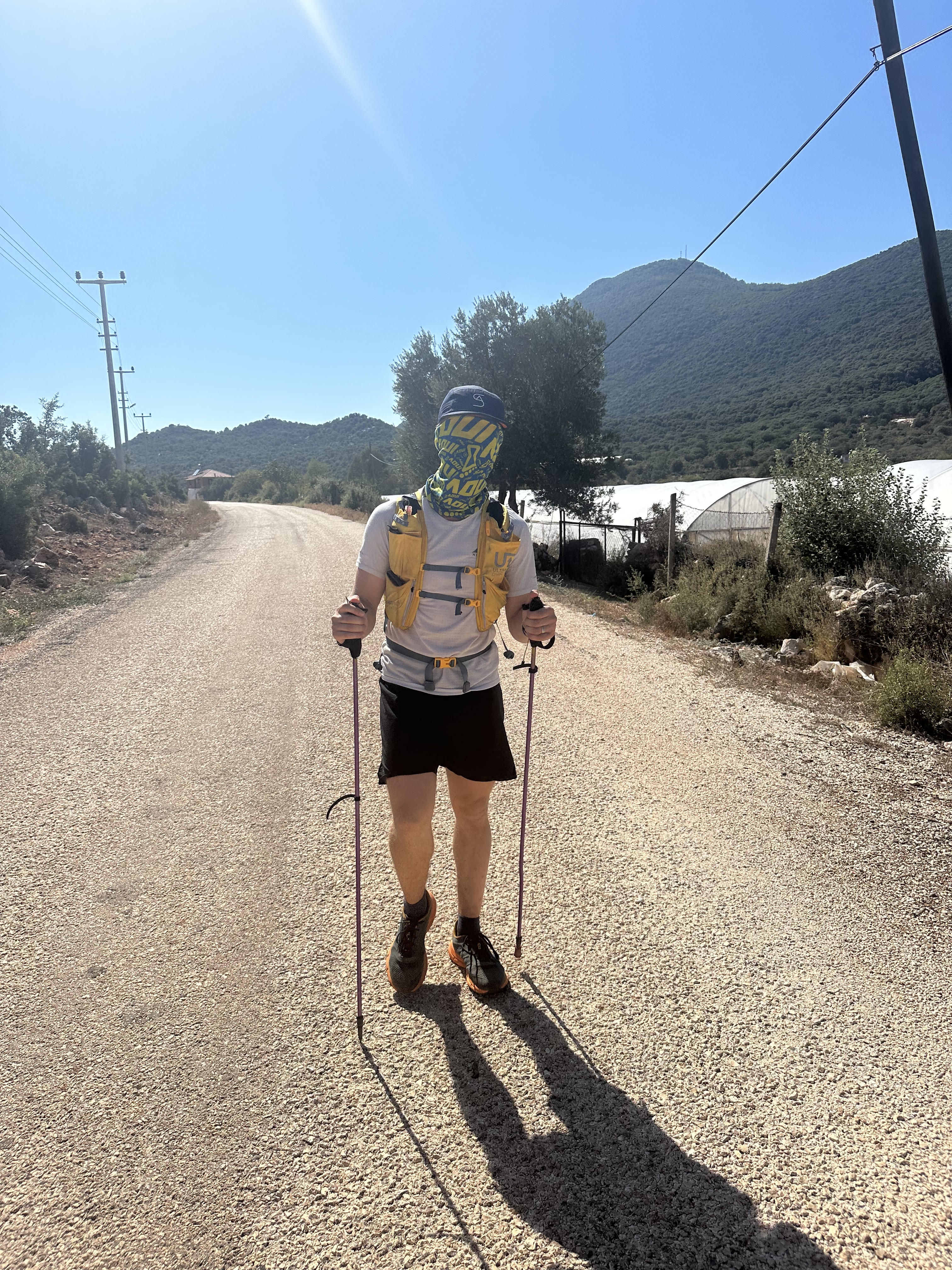
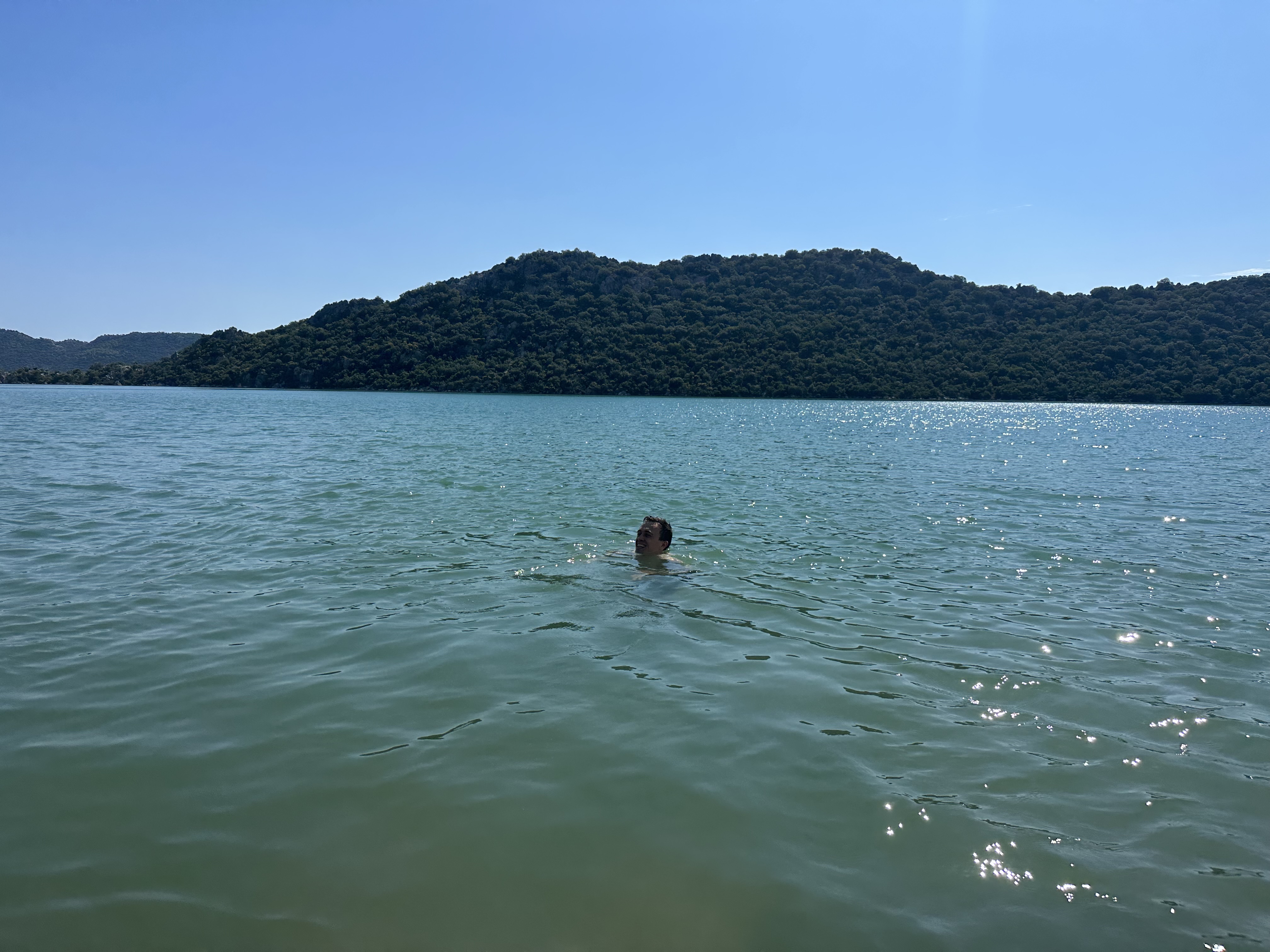
Above: Seeking shade and ice-creams along the route (left); me totally cooked (centre); infinite dips in the sea to cool down! (right)
It was that day that saw us cut our next day in two and completely skipping a remote 40km section to Finike to avoid a repeat of that situation.
All that leads me to say, be mindful of when you go and check where water refills are scarce.
The route
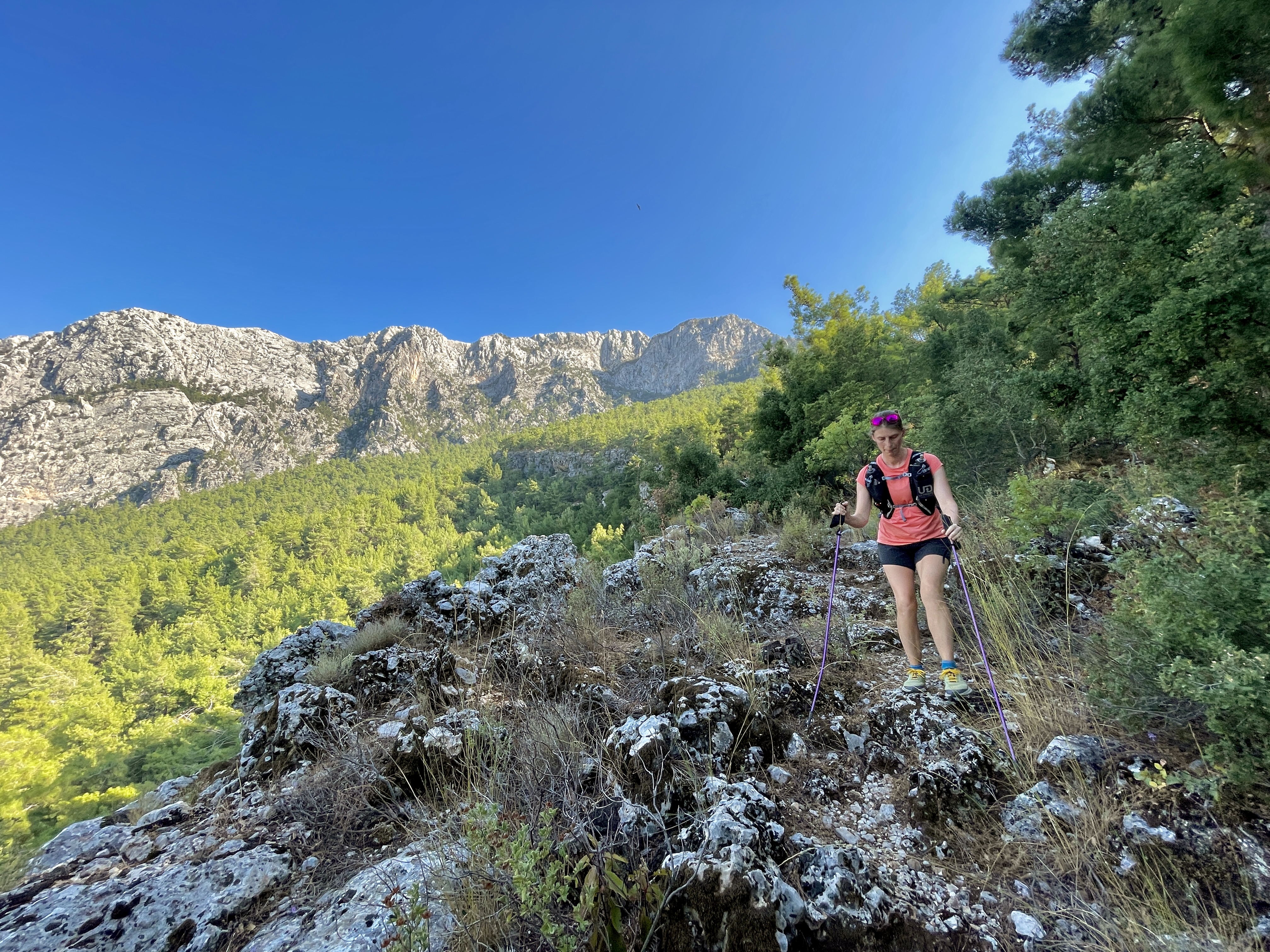
The Lycian Way is divided starkly into three sections: The expansive hillside and tough scrub from Öludeniz to Kaş; the rugged coastline from Kaş to Demre; and the forested mountains from Finike to Antalya.
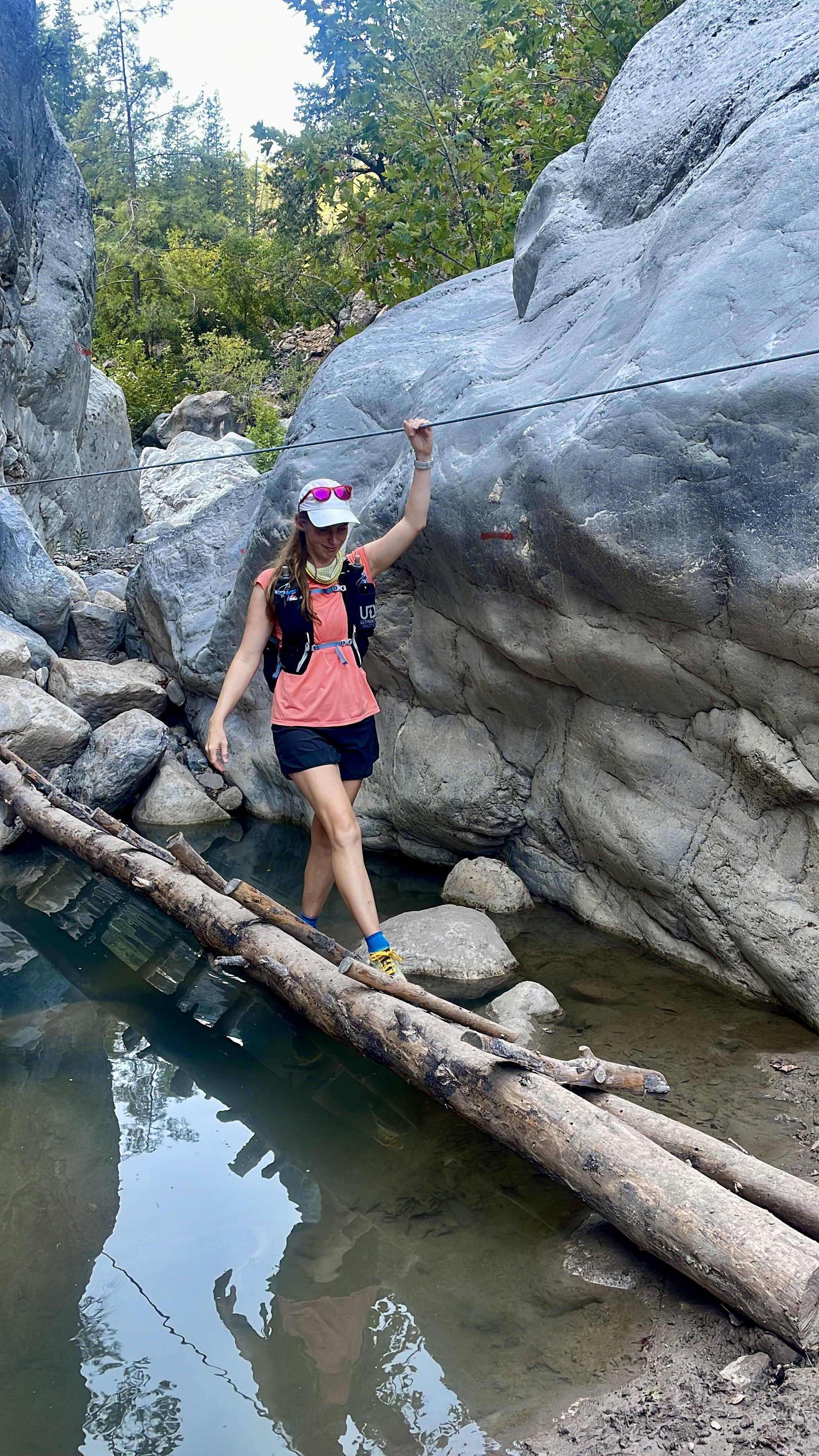
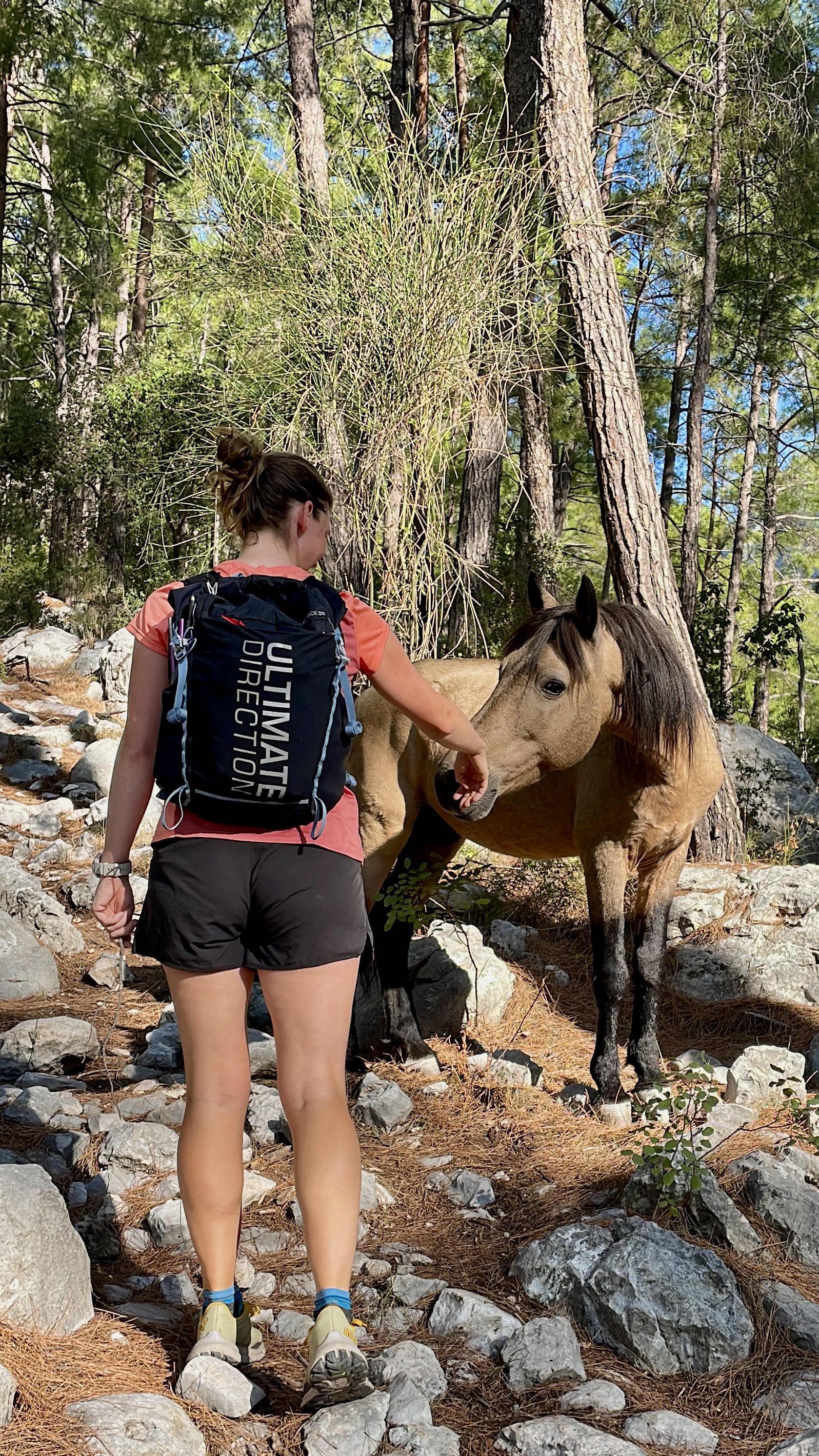
It is a sharp landscape: the spiny shrub snags at your clothing and the limestone eats away at the rubber on your shoes. It’s a wonder livestock find anything edible in this harsh environment, but they do!
I will never forget the variety of that first day. Leaving the yellow archway marking the start of the trail in Öludeniz, we skirted the soaring Babadağ mountain with a gigantic Turkish flag perched at its summit. It’s sheer face was decorated with layers of rocky slabs cascading on top of each other like enormous grey feathers.
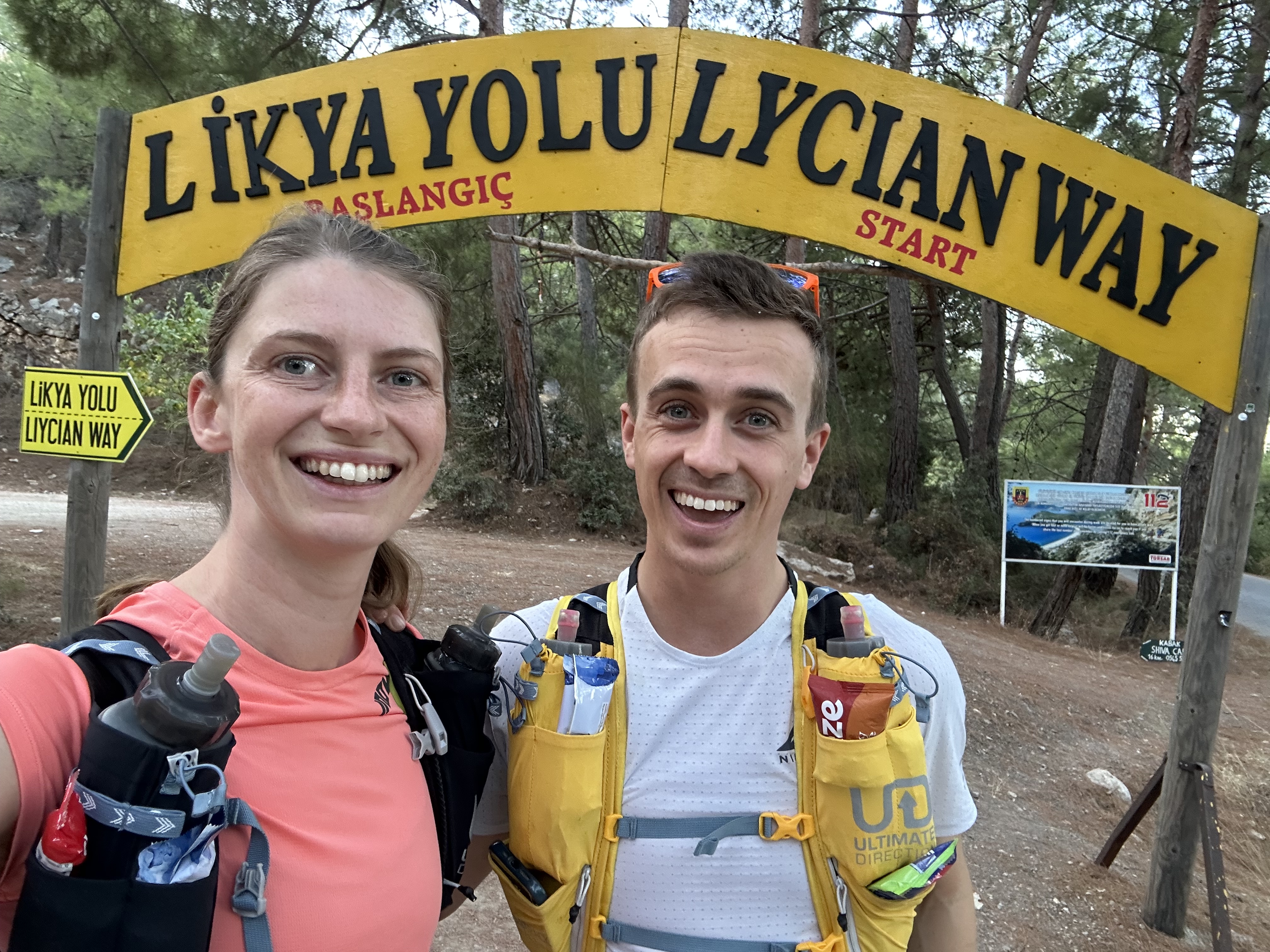
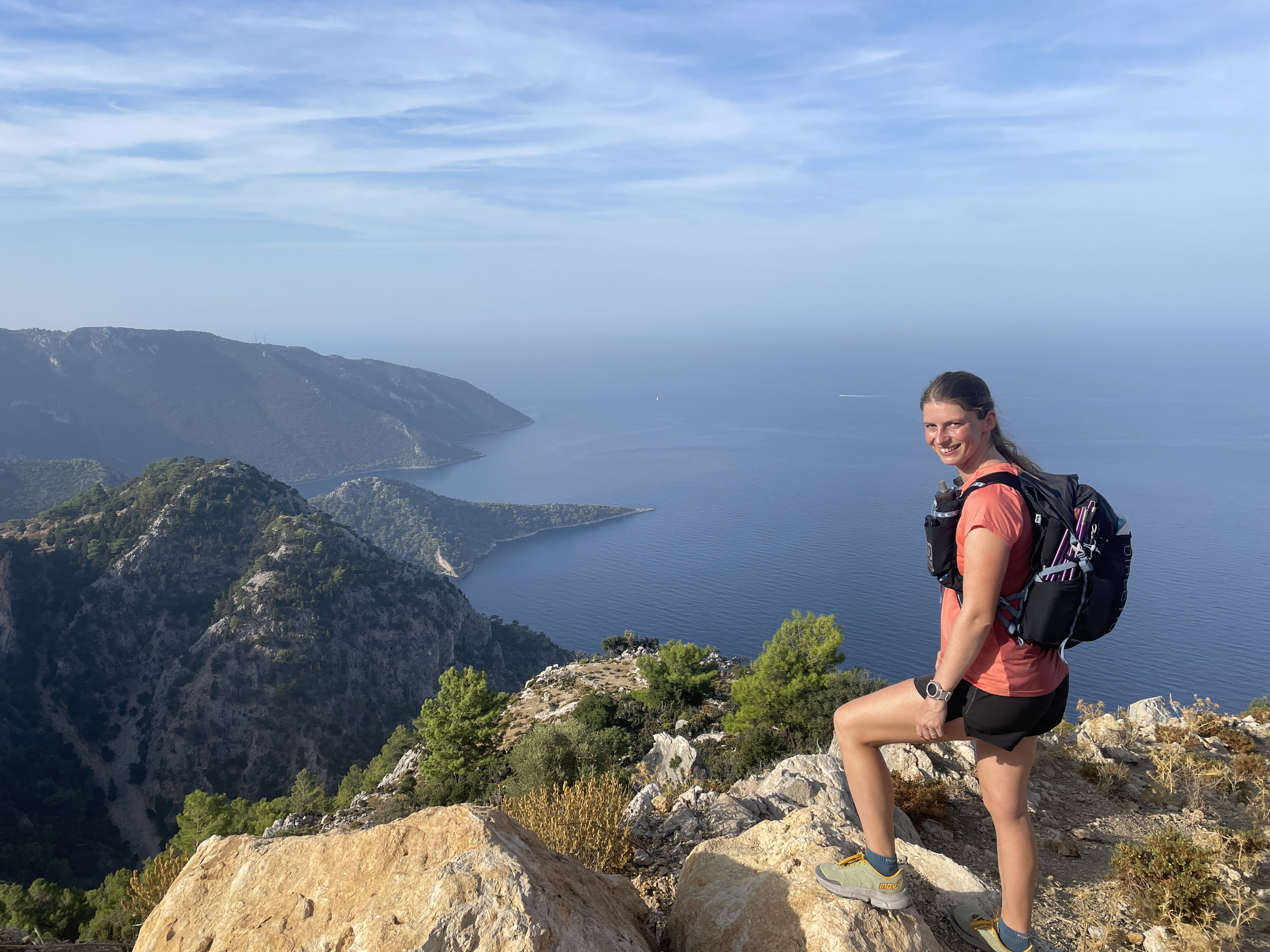

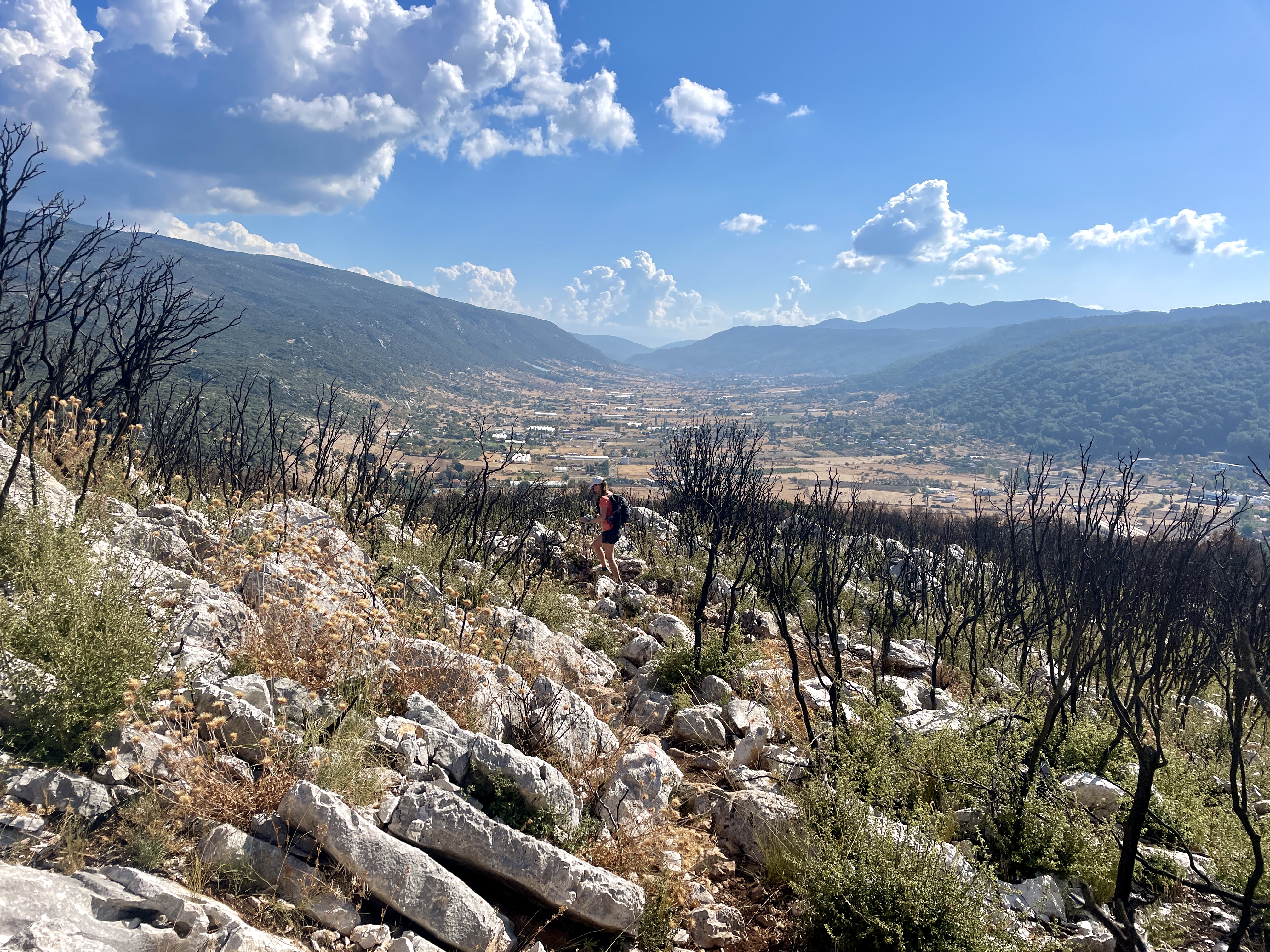
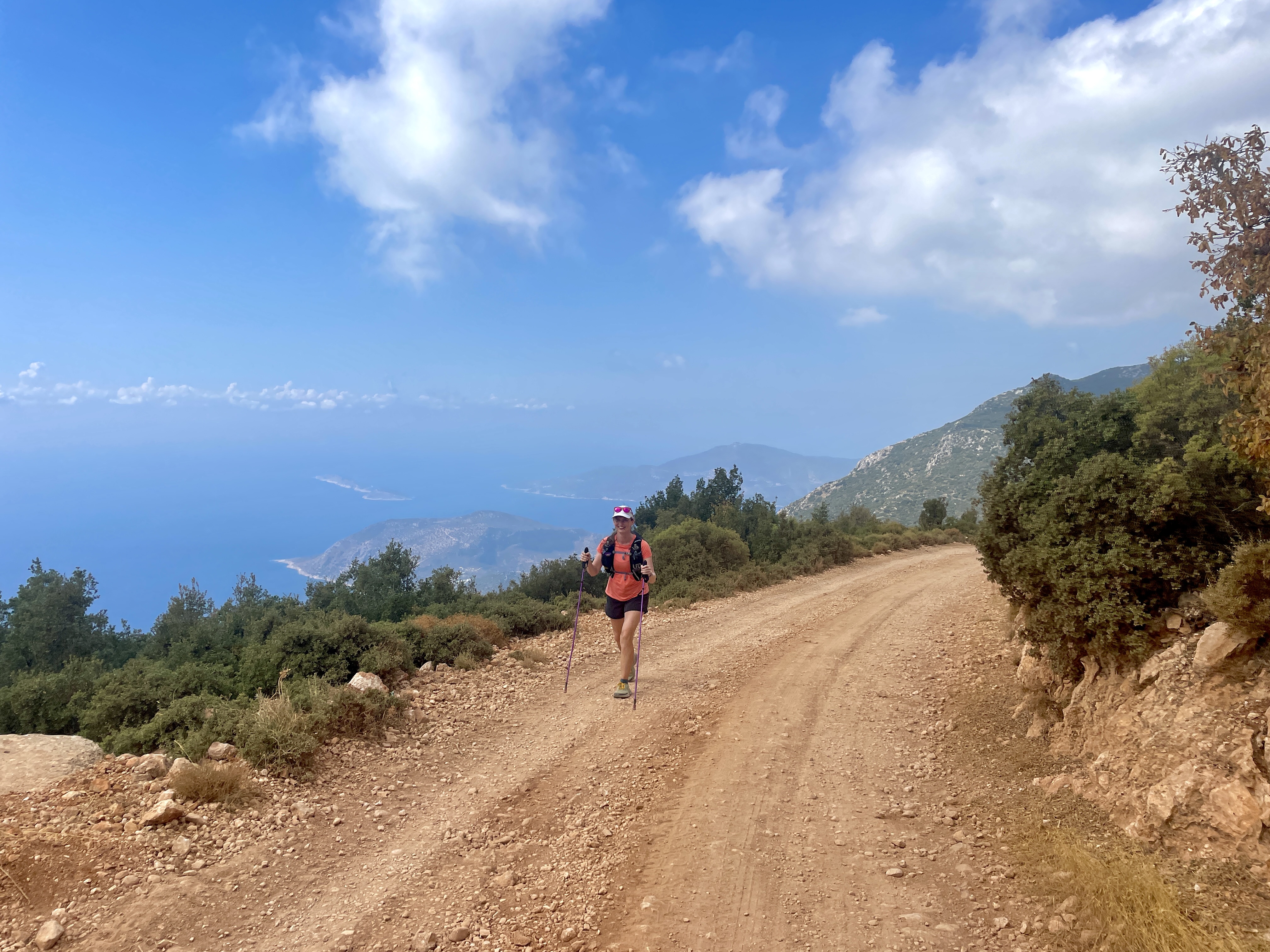
We passed through pine forests where beekeepers collected the sweet honey that would appear on our breakfast plates every morning thereafter, before dropping precipitously down to the secluded shores of Kabak.
Over the coming days, we would find the trail to straddle various dichotomies: Mountains and sea, ancient history and modernity. In places, old waterways and roads are slowly being consumed by the prickly vegetation. In Europe, historical monuments are imprisoned behind paid entries and turnstiles, whilst here you are crawling through ancient Lycian ruins just to get from A to B. It just goes to show how intertwined the people are with the land around them.


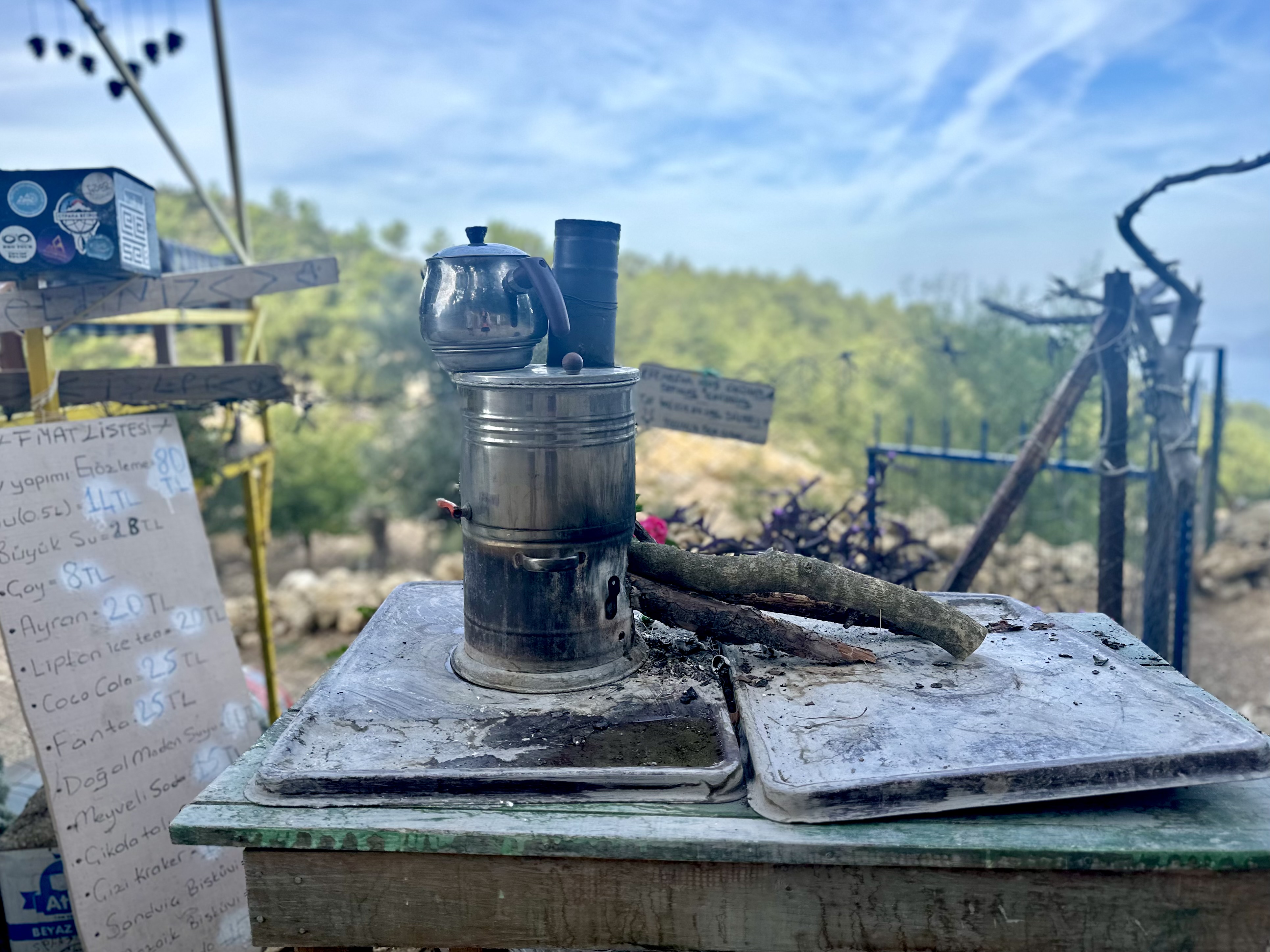
There is still a strong culture of transhumance and traditional farming in this region. We passed through numerous yaylas – high settlements where farmers bring their livestock to summer pastures before returning to the sea over winter. With each yayla we passed, bronzed hands reached out to offer çay (tea) thick with sugar, and warm smiles beckoned stories told through hand gestures and staccato sentences.
This blend of the people and landscape was really a characteristic of the first section, with the people we met just as hardy as the world around them.
The end of the first section came abruptly with the eruption of an enormous thunderstorm over Kaş, turning the dusty trail to cake mixture that made our shoes three times heavier. Following the heatstroke I mentioned earlier, we caught a bus to Finike and also skipped the next section along the shore to Karaöz – a pan flat, mostly tarmac section with little to no shade was not what we came for. Whist finishing the whole trail on foot was our aim, we were still here to enjoy ourselves.
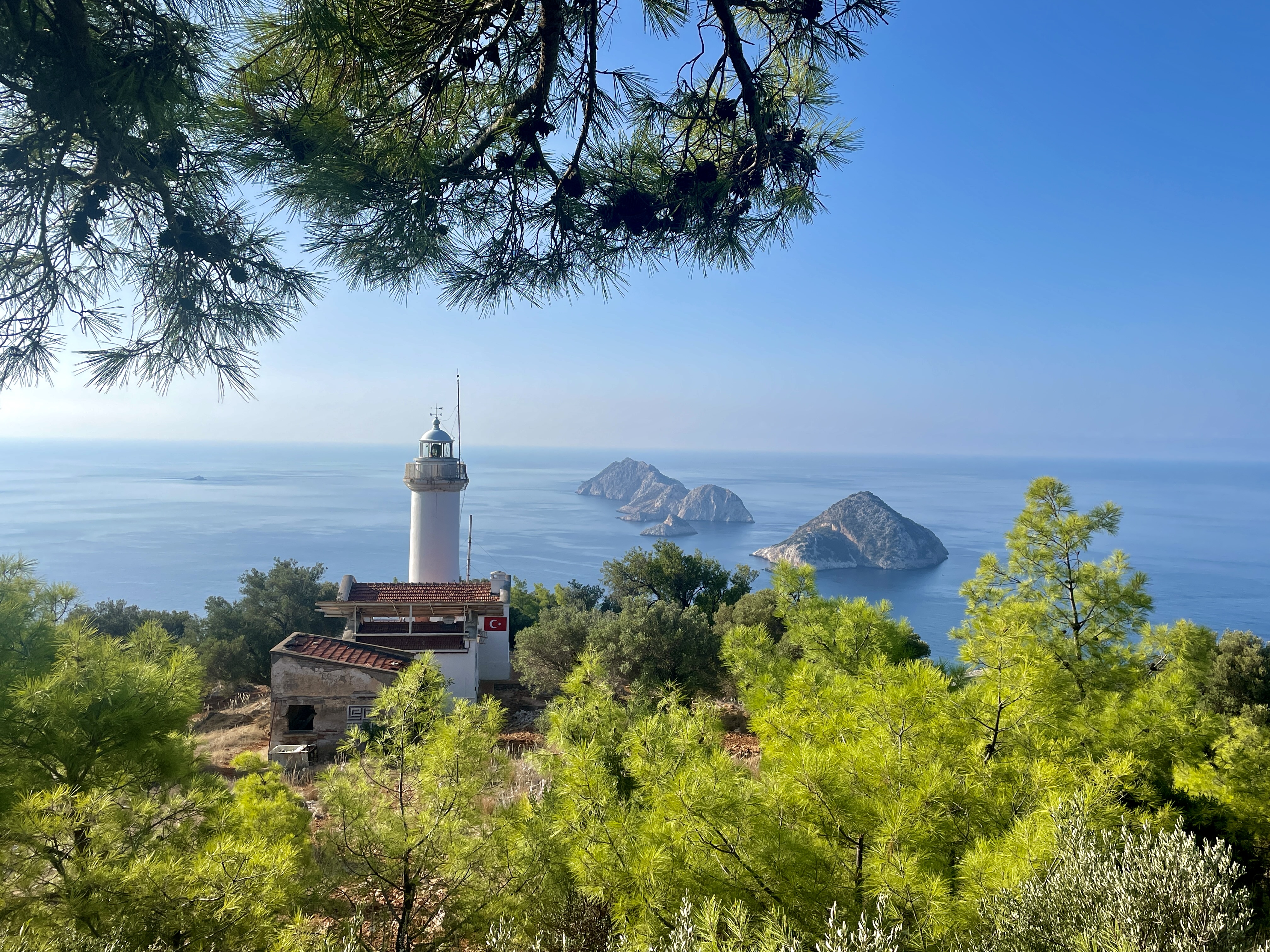
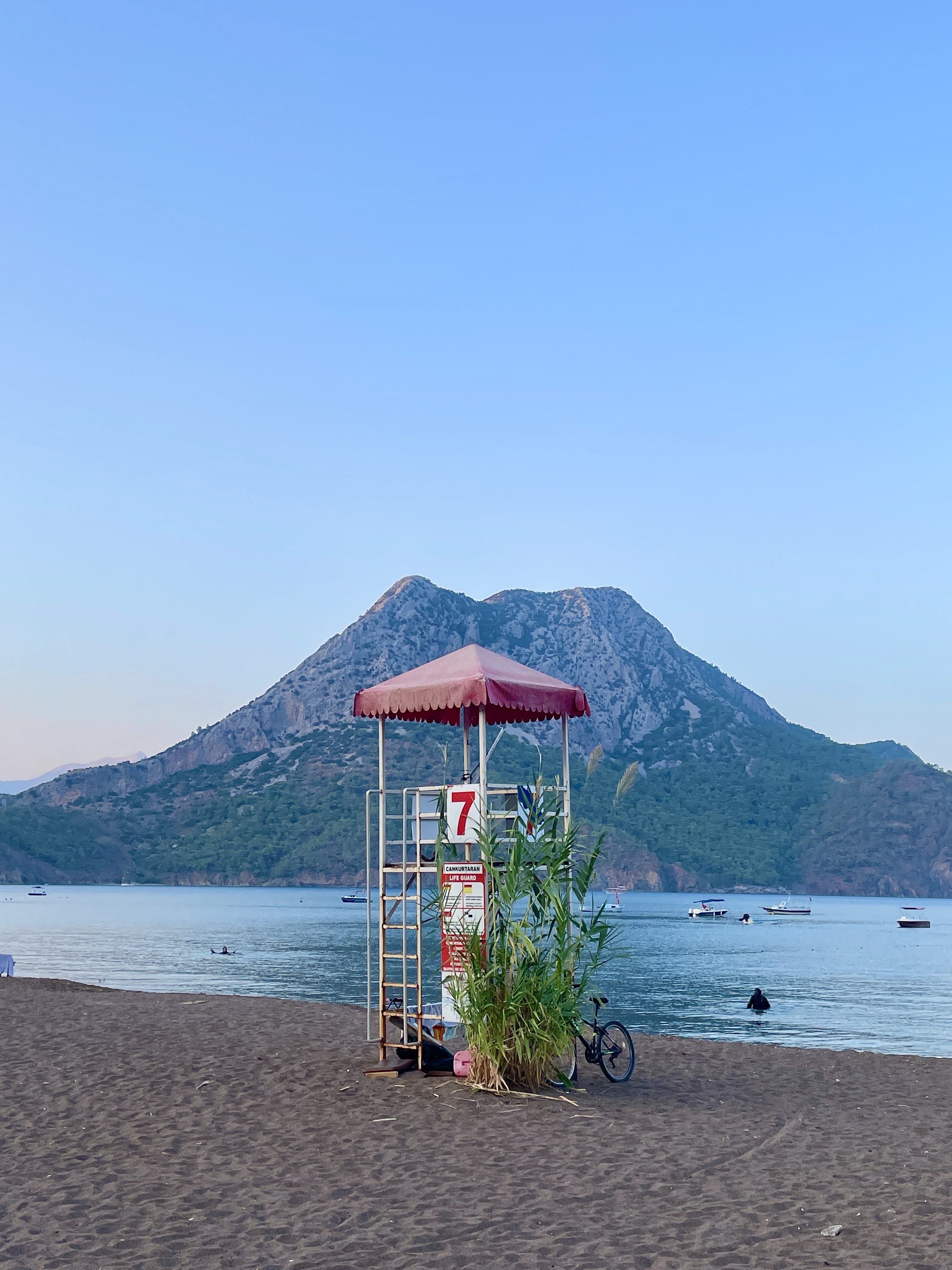
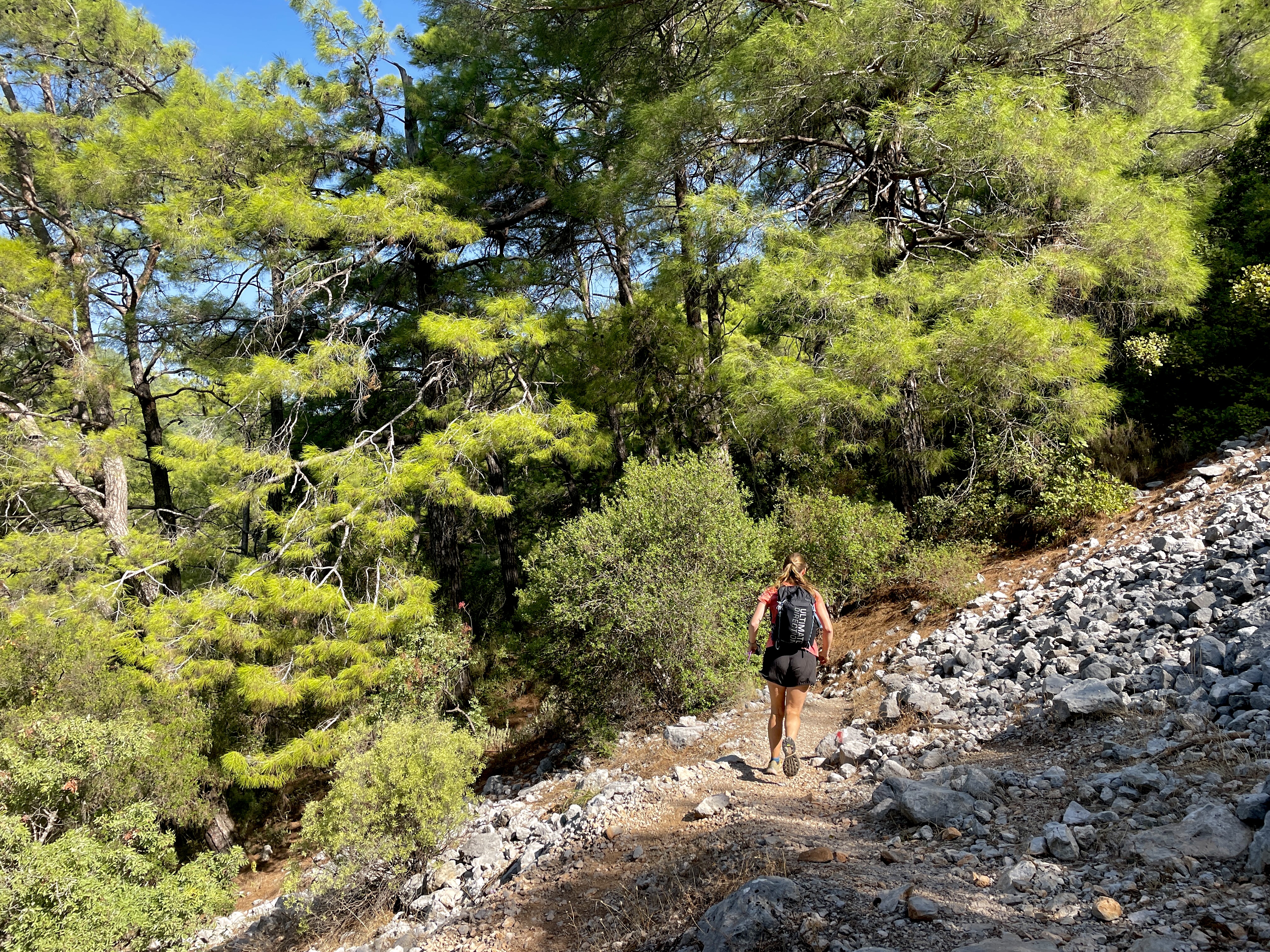
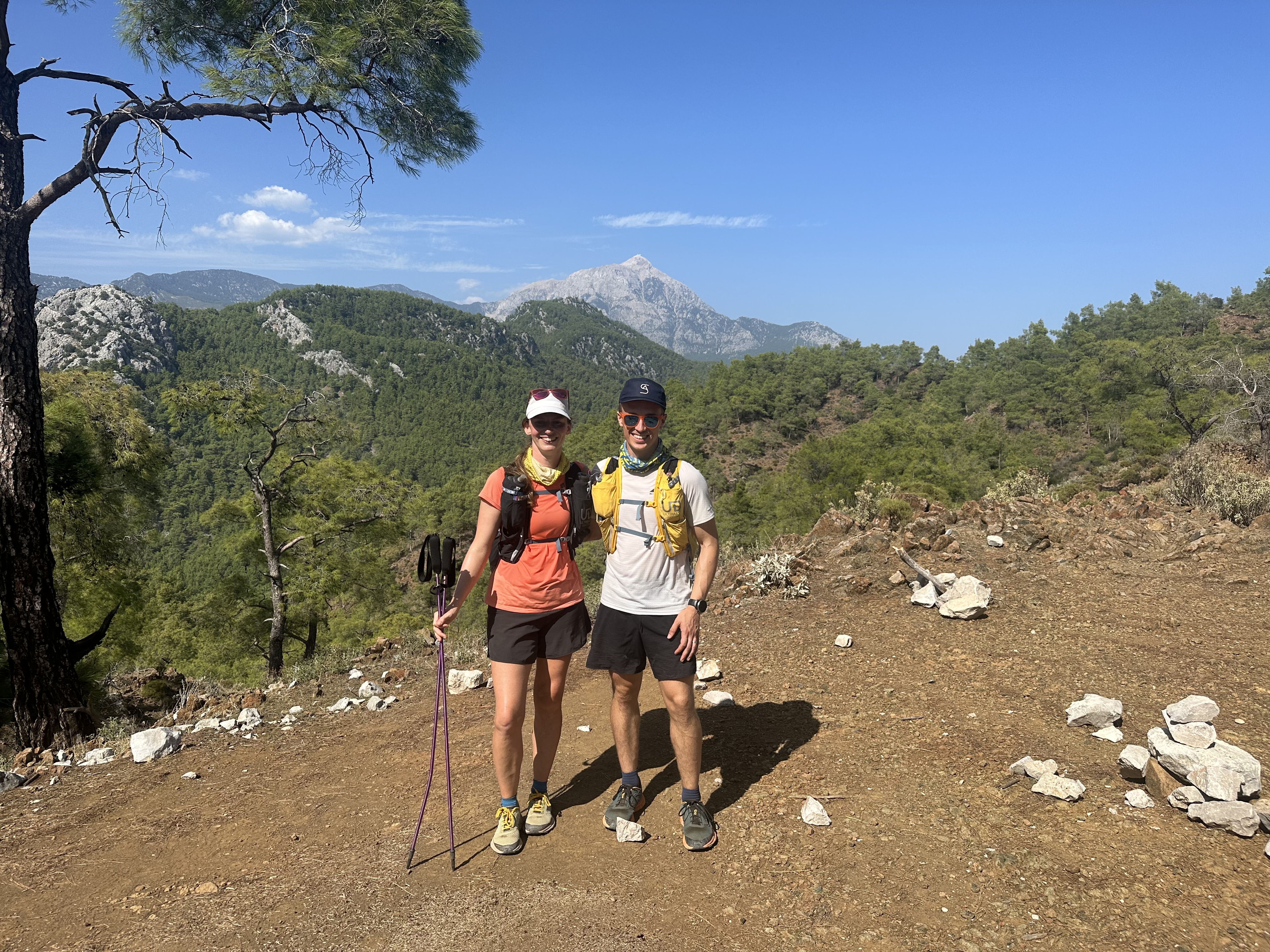
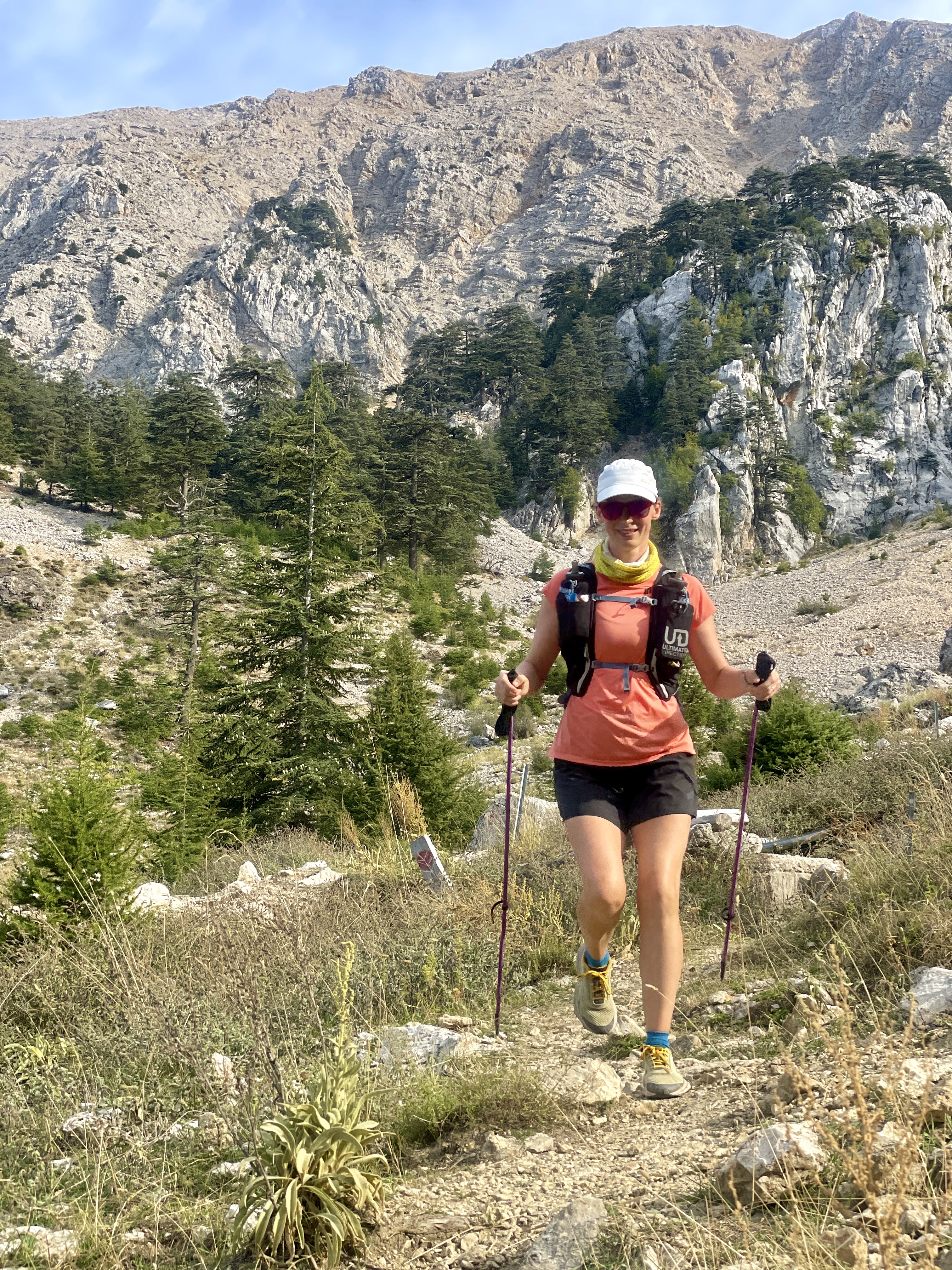
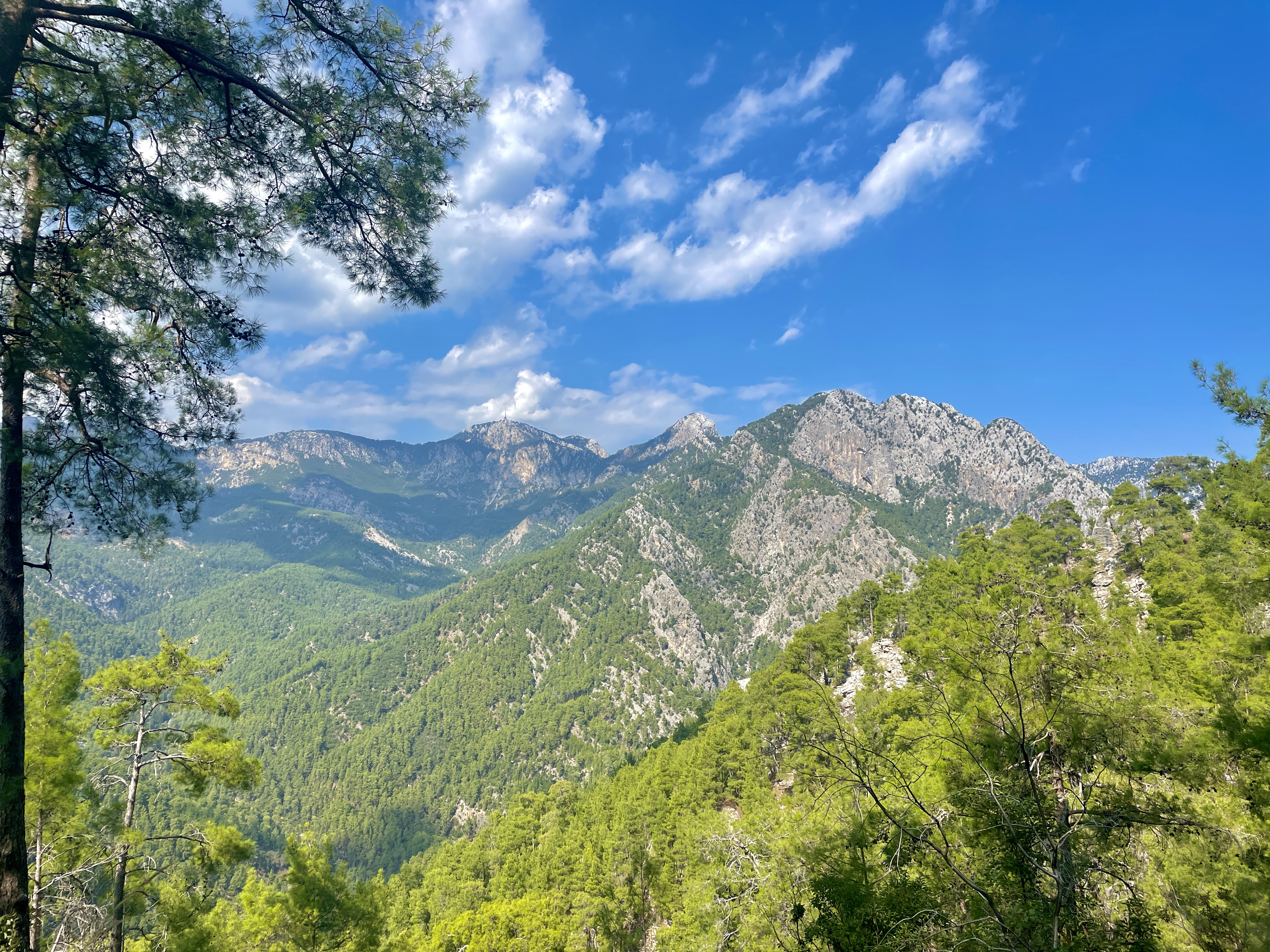
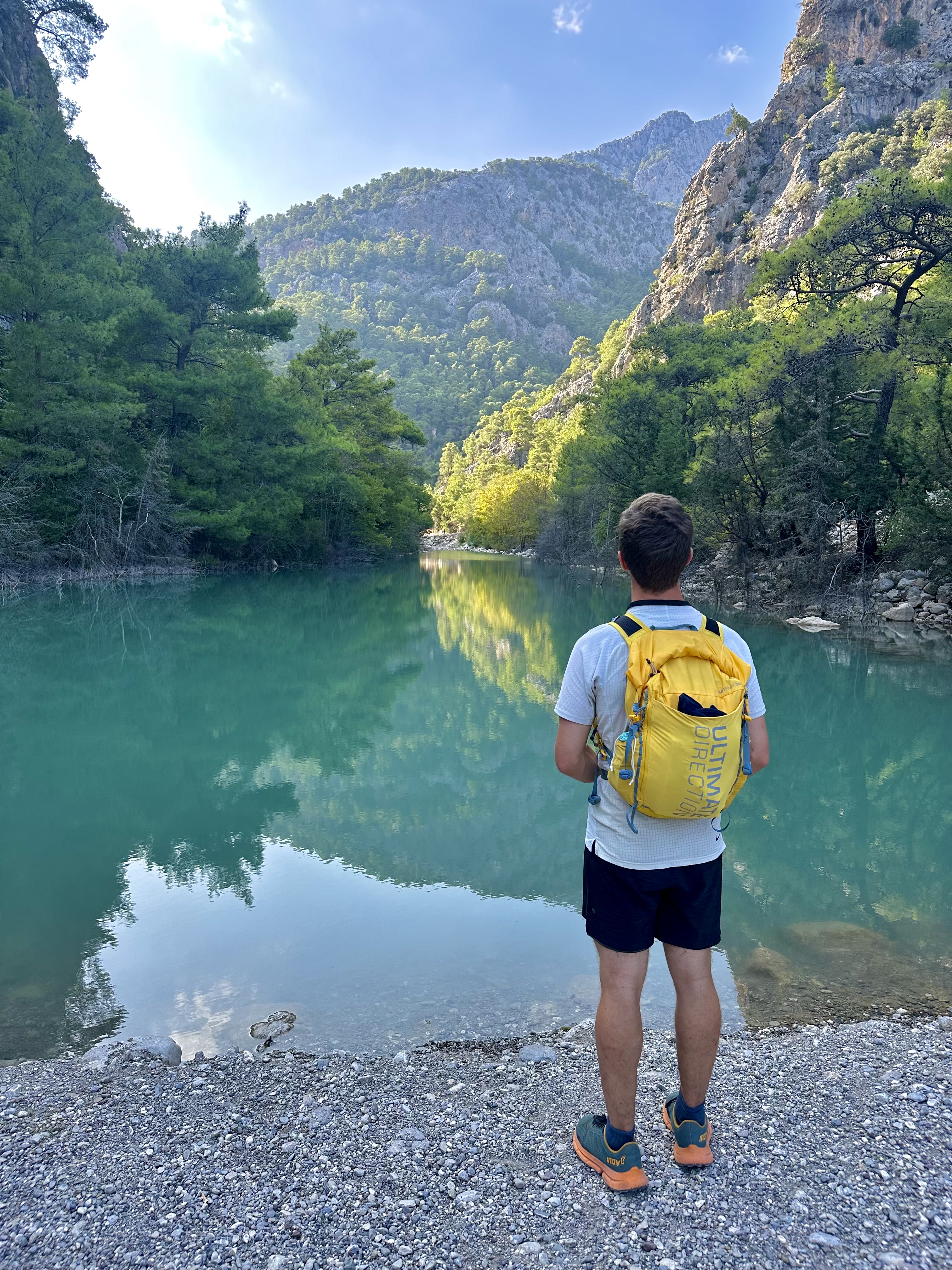
The section from Karaöz to Antalya was my favourite of the entire route. The eastern coast of Lycia was practically verdant compared with what came before; it was like we’d entered a completely different climate, as though the trail had evolved in the time we had been away from it.
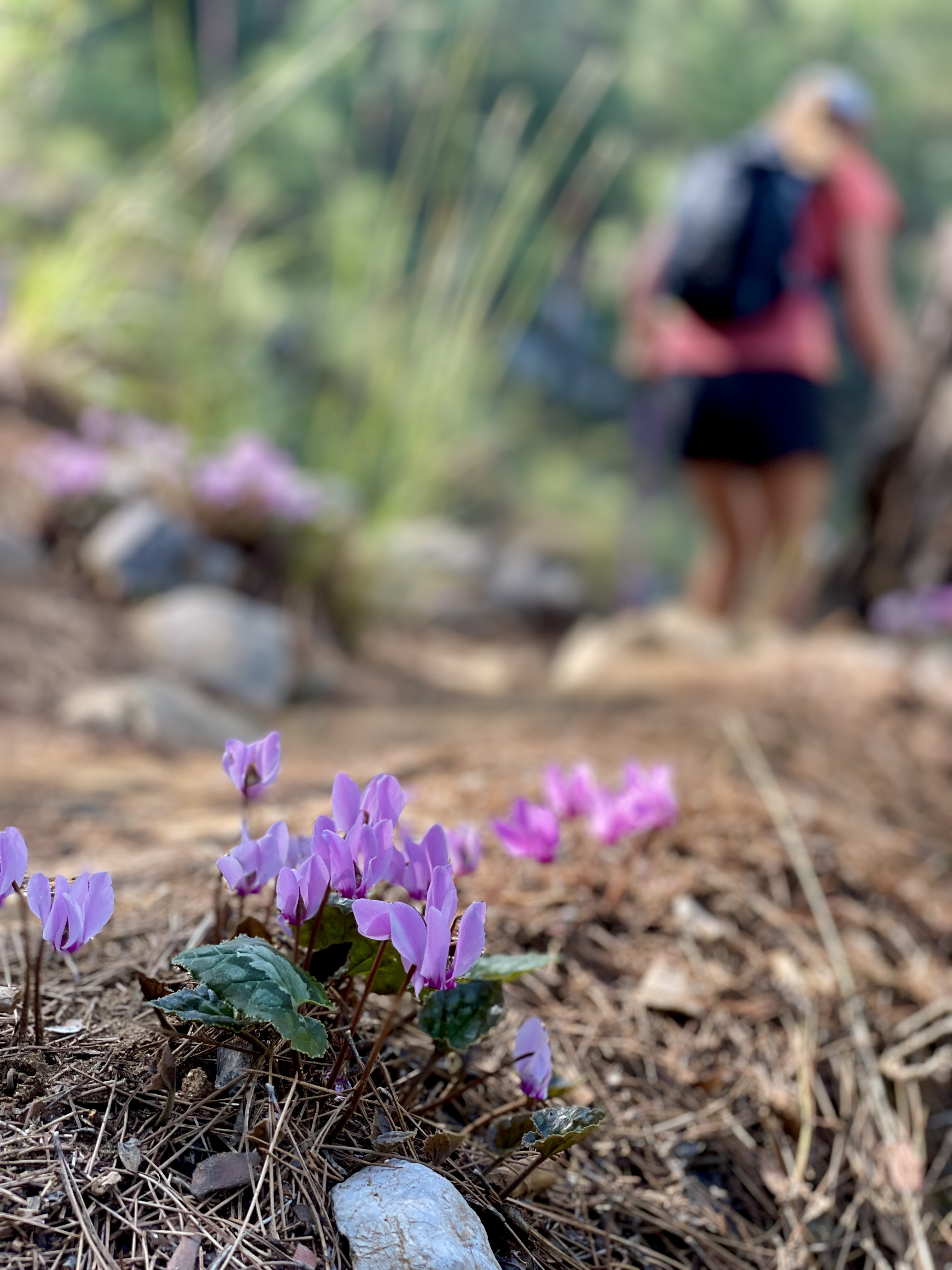
This section is perhaps more touristed, but this was low season so we had whole beaches, cafes and restaurants to ourselves. We passed through jungle-like wilderness, where twisted trees like muscular forearms arched across the trail, stretching towards the crack of light in the canopy.
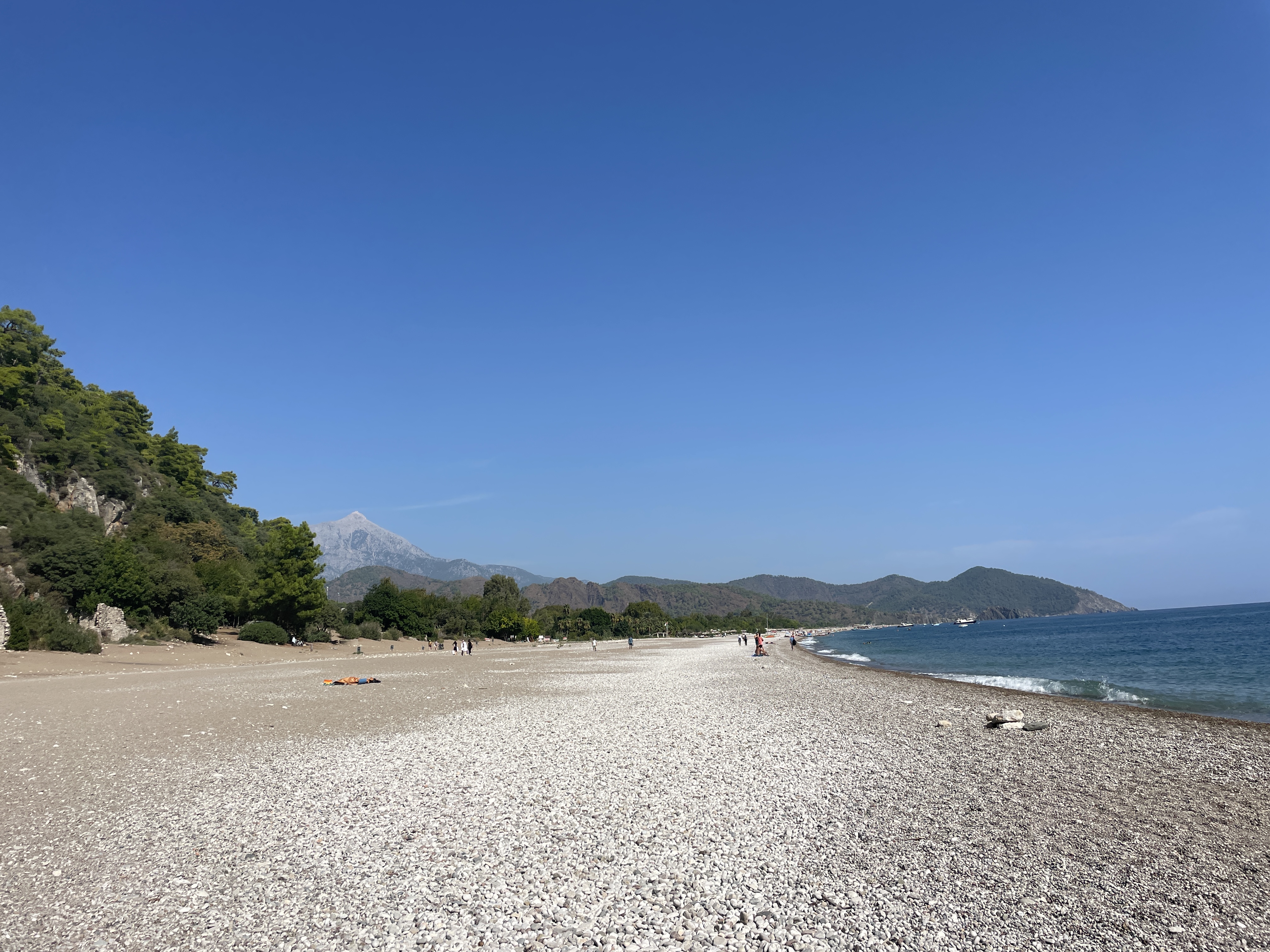

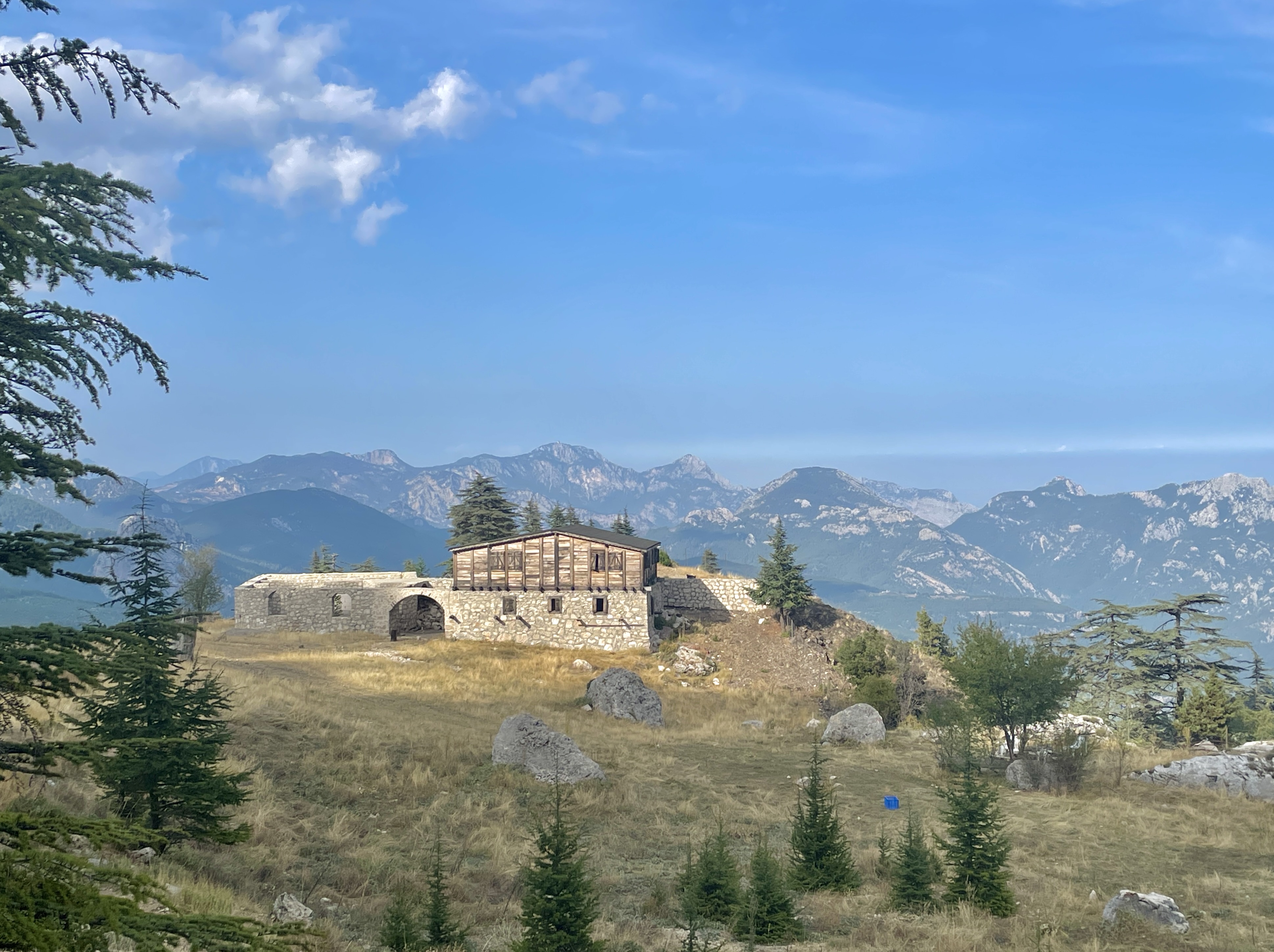
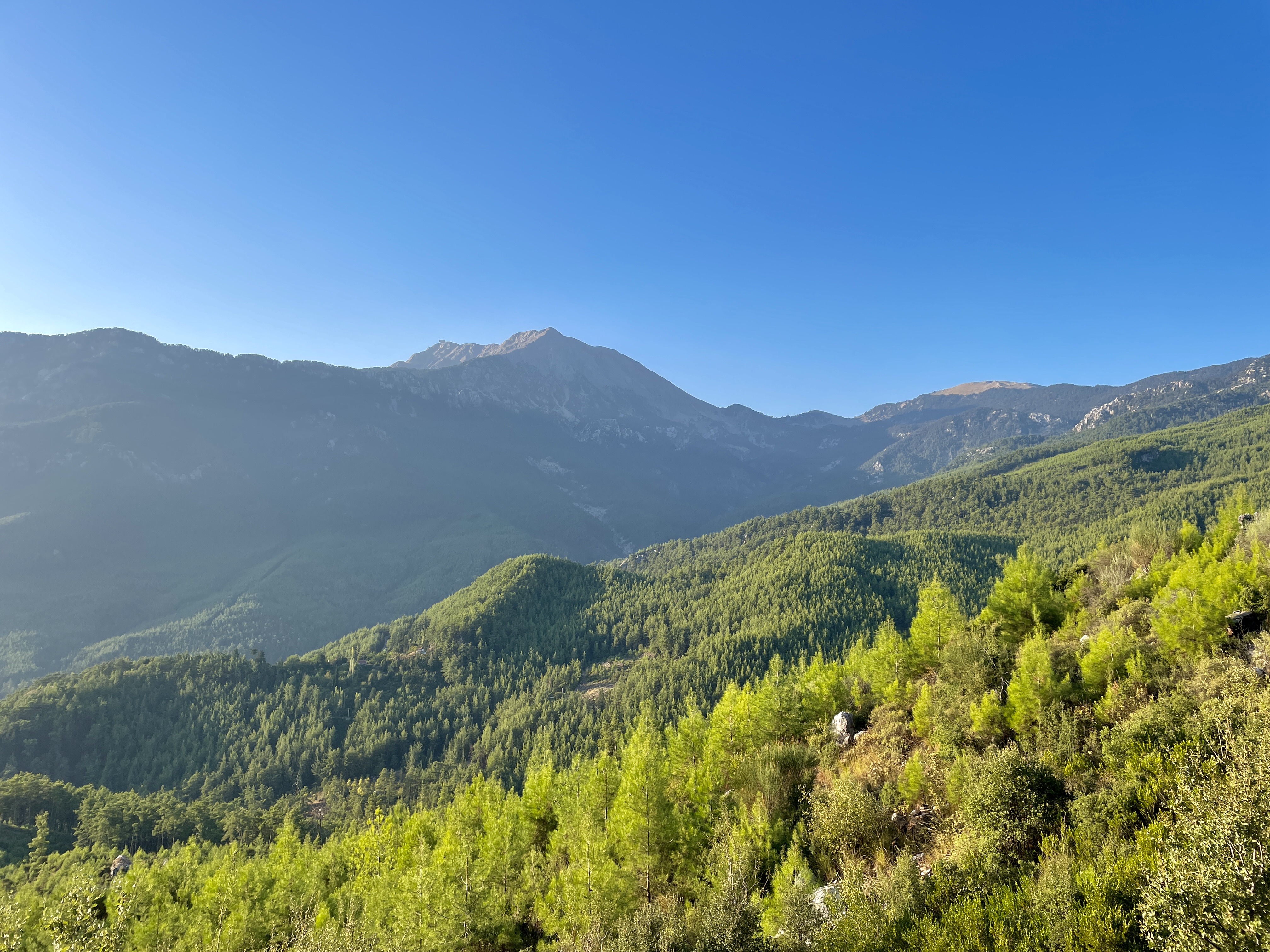
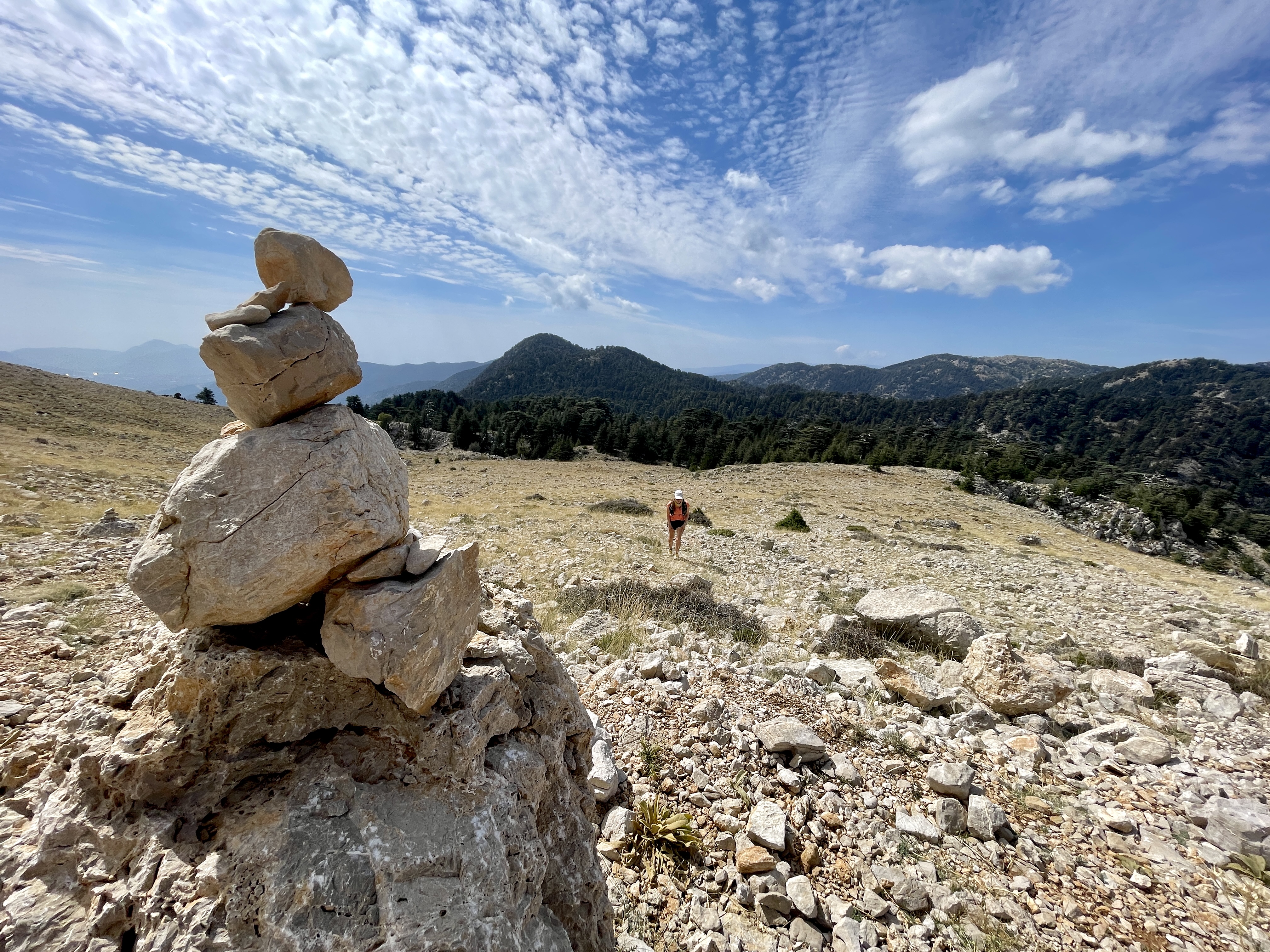
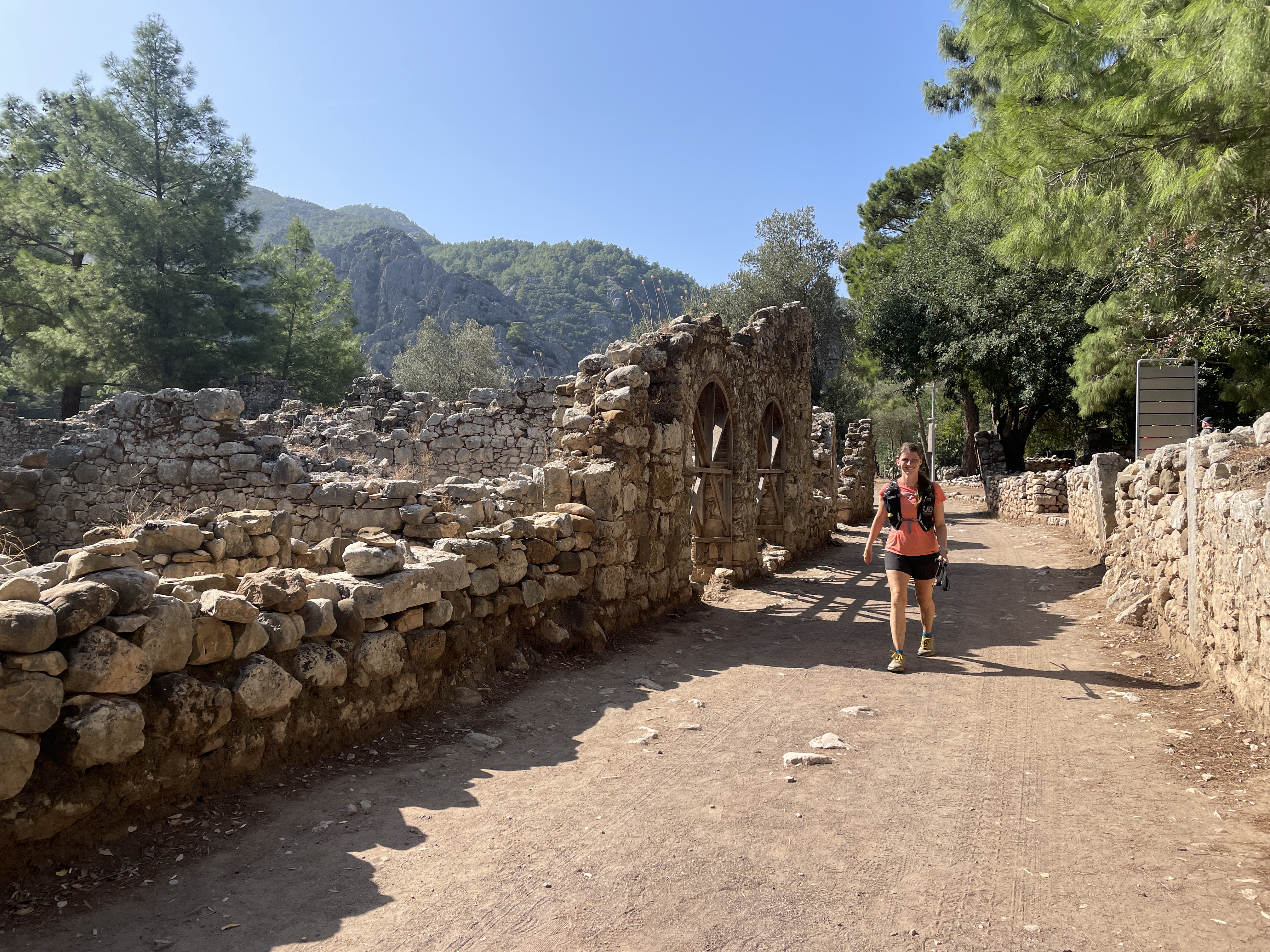
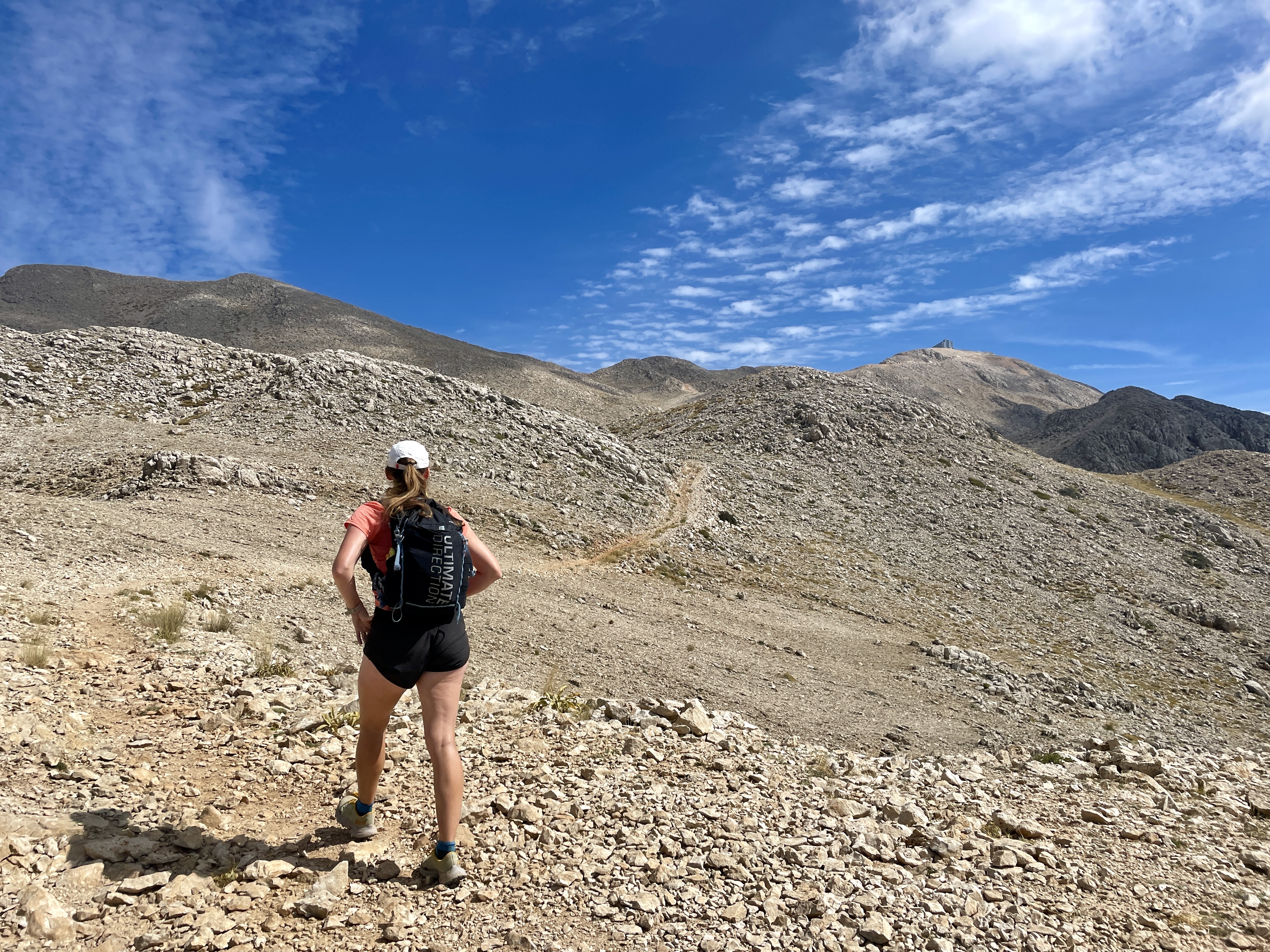
As we emerged from one such forest, we stumbled into the ruins of Olympos near Çirali, a place steeped in the religious history of this varied coastline. From the nearby beach, we spied the Lycian Mount Olympus – Tahtalı Daği – a towering 2,366m peak gazing out across its dominion. The next day we would be on its lunar summit, our dust-covered faces and grubby clothes clashing with the cleanliness of the tourists who had arrived by cable car to the summit.
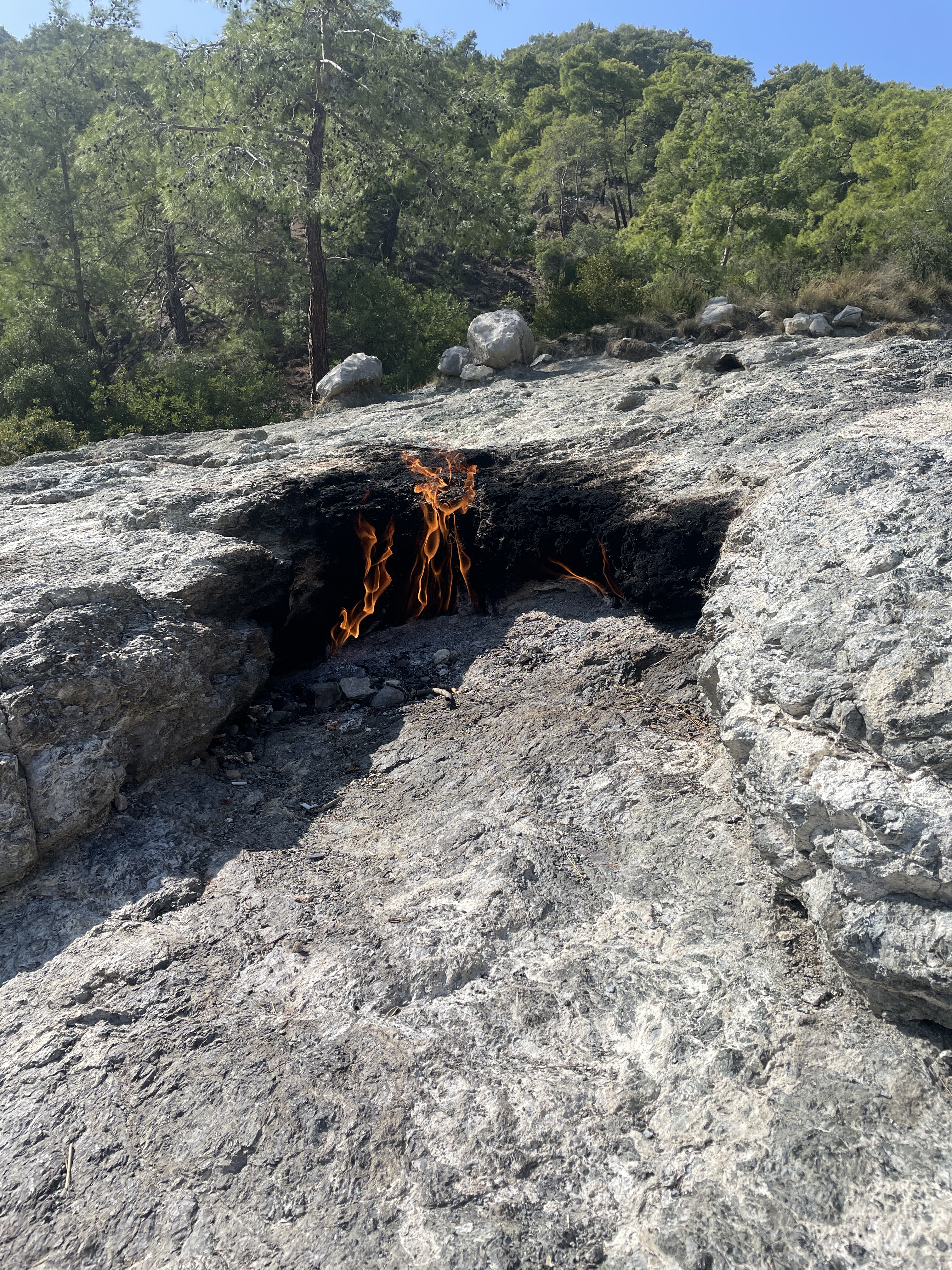
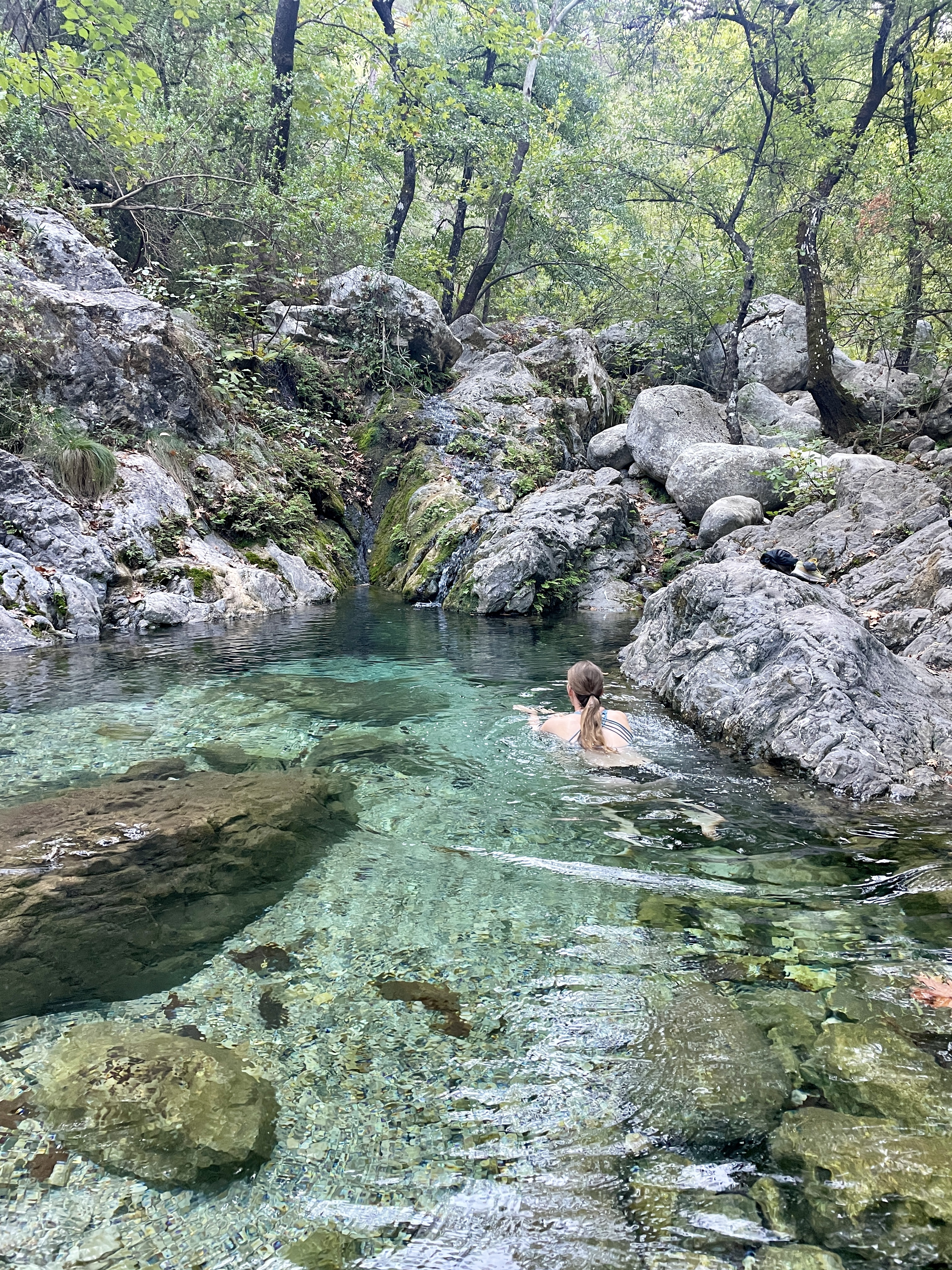
Before then, however, we had a long prologue to enjoy that passed through the legendary Chimaera flames and pomegranate trees bowing with the weight of their sweet fruit. We swam in a pool looking up to Tahtalı Daği, ate breakfast in a treehouse, stayed in a ramshackle pansiyon and ran through huge expanses of forest thick with the smell of cedar.
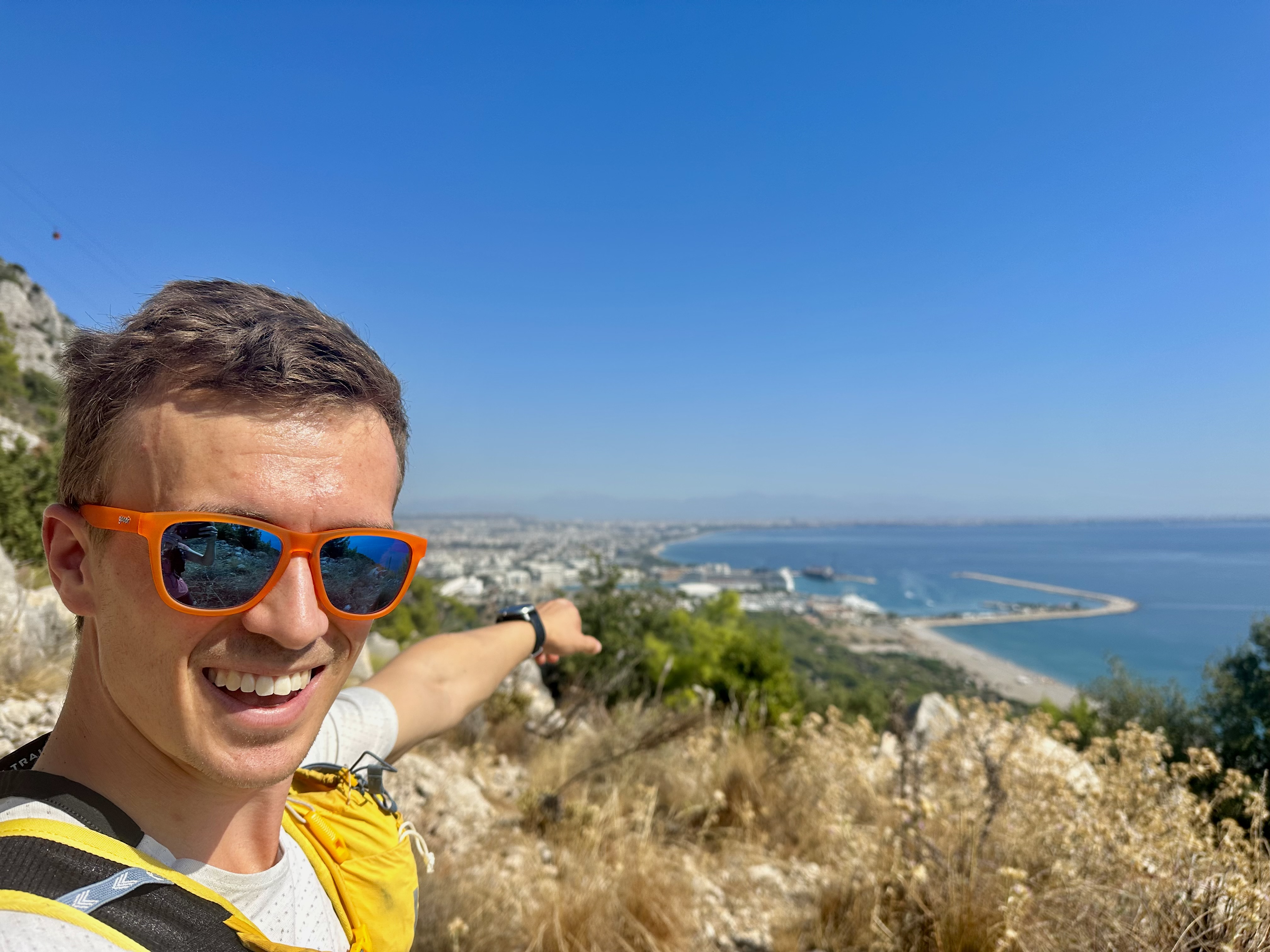
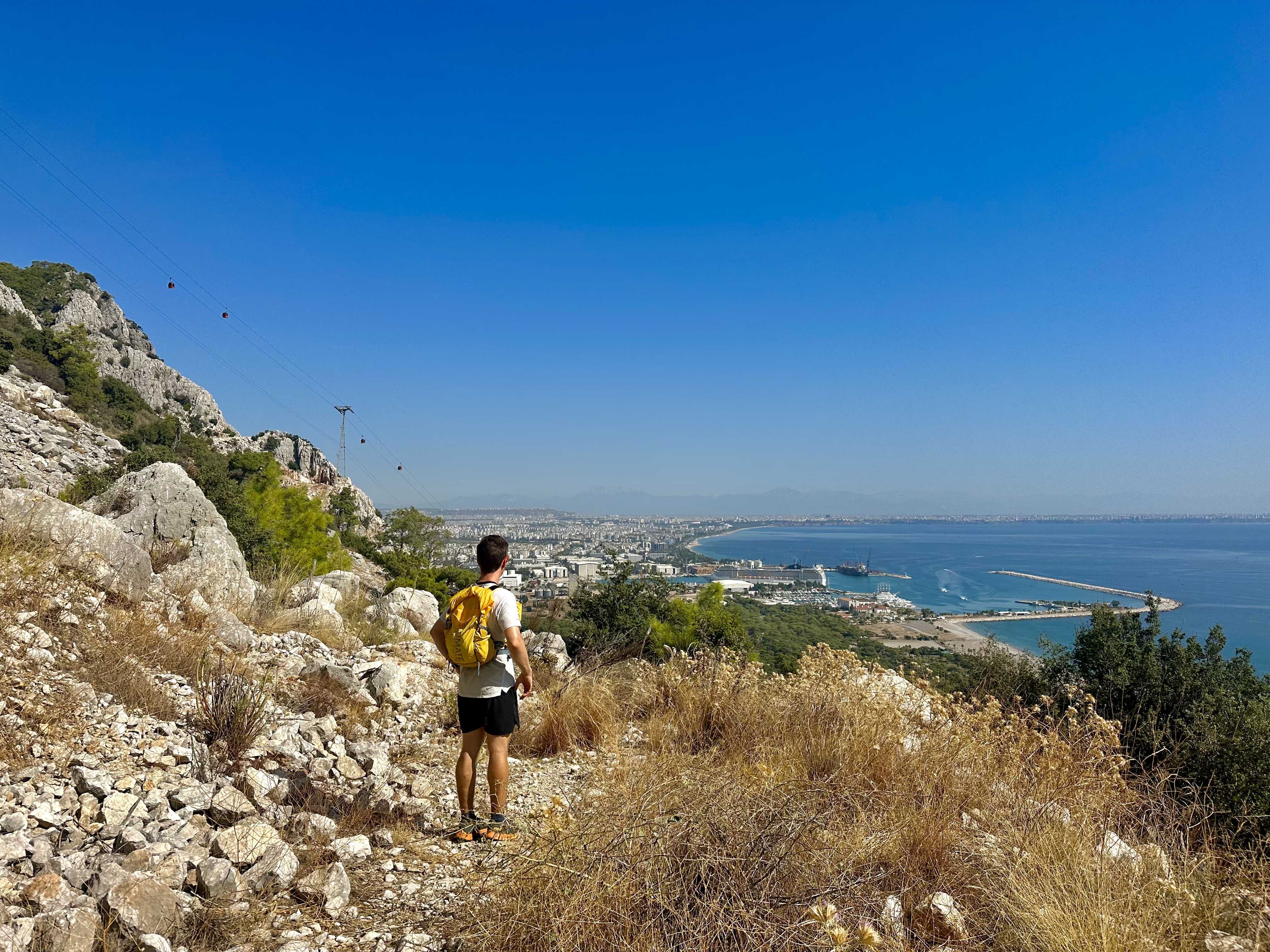
It was a stunning part of the route, delivering us to our finish in Antalya after 15 days of running and 18 days on the trail. The end was the one big thing I’d change about the route. The ‘main’ finish is a remote, challenging slog north before finishing in a nondescript place; our finish was similarly anti-climactic, but at least ended at the sea that had been our constant companion on the trail.
Below I have summarised the full route for you to take inspiration from.

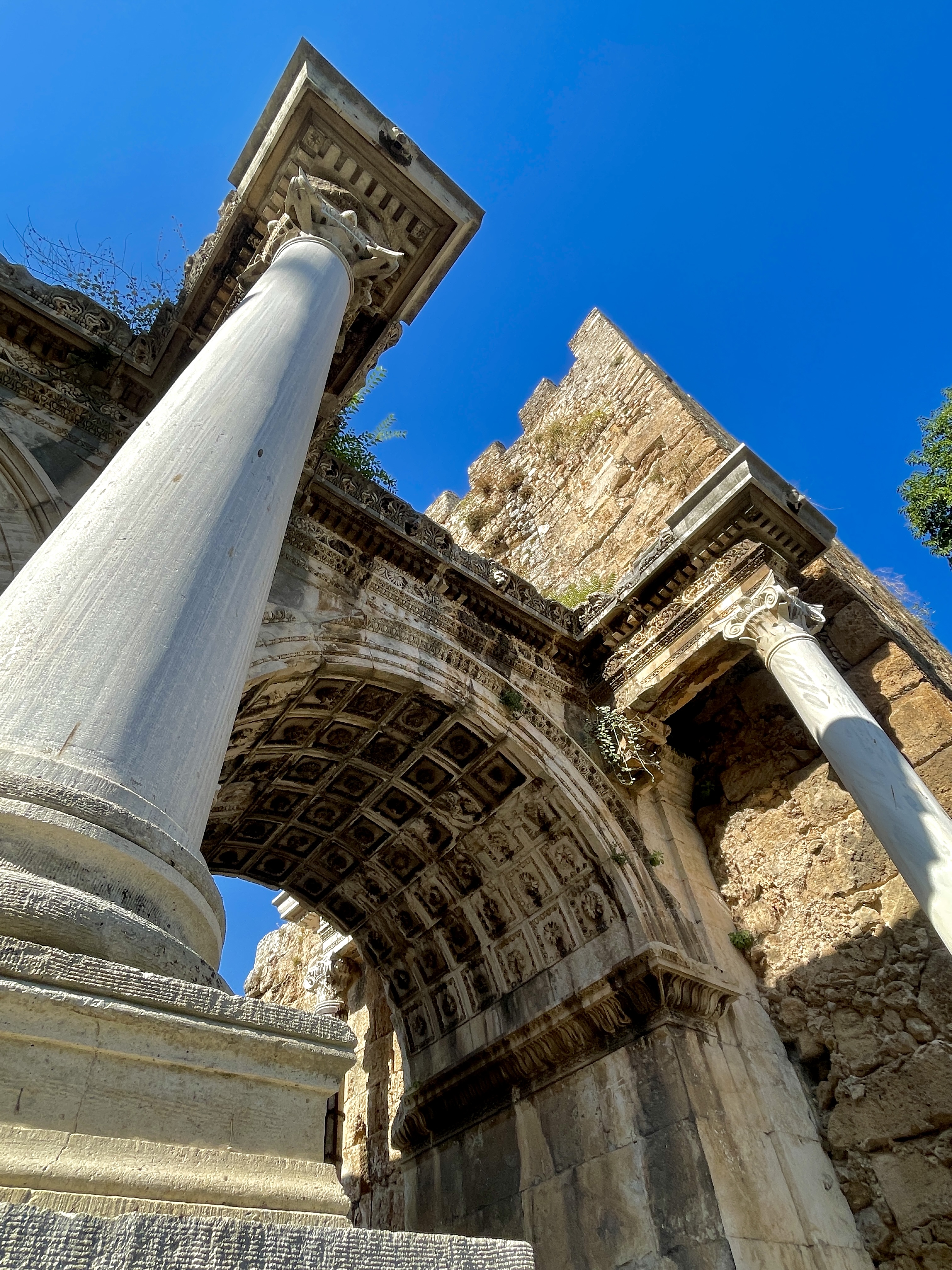
Our itinerary
Here is a screenshot of how we divided the route into the days.
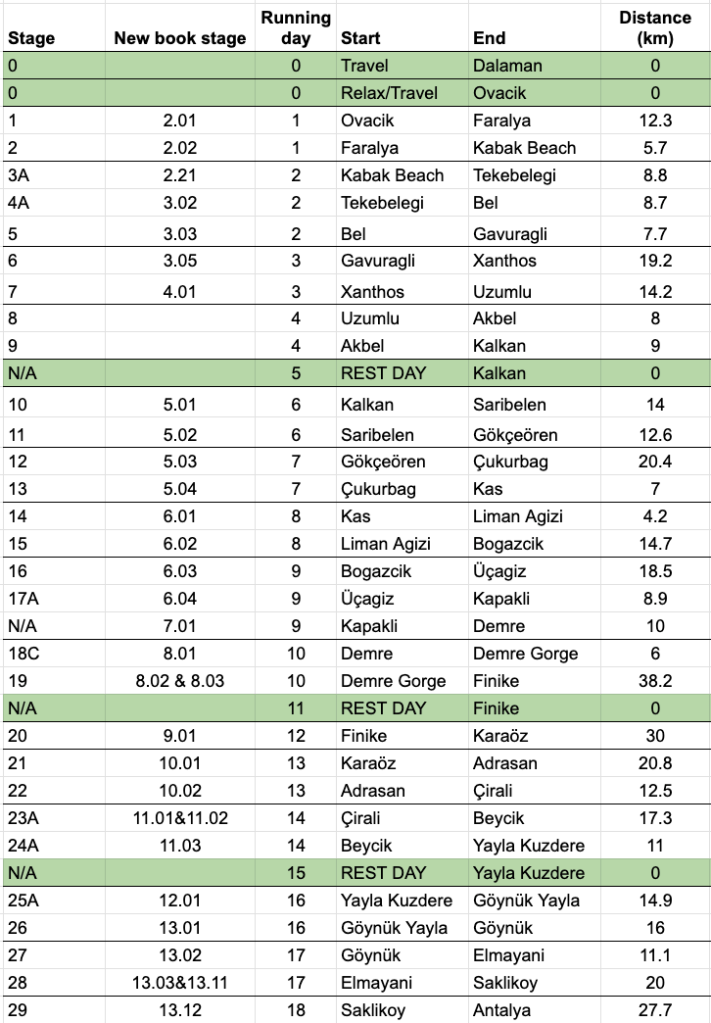
The first ‘Stage’ column refers to an old edition of the book.
Accommodation
We stayed in such a wonderful array of accommodation along the route, including Airbnbs, hotels, pansiyons, yaylas, lodges, and more. You often here this about places people visit, but the people were genuinely incredibly hospitable and willing to help you.
A big thing to remember is Booking.com and Airbnb are not actually available in Türkiye. This might seem strange given the large number of places listed on there. The way around this is to not search for accommodation on local Wi-Fi. ESIMs seem to work just fine (I use Airalo).
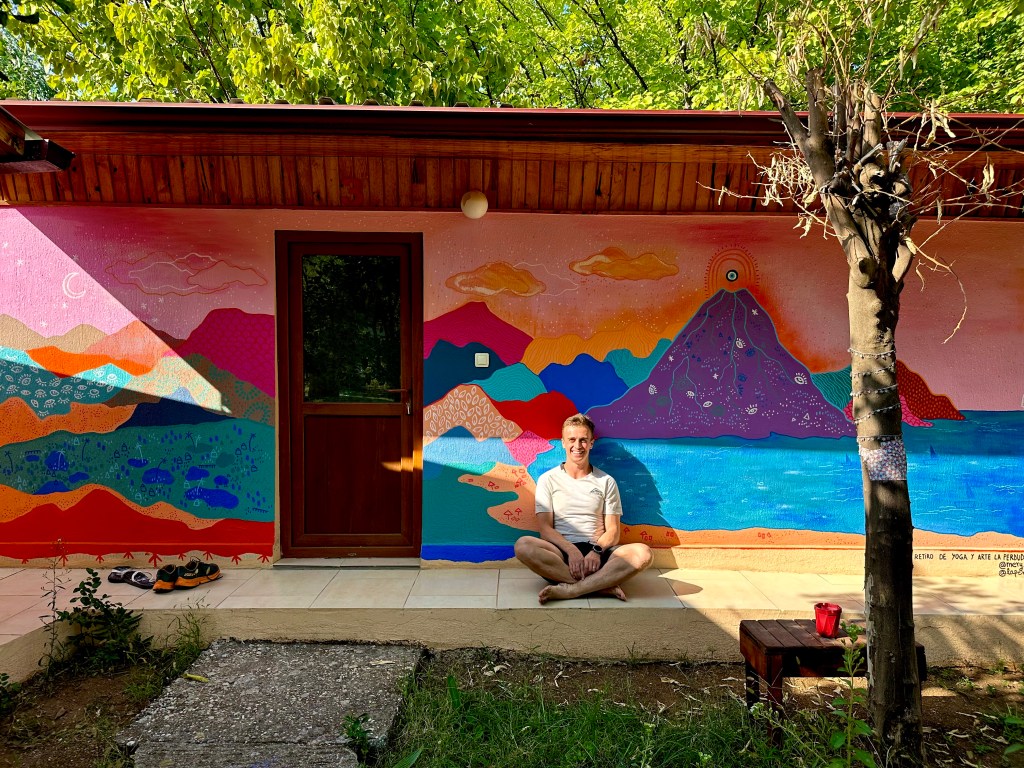
Aside from that, the biggest culture shock for anyone coming from Europe or other western countries is the haggling culture. In this part of the world, bartering is a social activity and breeds goodwill between you and your prospective host. Fail to engage and you will probably just offend them, which will be rewarded with a high price for your bed.
You really don’t need to be a commodity trader to participate in bartering, nor a board room negotiator. Everyone knows you will meet somewhere in the middle, so give it a go. Inflation in Türkiye is still a runaway train, so prices will have ballooned even more since we visited. Back then, a room for 500TL seemed very reasonable; now that might be closer to 800TL.
To put that into perspective, 500TL is now worth £11.15 (13,31€ or $14.57).
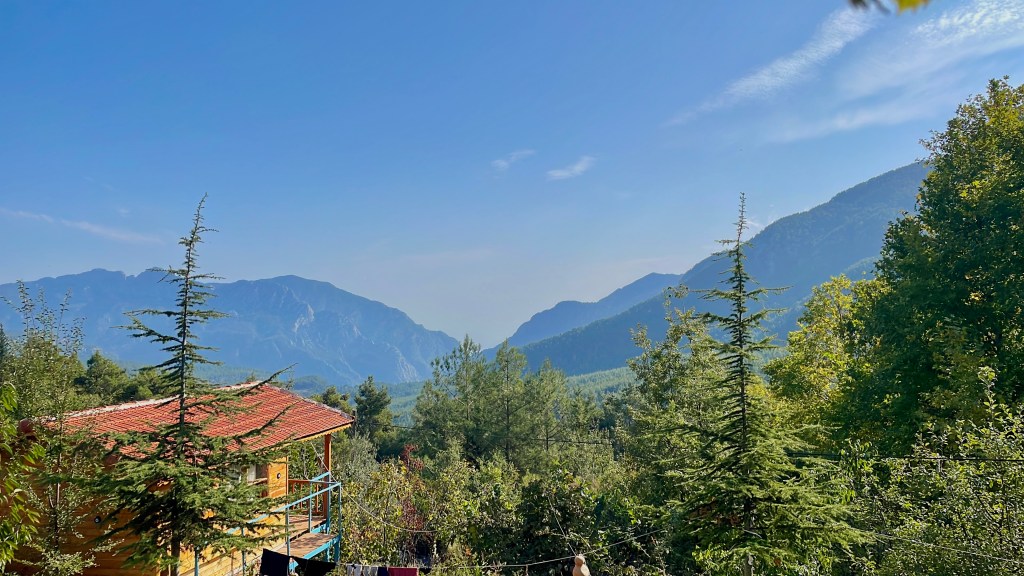
Our tactic for accommodation was to run half our distance for the day and book our accommodation over lunch. This worked every time. With pansiyons and yaylas, there is often no way to book in advance, so you show up and hope for a room, which I doubt you will every be refused.
We did book a handful of places in advance but we slightly regretted this because it meant the flexibility offered by our main tactic was nullified by the set bookings.
The variety of accommodation is extraordinary. We stayed in a few pleasant hotels and B&Bs, but we stayed in several…unique establishments. The most peculiar of these was Ali’s Pension. We found pansiyons to often be named after the man of the house but managed by the wife.
Sadly, I have forgotten the name of the woman who cared for us, so I will call her Asli. Upon our arrival, it was clear our presence was not hotly anticipated, but she went about showing us around the homely pansiyon, with cast iron pans covering surfaces and threadbare carpets adorning the floor. The exposed lightbulbs hanging from the ceilings provided a bearing for the local insects, with the ubiquitous buzz idesciferible between them. The beds were comfortable but in an austere kind of way. The bathroom featured a squat toilet, a leaky shower, and a resident frog.
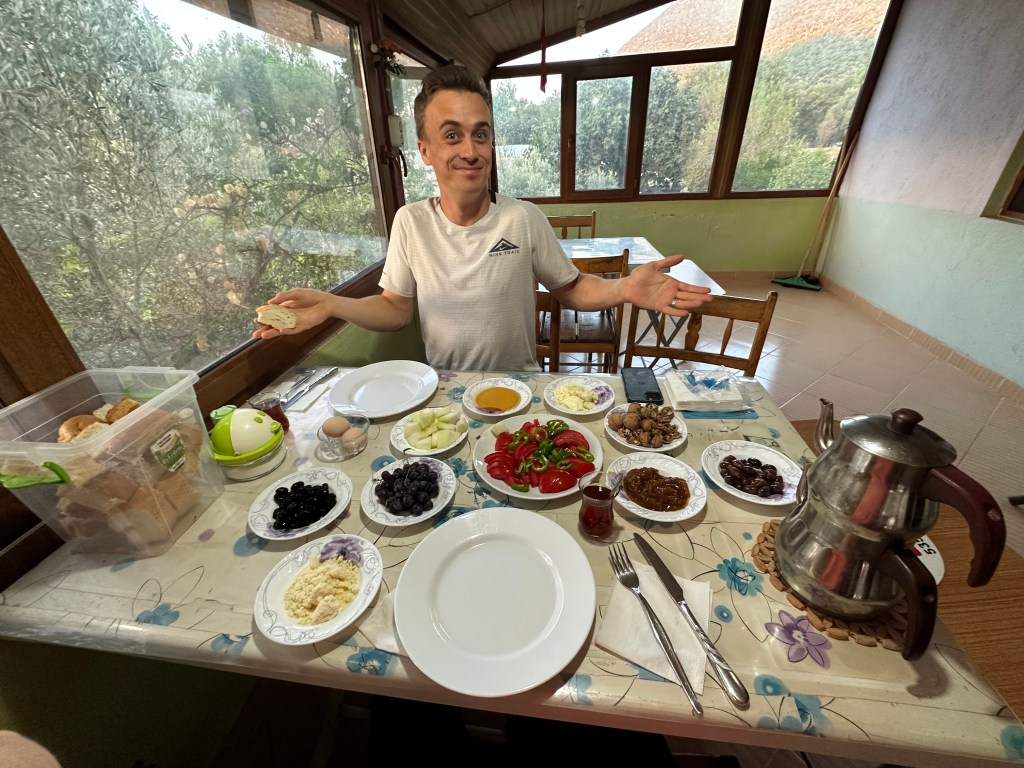
Still, it was comfortable and – the weird beefy, chewy stew aside – the food was tasty and filling. Asli wore a cloth around her hair and addressed us in an exasperated yet hospitable way for the evening (we couldn’t tell for sure as she spoke to us completely in Turkish).
In the morning, we were awoken by the first call to prayer loudly quaking through the shutters. Enjoying our staple breakfast of strong cheese, honey, eggs, olives, cucumber, tomato and bread, Asli beckoned for Bo to come with her. Soon, Bo was in the garden throwing feed to the chickens with Asli by her side. While I prepared the rucksacks for the day, the two returned to the breakfast table. Asli reached up and removed the cloth that bound her head to reveal long hair as red as the rusty soil her chickens pecked for seeds. Shaking it out, she appeared immediately relaxed. It was a real delight to have built up a rapport with our host through shaky interactions and stilted conversation.
It was moments like this that made the trip so special. If you are nervous, don’t worry, so was I. But these interactions are what make trips like this so memorable and open our eyes to other cultures and ways of living.
Food, drink and resupply
On the subject of eating, I will briefly touch on food and drink.
The Turkish breakfast is, in my opinion, the best of ‘the breakfasts’ out there. Usually it features cheese, cucumber, tomato, bread, fresh honey, olives, eggs (either boiled or as an omelette) and sometimes meat. The best breakfast meal – in fact, one we had at several points in the day – was menemen. This tomato-based scrambled egg meal was something we asked for repeatedly on the trail and actually make at home today! The basic ingredients are almost always available wherever you stay, so it is a good one to ask for.

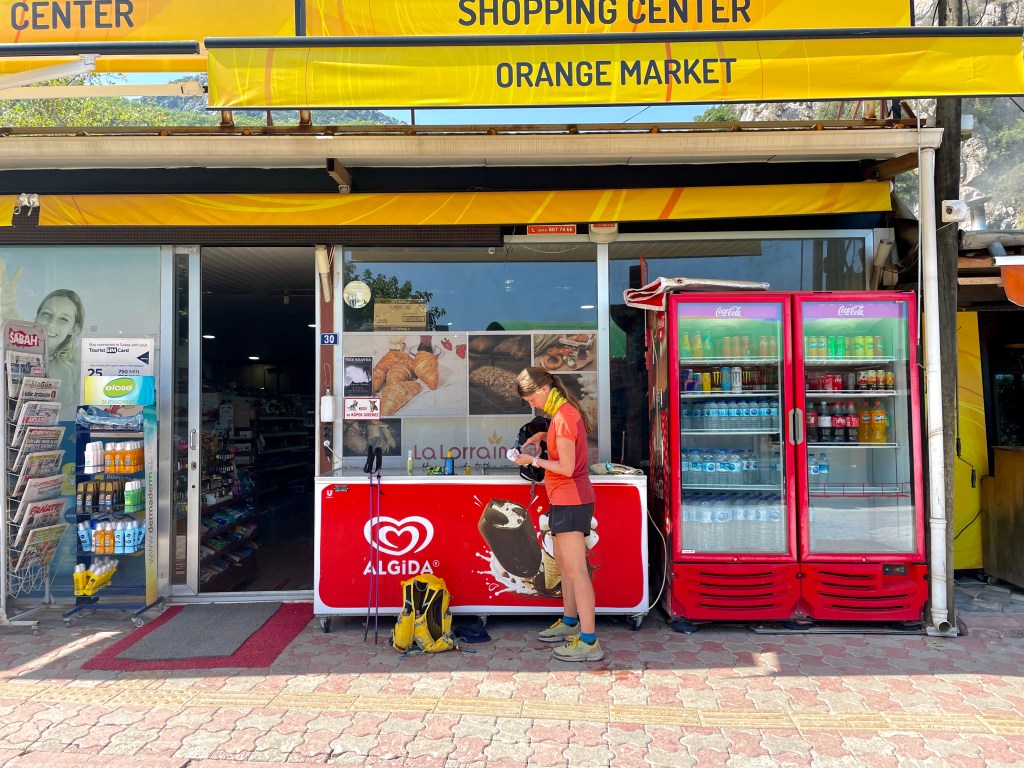
We would often ask our hosts if they would mind making breakfast early for us and, if possible, make a packed lunch. Most did this without question. If we struggled to have lunch made for us, we would buy a loaf of bread alongside cheese and ham from one of the innumerable little shops on the way.
Dinners were always made by our hosts, but we did occasionally visit a restaurant on our rest days. One of the best homemade meals was at Hussein and his wife’s pansiyon in Gökçeören. His wife (who again was nameless) made homemade flatbreads on a wide pan, serving us chicken thighs, rice, vegetables and dessert. It was a mountainous portion and definitely fuelled us up for the next day. Hussein, meanwhile, sat watching videos on his phone, smoking, and jabbering with neighbours.
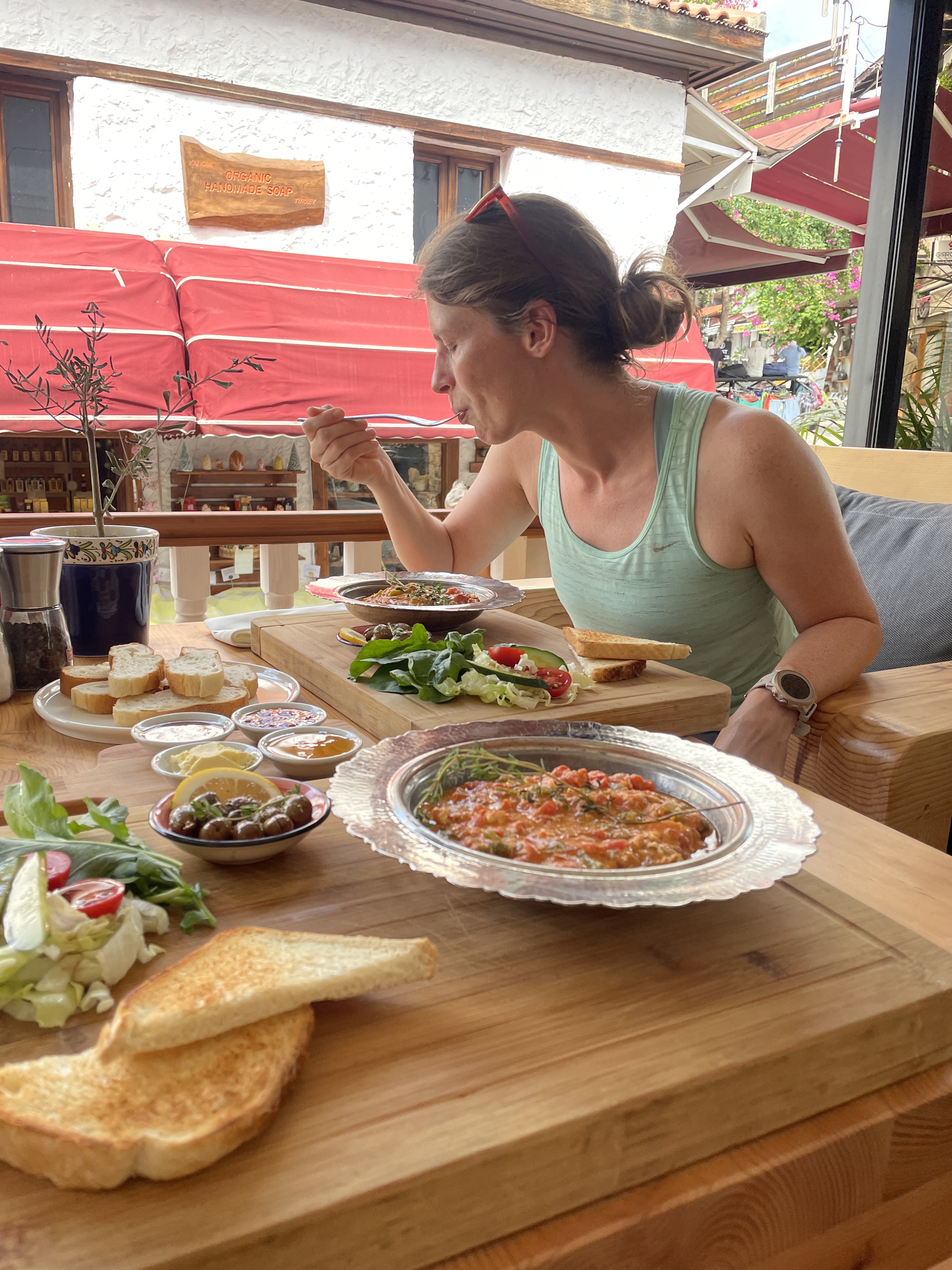
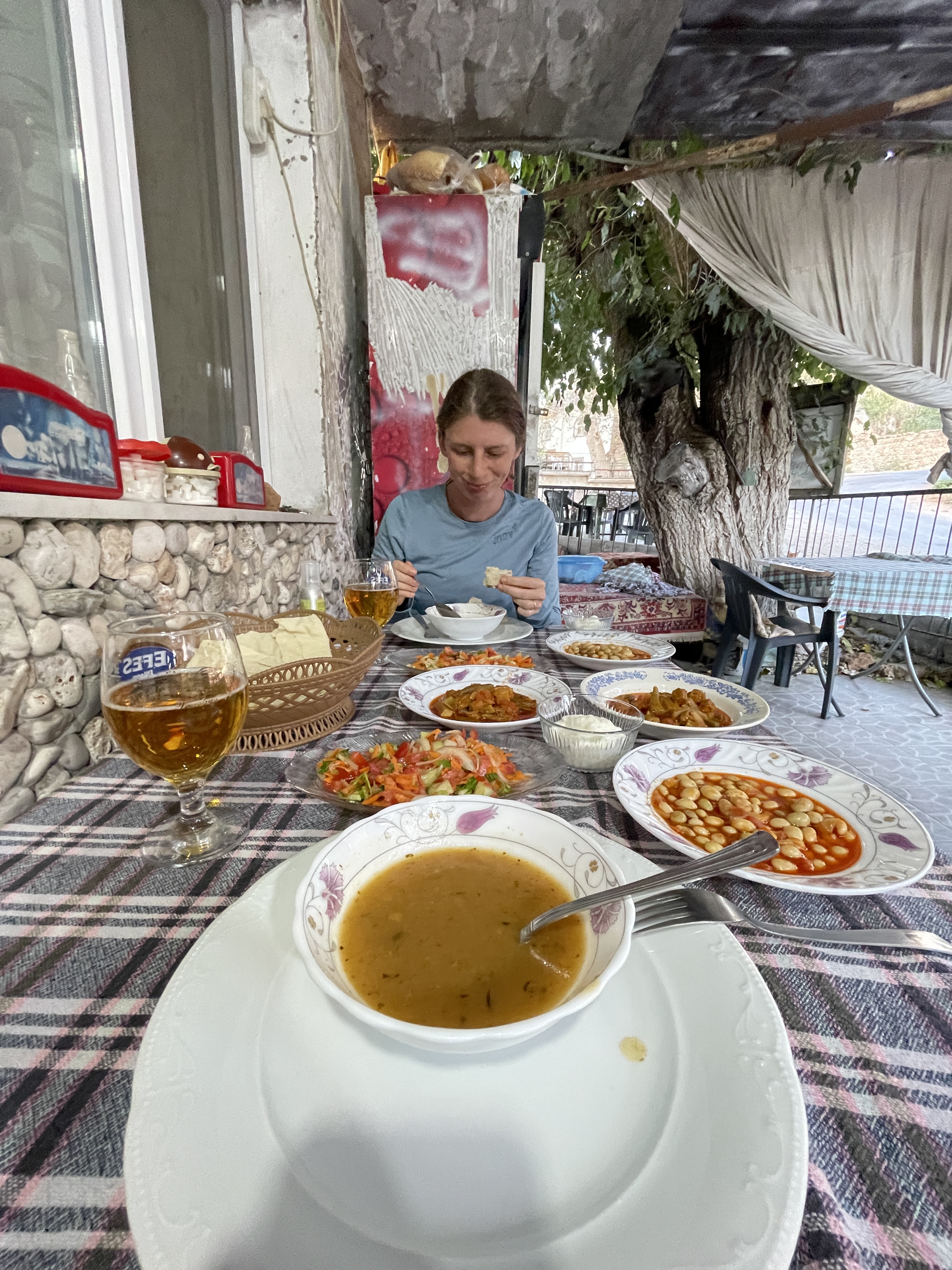
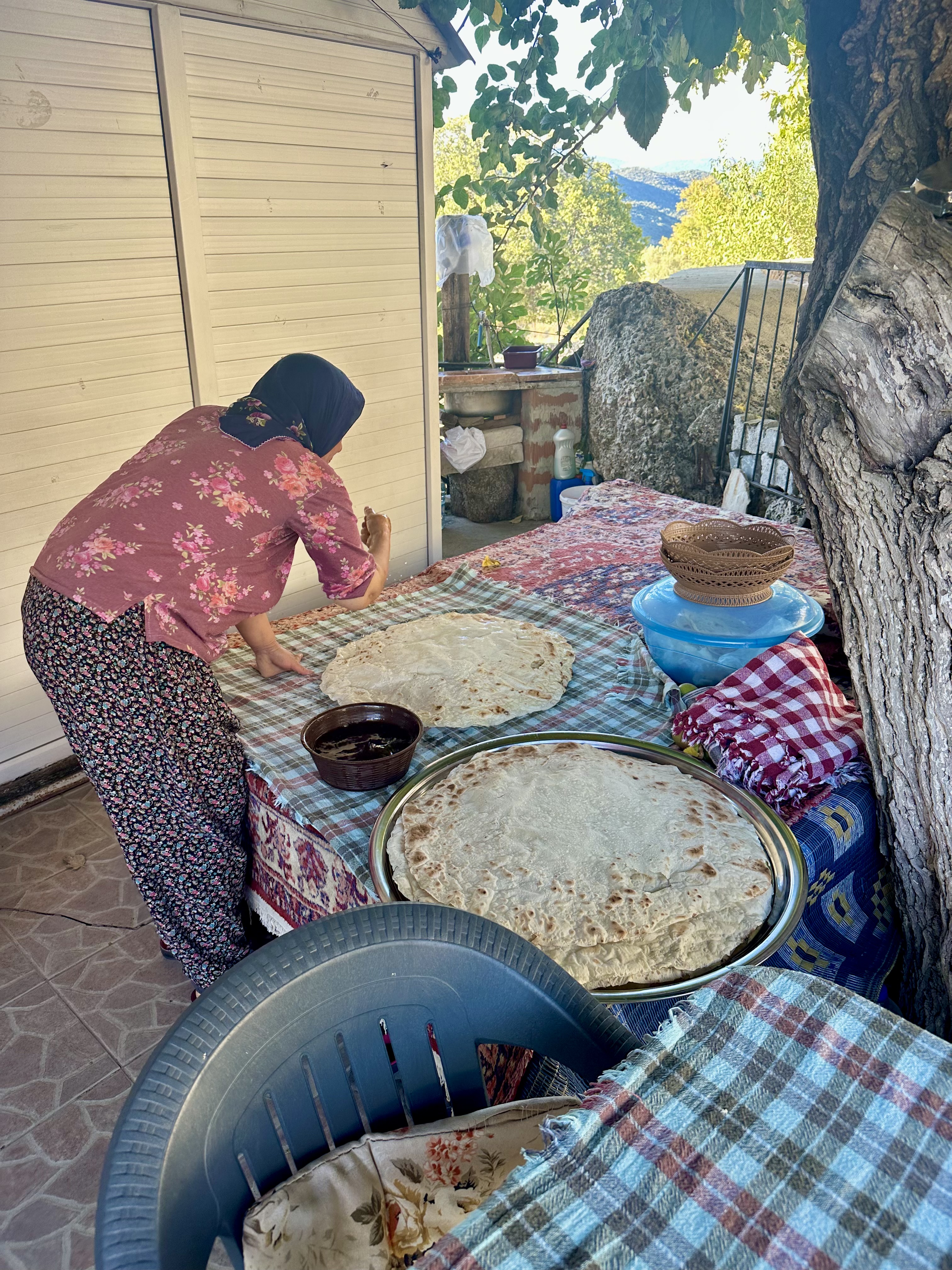
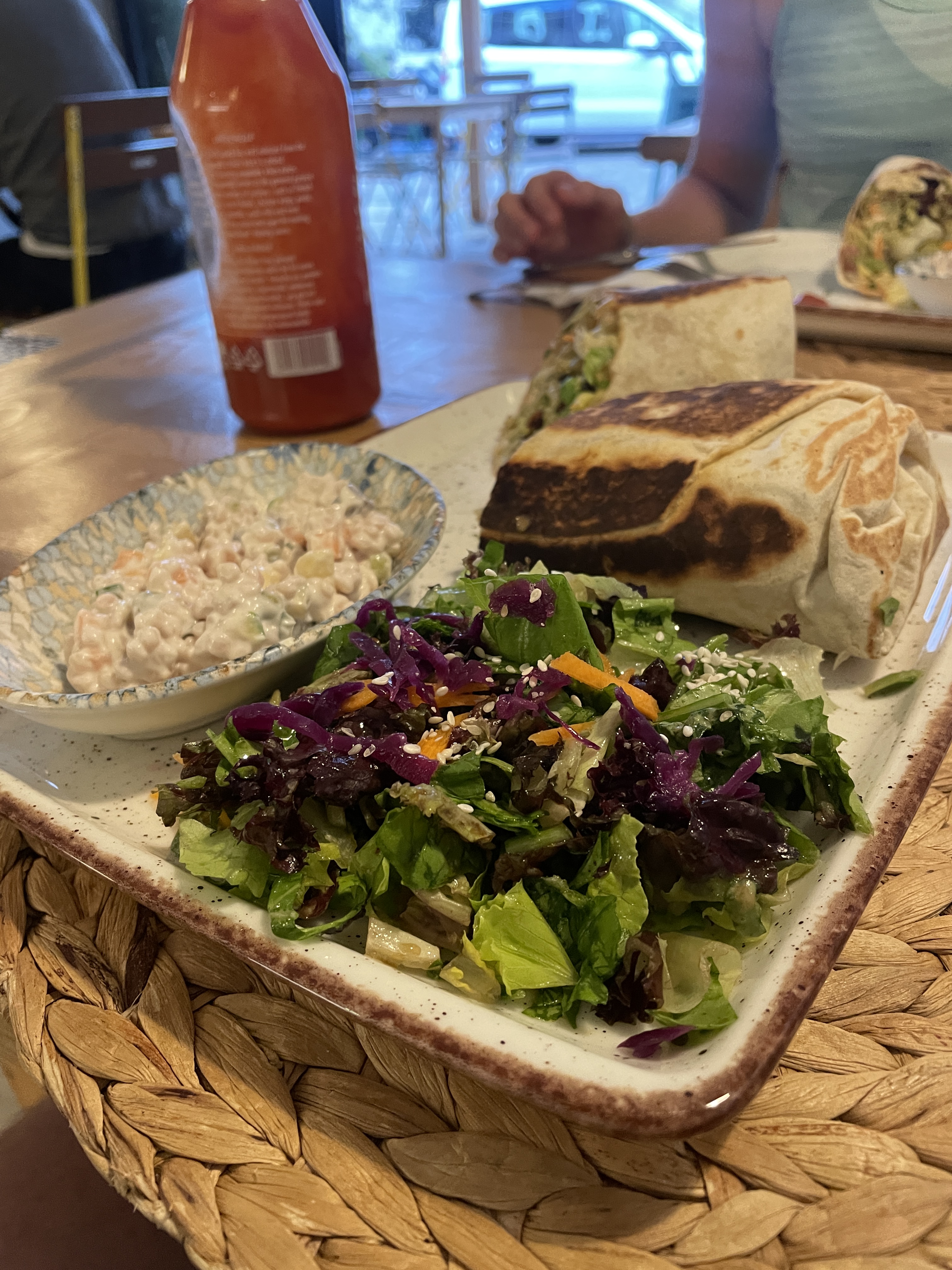
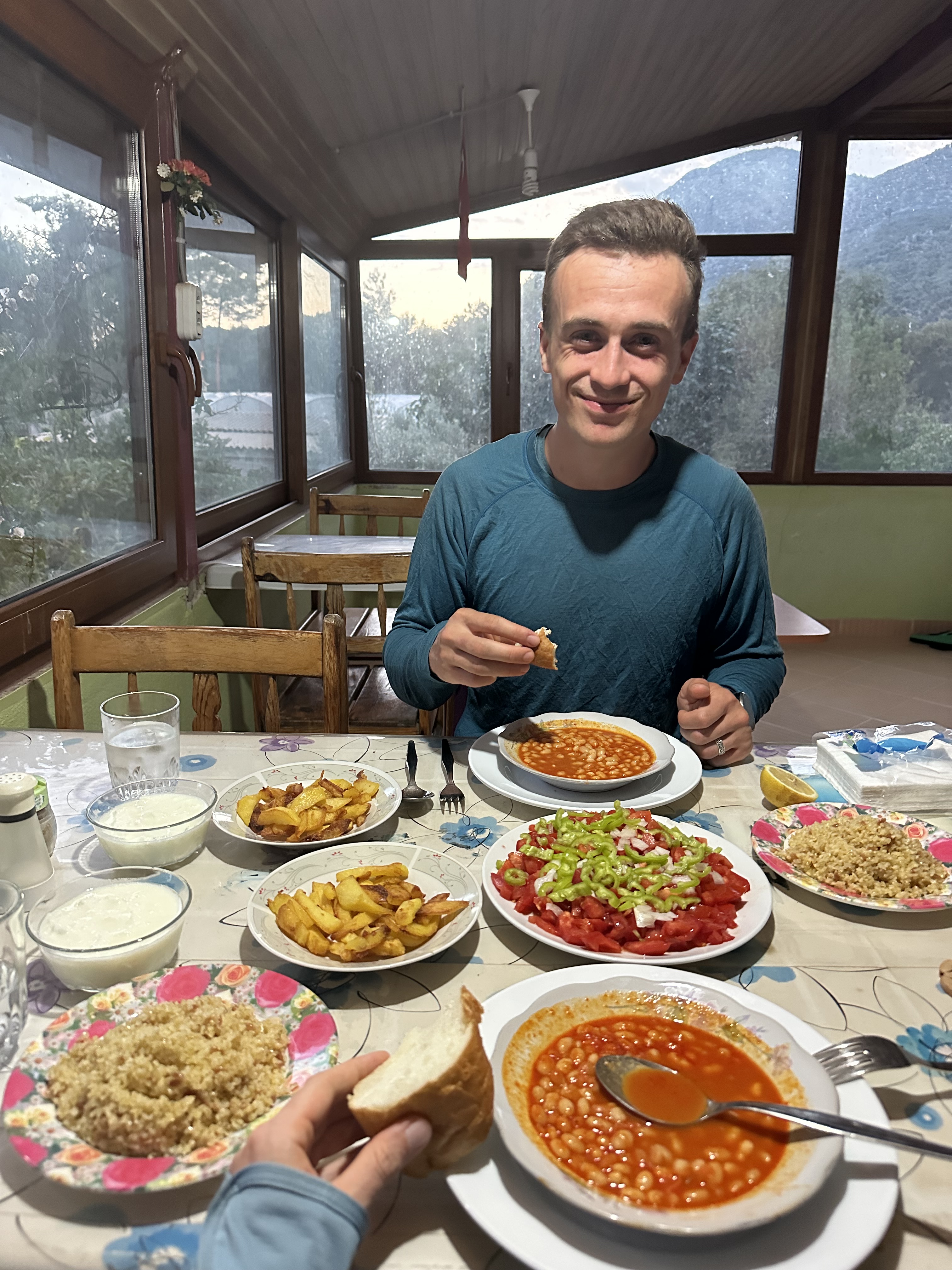
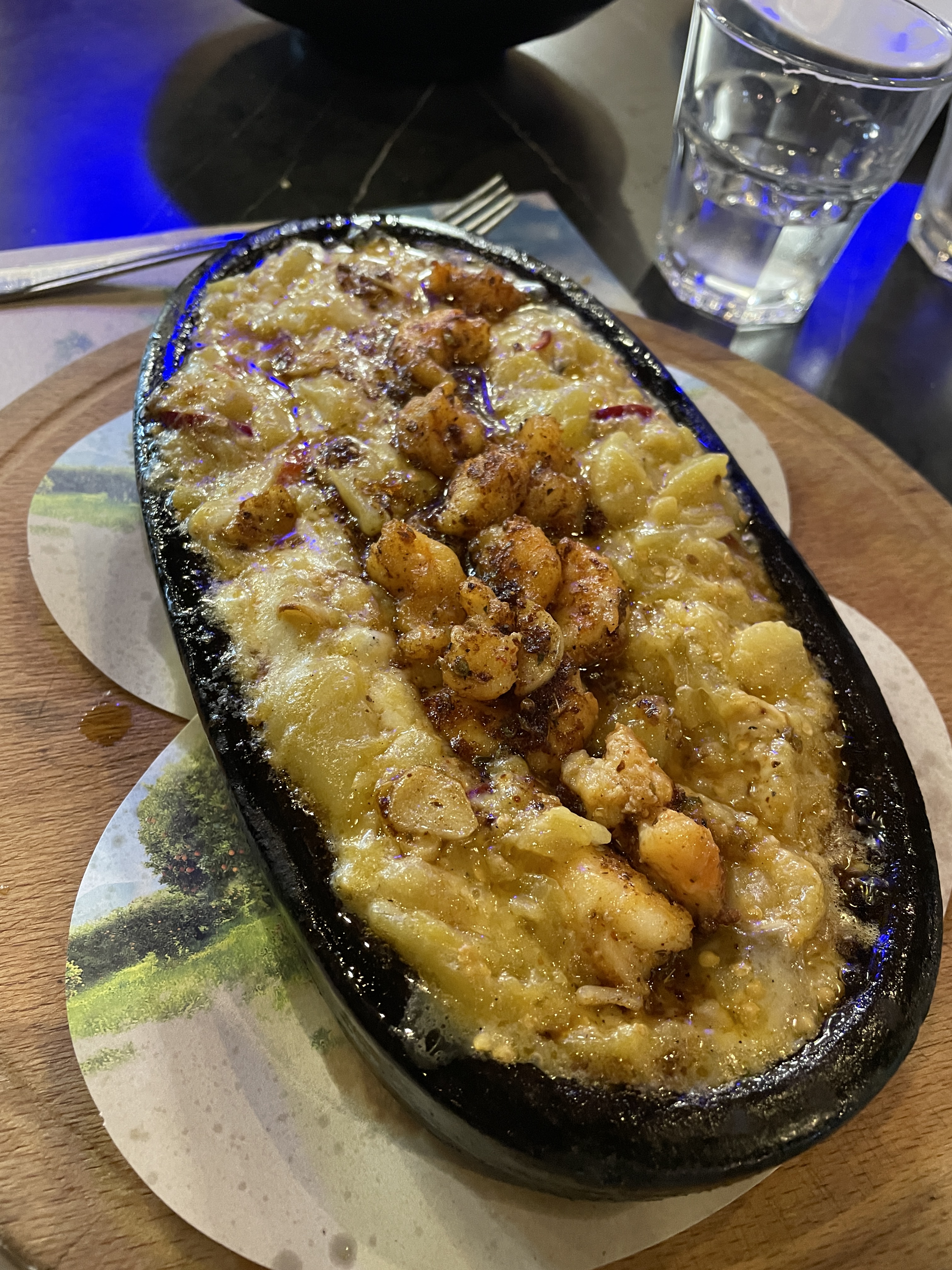

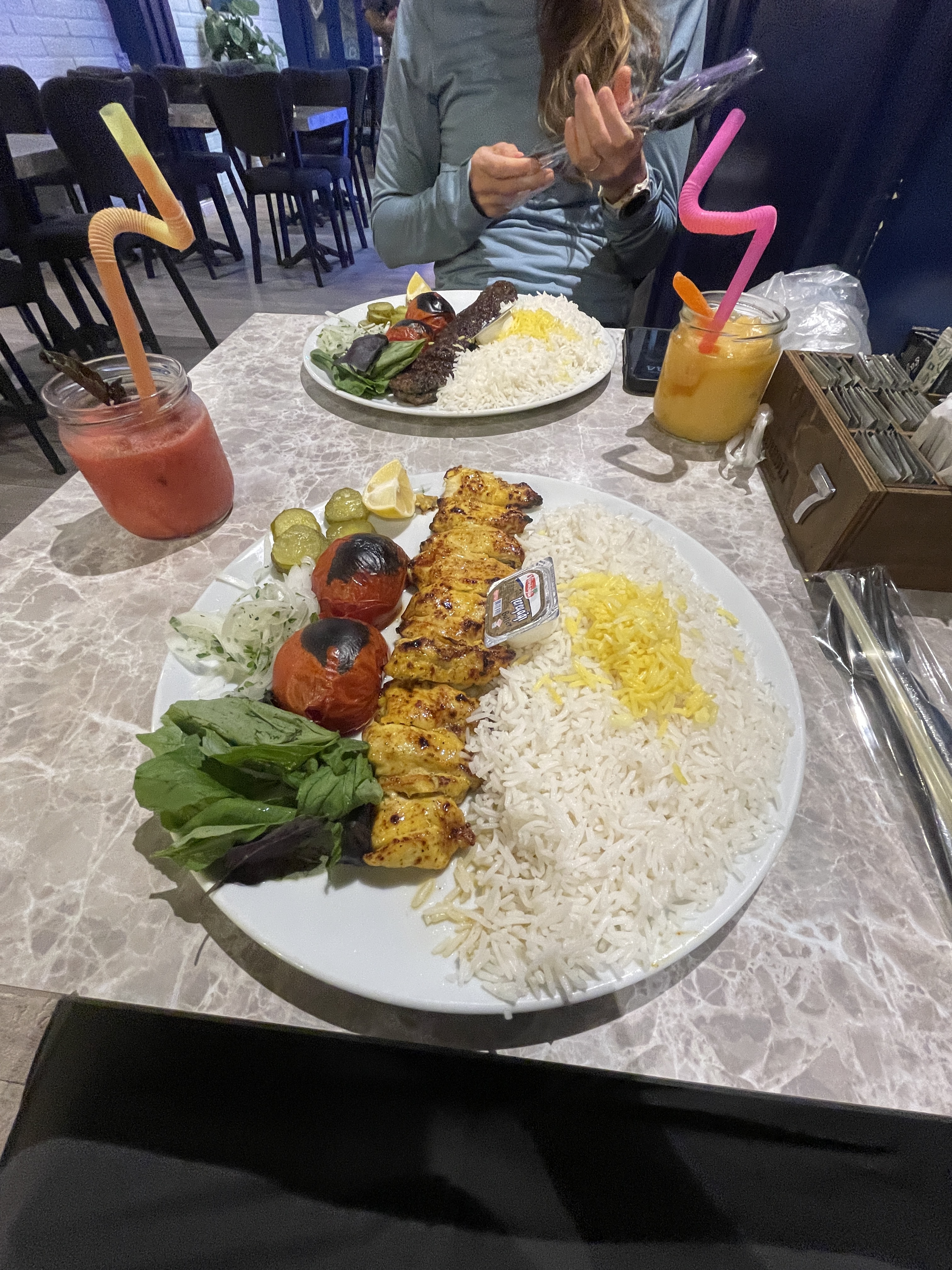
Every day or so we would load up on additional snacks and bottled water. Generally the water from indoor taps is drinkable but I would filter water that comes from fountains and taps. If we had access to a fridge or freezer we would put our soft flasks in overnight.
You will find your own way, but generally small local shops are very frequent on the trail so you shouldn’t be without food and water!
The unglamorous stuff
It might surprise you to learn that some moments sucked. The most obviously challenging part was the impact on our bodies, with various niggles appearing along the way and one for Bo that really looked like it might end the run after a few days. The heat was the other big challenge, but I have covered that elsewhere.
In the first section especially we (read: I) got incredibly frustrated with the number of snagging, clawing, biting bushes that lined the trail. It was infuriating at times to have bashed through one overgrown section and emerged scratched and torn, only to find the trail had vanished and we had to retrace our steps.
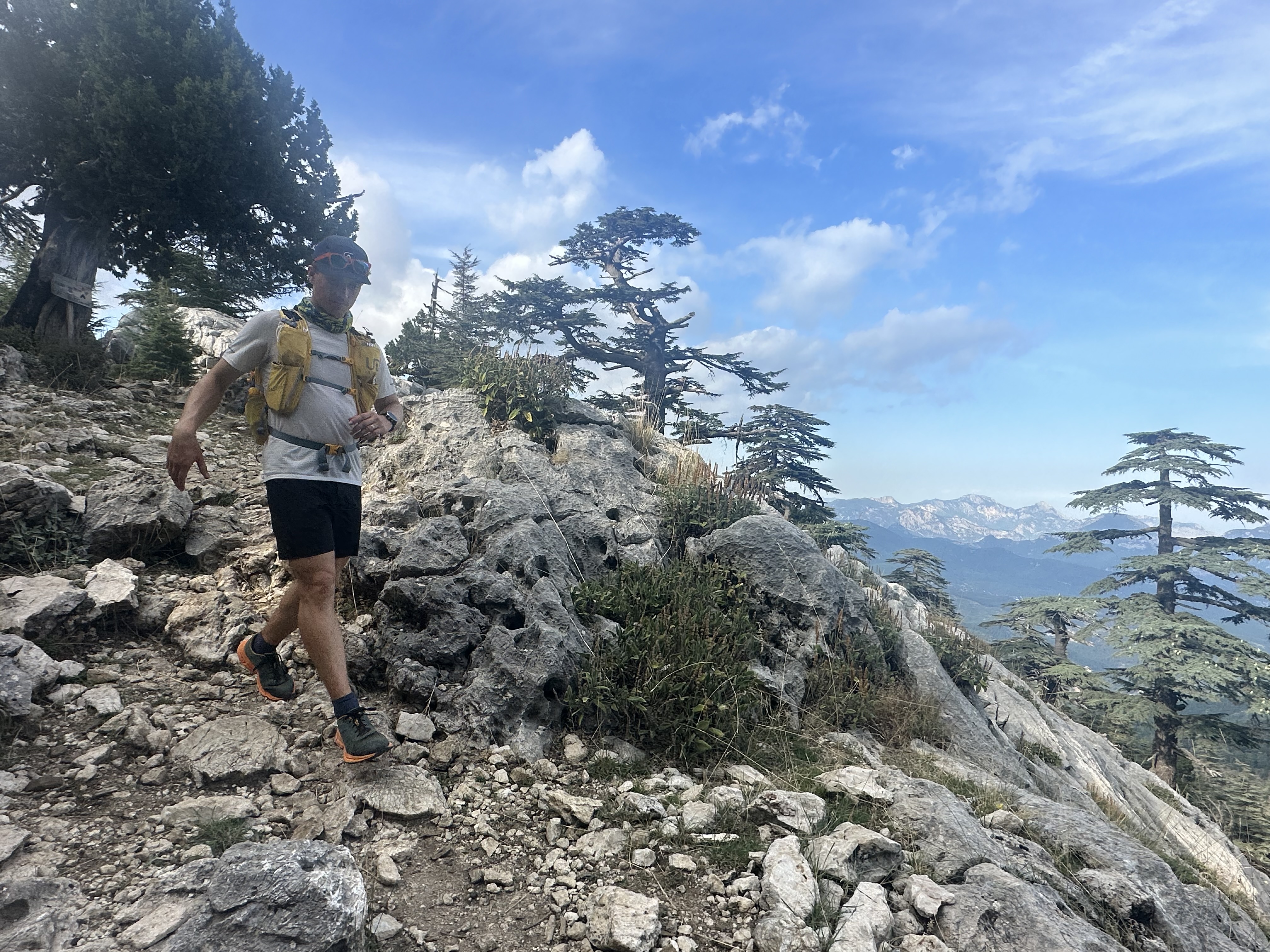
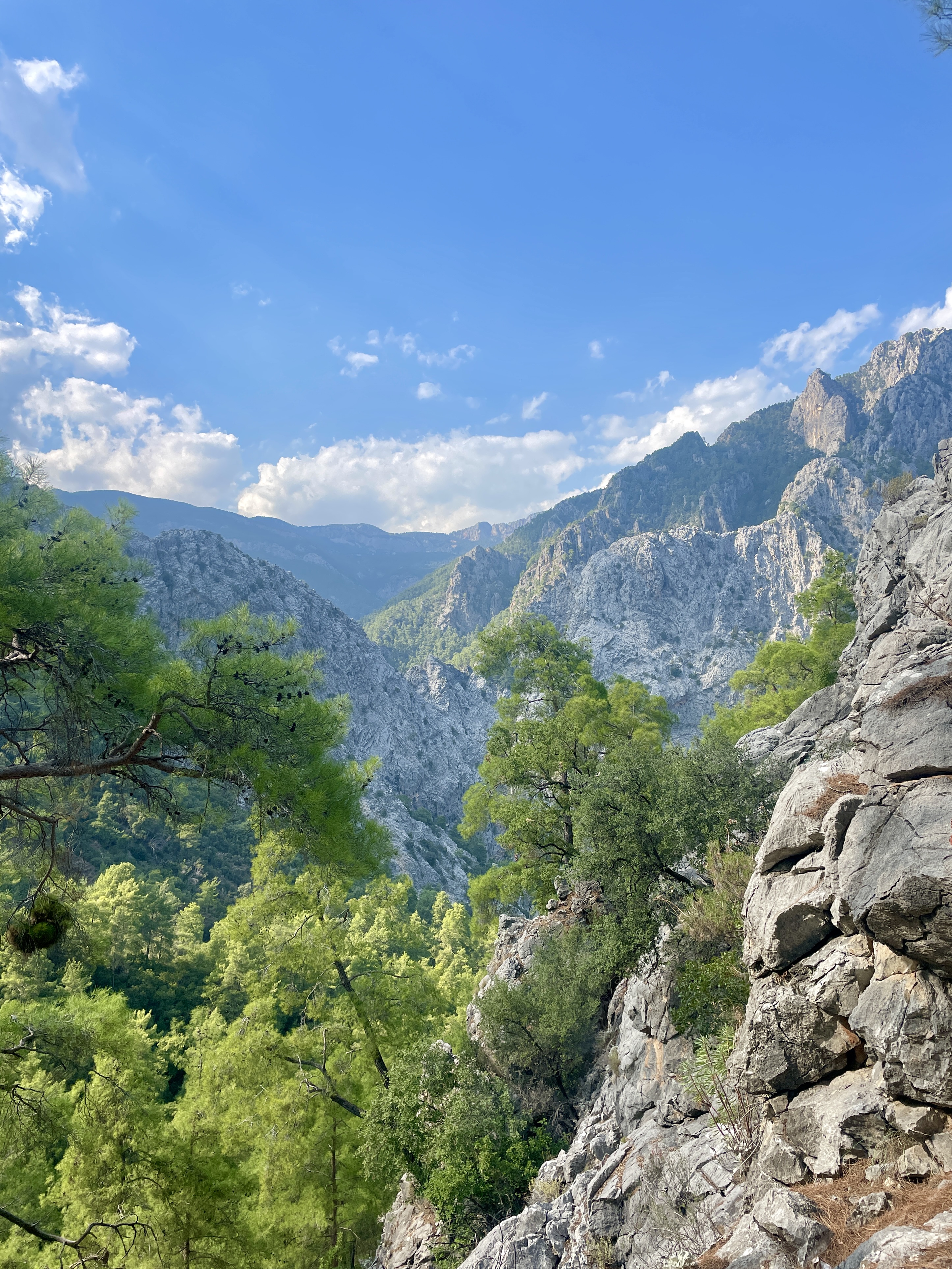
Speaking of the trail, there were some bits I would go back and review. Specifically, the final descent into Gedeller on the penultimate day was incredibly taxing. At times we were running down sinuous forestry trail, only to turn off and find ourselves clinging to a cliff face, edging towards another section of forestry trail. There has to be a smoother way down that connects the tracks without the vertigo-inducing traverses.
I could go on about mosquitoes, heat-induced squabbles, angry dogs (very few), chafing or any number of minor inconveniences, but they pale in comparison to the overall experience.
That feeling of carving a line along the southern coast of Türkiye is incomparable, and the memories of hospitality, delicious food, unlimited swims in the warm sea, and staggering scenery will last forever.
One memory epitomises the trip for me. In the final days on the trail, we were climbing along a high ridge covered in forest. On either side, the mountain swept down to the valleys below and spilled out to the sea. As we made our way up, the midday adhan echoed around us. The sound rippled through the towns as each started up moments after the other, creating a crescendo effect to our ears on that high ridge. It was a transcendental experience; eerie in a way, but wonderfully moving.
The end
As it was our honeymoon, we had to finish things off in style. We stayed for a few nights in the old town of Antalya, sampling the local culture as much as we could. The return to bustling civilisation and gaudy tourists was jarring; we felt like we’d experienced a completely different kind of Türkiye to the one these people were. Even in the city, we were searching out the little corners unbeknownst to the package holiday travellers.
Still, it was an enjoyable way to wind things down after such an amazing adventure.
I know, one year on, I will have forgotten things in this blog. If you have questions, please leave a comment or contact me via the contact form – I might even update the blog as they come in.
Thank you for reading – I hope it was useful!


 Ross Runs Wild